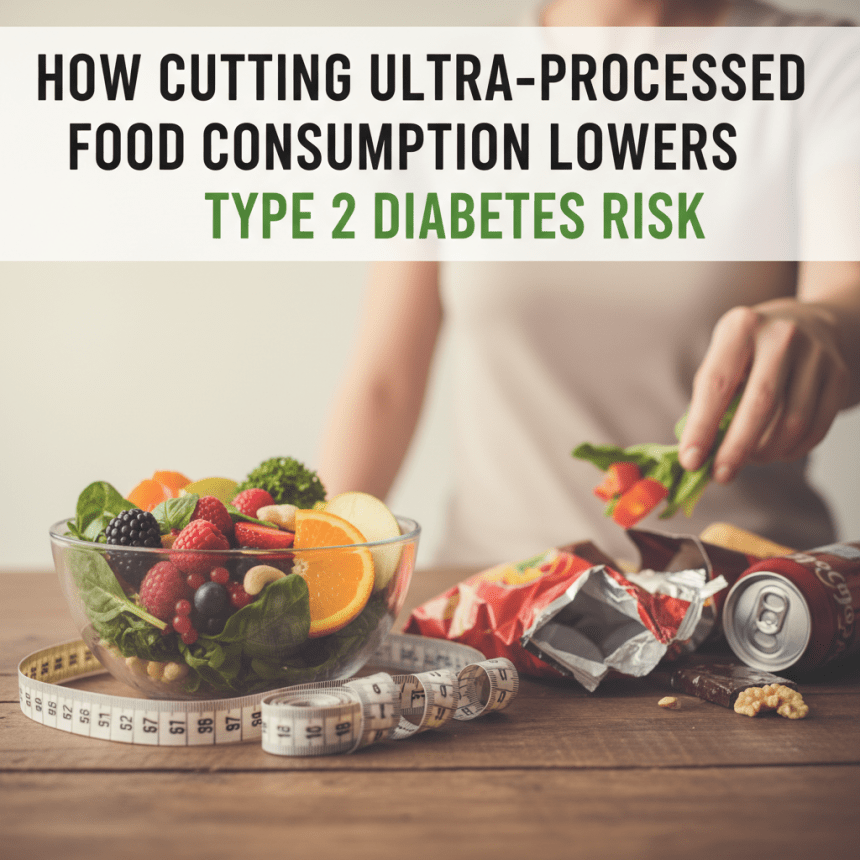
The global health landscape in early 2026 is witnessing a monumental shift in how we perceive the relationship between the industrialization of our food supply and the prevalence of metabolic diseases. For decades, the primary focus of diabetes prevention was centered on sugar and calorie counting. However, recent groundbreaking research and the newly released 2025 to 2030 Dietary Guidelines for Americans have redirected the spotlight toward a much more specific culprit: ultra-processed foods, often abbreviated as UPFs.
- Understanding the Definition of Ultra-Processed Foods in 2026
- The Landmark Research: Cutting Ultra-Processed Food for Diabetes Prevention
- Why Ultra-Processed Foods Trigger Insulin Resistance
- Identifying High Risk Ultra-Processed Foods
- The 2026 National Dietary Shift
- Practical Strategies for Reducing UPF Consumption Daily
- The Financial Reality of Whole Foods
- The Future of Metabolic Health Research
- Conclusion
- Sources and Further Reading
Current data suggests that more than half of the calories consumed by adults in the United States come from ultra-processed sources. This reliance on convenience over chemistry has led to a dramatic rise in Type 2 Diabetes cases, which now affects over 540 million people worldwide. The good news is that emerging evidence proves that even modest reductions in these foods can significantly lower the risk of developing insulin resistance and chronic high blood sugar.
Understanding the Definition of Ultra-Processed Foods in 2026
To effectively combat the risk of Type 2 Diabetes, we must first define exactly what constitutes an ultra-processed food. In the nutrition science of 2026, the NOVA classification system remains the gold standard for categorizing foods based on their level of industrial manipulation.
The NOVA Classification Breakdown
- Group 1: Unprocessed or minimally processed foods. These include natural edible parts of plants and animals, such as fresh fruits, vegetables, seeds, roots, and meats. They are often slightly altered by processes like chilling, freezing, or vacuum packaging to ensure they remain safe to eat without adding new substances.
- Group 2: Processed culinary ingredients. This category includes substances like oils, butter, sugar, and salt that are used to season and cook Group 1 foods.
- Group 3: Processed foods. These are simple industrial products made by adding Group 2 ingredients to Group 1 foods. Examples include canned vegetables in brine or freshly baked artisanal breads.
- Group 4: Ultra-processed foods. These are formulations of ingredients, mostly of exclusive industrial use, typically created through a series of industrial processes. They contain additives such as emulsifiers, flavor enhancers, and colorants designed to make the final product highly palatable and shelf stable.
The danger of Group 4 foods lies not just in their high sugar or fat content but in the loss of the original food matrix. When a whole grain is pulverized and recombined with stabilizers and sweeteners, the body processes those nutrients in a fundamentally different and often more harmful way.
The Landmark Research: Cutting Ultra-Processed Food for Diabetes Prevention
A pivotal study led by researchers at University College London, published in The Lancet Regional Health, has provided some of the most compelling evidence to date. This research analyzed the dietary habits of over 311,000 individuals across Europe over a period of nearly eleven years. The findings were stark: every 10 percent increase in the consumption of ultra-processed foods was linked to a 17 percent increase in the risk of Type 2 Diabetes.
Perhaps the most empowering takeaway from this study is the “replacement effect.” Researchers found that substituting just 10 percent of ultra-processed foods with minimally processed alternatives could reduce the risk of diabetes by as much as 18 percent. This suggests that the path to metabolic health does not require a complete lifestyle overhaul but rather a consistent series of better choices.
In late 2025 and early 2026, additional longitudinal studies confirmed these findings in younger populations. A study from the Keck School of Medicine of USC highlighted that in young adults aged 17 to 22, even modest increases in ultra-processed food intake led to a 64 percent higher risk of prediabetes. This underscores the urgency of dietary intervention early in life to prevent the onset of chronic metabolic dysfunction.
Why Ultra-Processed Foods Trigger Insulin Resistance
The biological mechanisms by which these foods damage our health are complex and multifaceted. Unlike whole foods, which require significant digestion to release their nutrients, ultra-processed foods are designed for rapid absorption.
The Glycemic Spike and Insulin Fatigue
Many ultra-processed items are stripped of fiber. Fiber acts as a natural brake, slowing down the absorption of sugar into the bloodstream. When fiber is absent, the body experiences a rapid spike in blood glucose. In response, the pancreas must pump out high levels of insulin to clear the sugar. Over time, the body’s cells become “numb” to insulin, a condition known as insulin resistance. This is the primary precursor to Type 2 Diabetes.
Inflammation and the Gut Microbiome
Emerging 2026 research has also focused heavily on the impact of food additives like emulsifiers and artificial sweeteners on the gut microbiome. These substances can alter the delicate balance of bacteria in our intestines, leading to low grade systemic inflammation. Chronic inflammation is now recognized as a major driver of metabolic disease, as it further impairs the body’s ability to regulate glucose effectively.
The Personal Fat Threshold
Another concept gaining traction this year is the Personal Fat Threshold. Some researchers suggest that ultra-processed foods contribute to the accumulation of “ectopic fat,” which is fat stored in organs like the liver and pancreas rather than under the skin. When the liver becomes fatty, it becomes resistant to insulin, and when the pancreas is exposed to excess fat, its insulin producing beta cells begin to fail.
Identifying High Risk Ultra-Processed Foods
Not all foods categorized as ultra-processed carry the same level of risk. The 2026 data allows us to prioritize which foods to cut first for maximum impact on blood sugar health.
The Top Culprits
- Sugar Sweetened and Artificially Sweetened Beverages: Sodas, energy drinks, and even some “diet” juices are among the most dangerous for metabolic health. Sweetened beverages alone can account for nearly 40 percent of an individual’s ultra-processed intake.
- Savoury Snacks and Processed Meats: Packaged chips, crackers, sausages, and deli meats are often high in sodium and industrial fats that contribute to hypertension and insulin resistance.
- Ready to Eat Meals: Frozen pizzas, microwaveable dinners, and instant noodles are typically laden with preservatives and refined carbohydrates.
The Nuance of UPFs
Interestingly, some foods that fall under the ultra-processed umbrella may not be as harmful. Whole grain breads, certain breakfast cereals with high fiber, and plant based alternatives have shown a neutral or even slightly protective effect in some studies. This is likely due to their remaining fiber and nutrient content. The key for consumers in 2026 is to look past the “ultra-processed” label and examine the specific ingredient list and fiber to sugar ratio.
The 2026 National Dietary Shift
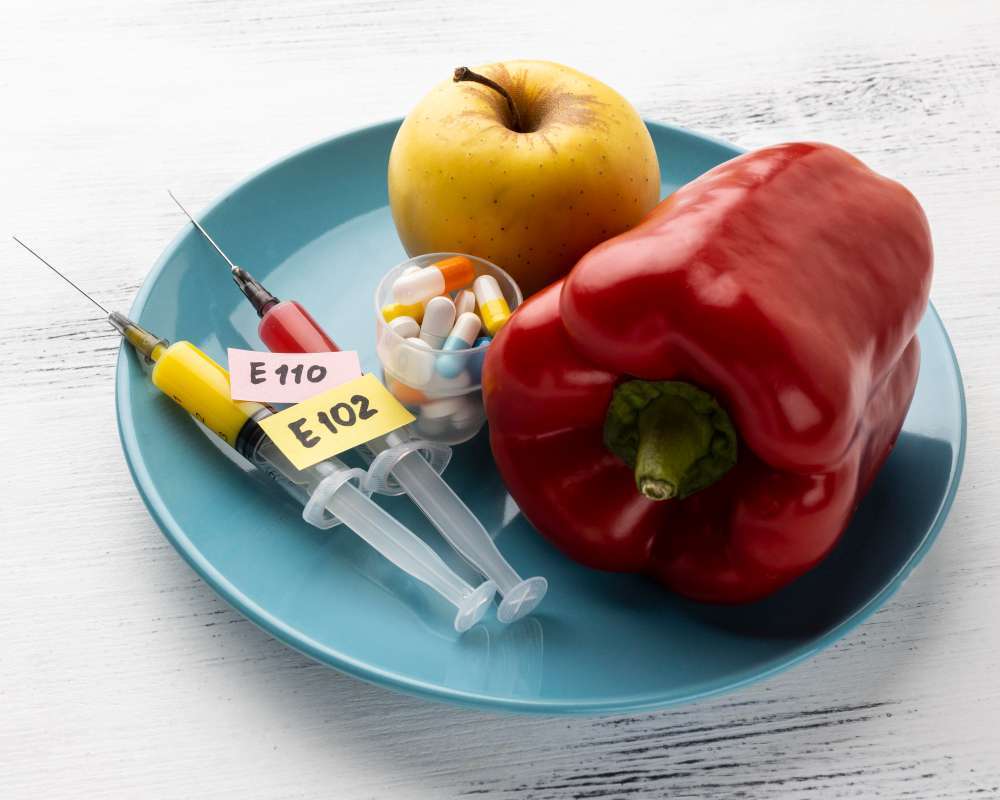
On January 7, 2026, the United States government released the 2025 to 2030 Dietary Guidelines for Americans. For the first time in history, these guidelines explicitly recommend eating less ultra-processed food. This represents a historic reset in nutrition policy, moving away from a purely nutrient based approach to one that emphasizes the quality and processing of the food itself.
Key Takeaways from the 2026 Guidelines
The new guidelines advocate for a “Real Food” approach. They prioritize high quality proteins, healthy fats, fruits, vegetables, and whole grains while advising a total avoidance of added sugars and non nutritive sweeteners for children. For adults, the recommendation is that no single meal should contain more than 10 grams of added sugar.
This policy change is expected to trigger shifts in federal programs like SNAP and WIC, potentially restricting the purchase of high sugar beverages and highly processed snacks. As these policies take hold, the availability and affordability of whole foods are expected to improve across the country.
Practical Strategies for Reducing UPF Consumption Daily
Transitioning away from a diet high in processed foods can feel daunting, especially given the convenience and low cost of these products. However, several practical strategies can help bridge the gap.
The Art of the Swap
Instead of focusing on what you cannot eat, focus on what you can replace.
- Replace sugary cereals with steel cut oats topped with fresh berries.
- Swap packaged deli meats for roasted chicken or legumes like chickpeas and lentils.
- Choose sparkling water with a splash of real fruit juice instead of soda.
- Replace white, refined bread with sprouted grain or artisanal sourdough bread.
Batch Cooking and Meal Prepping
One of the main reasons people turn to ultra-processed foods is a lack of time. Dedicating a few hours on a Sunday to batch cook grains, roast vegetables, and prepare proteins can ensure that you have “ready to eat” whole food options throughout the week. This reduces the temptation to reach for a frozen meal or order fast food during a busy workday.
Reading Labels Like a Pro
In 2026, food labels are more transparent than ever, but they still require a discerning eye. A general rule of thumb used by nutritionists today is the “five ingredient rule.” If a product contains more than five ingredients, or if it contains ingredients you wouldn’t find in a home kitchen (like maltodextrin, soy lecithin, or high fructose corn syrup), it is likely ultra-processed.
The Financial Reality of Whole Foods
A common criticism of the push to reduce ultra-processed food is the cost. It is a reality that, in many areas, a bag of chips is cheaper than a bag of apples. However, when viewed through the lens of long term health, the “savings” of ultra-processed foods are an illusion. The cost of managing Type 2 Diabetes, including medications like insulin or GLP-1 agonists, far outweighs the cost of a whole food diet.
To save money on whole foods, experts in 2026 recommend:
- Buying in bulk: Grains, beans, and nuts are much cheaper when bought in larger quantities.
- Frozen and Canned Options: Frozen vegetables and canned beans (rinsed to remove excess salt) are just as nutritious as fresh versions and have a much longer shelf life, reducing food waste.
- Seasonal Eating: Purchasing produce that is in season is almost always more affordable.
The Future of Metabolic Health Research
As we look toward the remainder of 2026 and beyond, the research community is shifting its focus toward personalized nutrition. We are beginning to understand that different people react to ultra-processed foods in different ways based on their genetics and their microbiome.
Ongoing trials are investigating whether certain “healthy” ultra-processed foods can be reformulated to remove the additives that cause inflammation while keeping the convenience that modern life requires. Furthermore, there is a growing movement to hold food manufacturers accountable for the metabolic impact of their products, similar to how the tobacco industry was regulated in the late 20th century.
Conclusion
The link between ultra-processed food consumption and Type 2 Diabetes is no longer a matter of debate; it is a scientific certainty. By understanding the NOVA classification, recognizing the biological impact of industrial additives, and making conscious daily substitutions, we can take control of our metabolic destiny.
Reducing the intake of these foods is perhaps the most significant action an individual can take in 2026 to lower their risk of chronic disease and improve their overall quality of life. The journey toward health starts not with a restrictive diet, but with a return to real, whole food.
Sources and Further Reading
- University College London: Replacing ultra-processed foods in diet may reduce type 2 diabetes risk
- News Medical: Ultra-processed food consumption increases the risk for prediabetes in young adults
- The 2025 to 2030 Dietary Guidelines: Understanding the New Pyramid
- National Institutes of Health (NIH): Dejunking Your Diet
- ResearchGate: Ultra-processed foods and the risk of diabetes: a review