



Rising anger over ‘lop-sided’ and ‘immoral’ US health funding pacts with African countries
Zimbabwe refuses to sign agreement and Kenya faces a court case over data sharing as new aid deals come under scrutiny
A series of bilateral health agreements being negotiated between African countries and the administration of President Donald Trump have been labelled “clearly lop-sided” and “immoral” amid growing outrage at US demands, including countries being forced to share biological resources and data.
It emerged this week that Zimbabwe had halted negotiations with the US for $350m (£258m) of health funding, saying the proposals risked undermining its sovereignty and independence.
A letter sent by Albert Chimbindi, Zimbabwe’s secretary for foreign affairs and international trade, in December that was made public said the president, Emmerson Mnangagwa, “directed that Zimbabwe must discontinue any negotiation, with the USA, on the clearly lop-sided MoU [memorandum of understanding] that blatantly compromises and undermines the sovereignty and independence of Zimbabwe as a country”.
Meanwhile, a deal with Zambia – which has been linked to a separate agreement with the US on “collaboration in the mining sector” – has yet to be finalised, with Asia Russell, director of the HIV advocacy organisation Health Gap, accusing the US of “conditioning life-saving health services on plundering the mineral wealth of the country. It’s shameless exploitation, which is immoral.”
At least 17 African countries have signed deals with the US, collectively securing $11.3bn in health aid but raising concerns over concessions made in return.
Critics say there has been a lack of consultation with the community groups that provide a lot of the healthcare in African countries, and have raised concerns over data privacy – the US requests patient record data as part of the deals – and the prioritisation of faith-based healthcare providers.
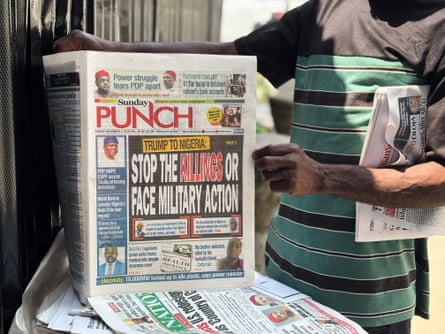
In Nigeria, US statements suggest the funding is contingent on authorities tackling what the Trump administration refers to as the persecution of Christians in the country.
The Trump administration is negotiating the bilateral agreements with countries as part of its America First global health strategy. The new approach follows the US dismantling what had been the flagship aid body, USAID, and pulling back from large multilateral bodies such as the World Health Organization.
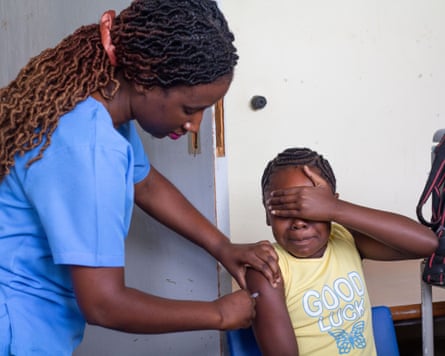
The rapid push for deals is being seen as part of US manoeuvres to establish and entrench power on the continent. The deals also commit African nations to rely on US regulatory approval of new drugs and technologies before rolling them out.
The US-Rwanda deal is explicit that it will bring increased US private sector involvement in the country’s health sector.
A Zimbabwean government spokesperson said on Wednesday that the US had asked for “sensitive health data, including pathogen samples”, but without any corresponding guarantee of access to any resulting medical innovations.
“Zimbabwe was being asked to share its biological resources and data over an extended period, with no corresponding guarantee of access to any medical innovations – such as vaccines, diagnostics or treatments – that might result from that shared data,” he said. “In essence, our nation would provide the raw materials for scientific discovery without any assurance that the end products would be accessible to our people should a future health crisis emerge.”
He said Zimbabwe was also afraid bilateral agreements would undermine WHO systems designed to ensure fairness in any future pandemic response.
“Development aid should empower nations, not create dependencies or serve as a vehicle for strategic extraction,” he said. “When financial assistance is contingent upon concessions that touch upon national security, data sovereignty, or access to strategic resources, it fundamentally alters the nature of the relationship from one of partnership to one of unequal exchange.”
The US ambassador to Zimbabwe, Pamela Tremont, said on X she regretted the country’s decision.
“We believe this collaboration would have delivered extraordinary benefits for Zimbabwean communities – especially the 1.2 million men, women and children currently receiving HIV treatment through US-supported programmes,” she said. “We will now turn to the difficult and regrettable task of winding down our health assistance in Zimbabwe.”
Most of the new US-African deals are not publicly available, although the Guardian has seen a draft template, and a handful of documents that appear to be final agreements are in circulation.
The five-year deals commit African countries to gradually provide a greater amount of domestic funding, including for health-worker salaries and equipment – replacing US investment which will decrease each year. If countries fail to meet those commitments, US funding may be withdrawn.
US drafts also include requests for access to health data and information on new or emerging pathogens for up to 25 years, although many countries appear to have negotiated shorter commitments.
In Kenya, the first country to sign a deal, a court case brought by campaigners over data sharing terms has put the agreement on hold. The Consumer Federation of Kenya (Cofek), one of the groups bringing the case, said Kenya risked “ceding strategic control of its health systems if pharmaceuticals for emerging diseases and digital infrastructure (including cloud-storage of raw data) are externally controlled”.
Uganda’s attorney general, Kiryowa Kiwanuka, sought to downplay similar fears about his country’s deal in an interview hosted on X, saying it was “not true” that citizens’ health data and privacy was at risk.
“We have our data protection and privacy law, and the agreement is riddled with that,” he said.
One reproductive and gender justice campaigner in Uganda questioned whether the increased domestic funding targets were realistic, given African governments’ failure to meet the 2001 Abuja declaration’s 15% minimum national budget allocation to health.
She said there had been “no public participation” in the negotiation process, and non-governmental organisations were expected to be further sidelined. Specialist clinics offering care to marginalised groups such as the LGBTQ+ community were unlikely to see funding “trickle down” to them, she said.
In Nigeria, according to a US embassy statement, the agreement for $2.1bn of US funding “places a strong emphasis on Christian faith-based healthcare providers”.
Fadekemi Akinfaderin of Fòs Feminista wrote on Substack that “singling out one religious group in a deeply plural country risks inflaming existing tensions and politicising health”. She also warned that “faith-based facilities are less likely to provide family planning services, STI prevention and some vaccinations, due to ideological beliefs”, urging Nigeria’s health ministry to ensure coverage gaps did not result from the agreement.
Rachel Bonnifield, director of global health policy and senior fellow at the Center for Global Development thinktank, said that despite the criticisms there were good reasons for countries to sign deals including “very substantial amounts of funding – in some cases equivalent to 50% or more of governments’ total domestic spending on health – to support very basic and much needed health services”.
A shift to government control of health funds, rather than distribution through US NGOs, was also likely to be attractive, she said, with the deals seen as a chance to establish new, broader relationships with the US.
“Even transactional negotiations can be seen as treating African governments like peers and partners versus the recipients of American charity,” said Bonnifield.
📰 This article was curated and published by
HEALTH GUIDANCE HUB
— your trusted source for the latest health news, medical research, and wellness guidance.
Visit us at https://healthguidancehub.space/ for more health insights.
