


Beyond amyloid plaques: AI reveals hidden chemical changes across the Alzheimerâs brain
A powerful new brain map reveals Alzheimerâs as a sweeping chemical upheavalânot just a plaque problem.
- Date:
- March 1, 2026
- Source:
- Rice University
- Summary:
- Scientists at Rice University have produced the first full, dye-free molecular atlas of an Alzheimerâs brain. By combining laser-based imaging with machine learning, they uncovered chemical changes that spread unevenly across the brain and extend beyond amyloid plaques. Key memory regions showed major shifts in cholesterol and energy-related molecules. The findings hint that Alzheimerâs is a whole-brain metabolic disruptionânot just a protein problem.
- Share:
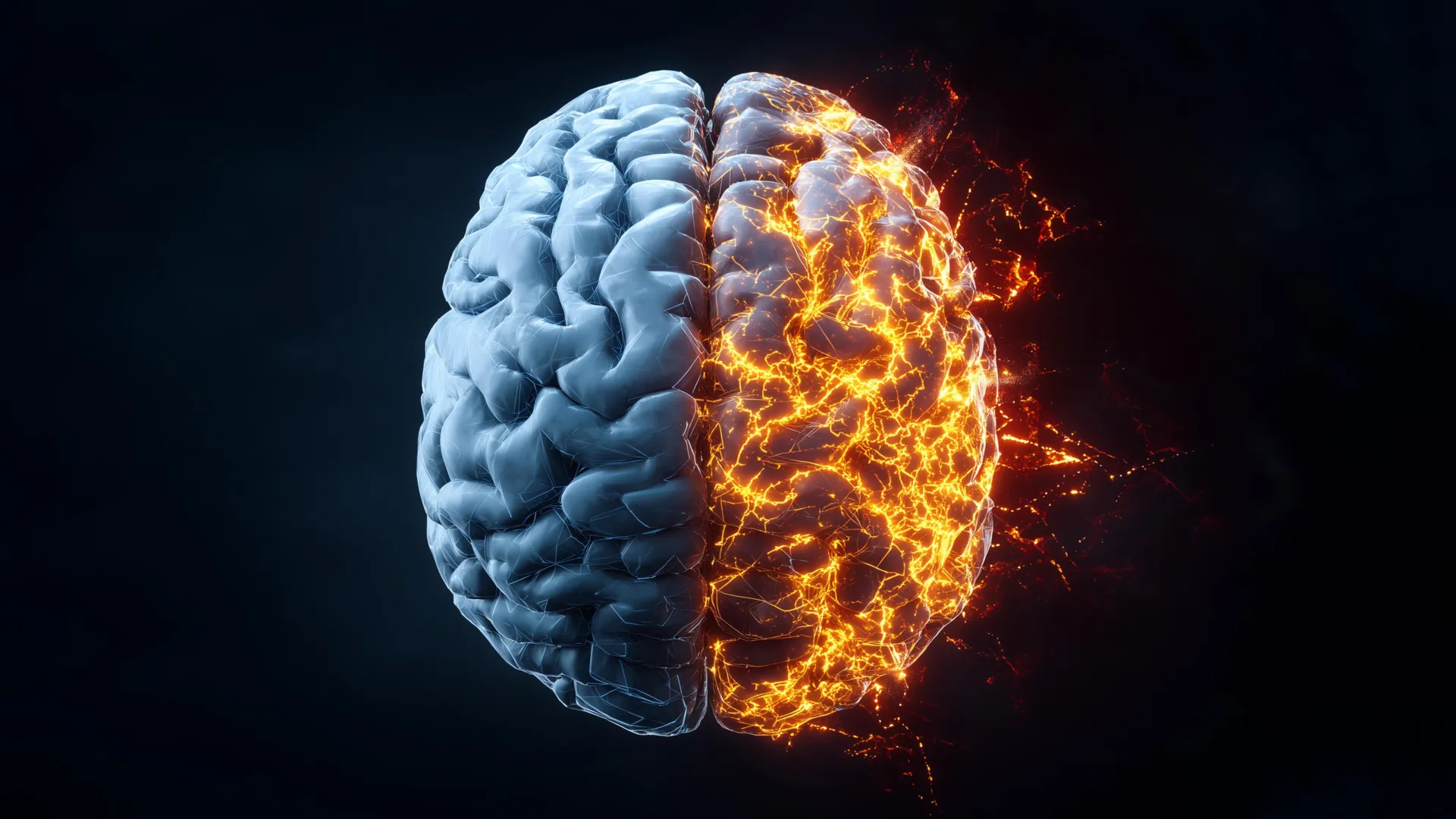
Researchers at Rice University have produced the first comprehensive, label free molecular atlas of the Alzheimer’s brain in an animal model. The work offers a deeper look at how the disease begins and spreads. Alzheimer’s claims more lives each year than breast cancer and prostate cancer combined, underscoring the urgency of understanding what drives it.
Using an advanced light based imaging method combined with machine learning, the team examined brain tissue from both healthy and Alzheimer’s affected animals. Their results, published in ACS Applied Materials and Interfaces, reveal that chemical changes linked to Alzheimer’s are not confined to amyloid plaques. Instead, these alterations appear throughout the brain in uneven and complex patterns.
Laser Imaging Reveals Brain Chemistry in Detail
To detect these subtle shifts, the scientists turned to hyperspectral Raman imaging. This sophisticated form of Raman spectroscopy uses a laser to detect the unique chemical fingerprints of molecules within tissue.
“Traditional Raman spectroscopy takes one measurement of chemical information per molecular site,” said Ziyang Wang, an electrical and computer engineering doctoral student at Rice who is a first author on the study. “Hyperspectral Raman imaging repeats this measurement thousands of times across an entire tissue slice to build a full map. The result is a detailed picture showing how chemical composition varies across different regions of the brain.”
The researchers scanned entire brains slice by slice, compiling thousands of overlapping measurements to build high resolution molecular maps of both healthy and diseased tissue. Because the imaging was label free, the samples were not treated with dyes, fluorescent proteins or molecular tags.
“This means we observed the brain as is, capturing a complete, unaltered portrait of its chemical makeup,” Wang said. “I think this makes the approach more unbiased and better suited for discovering new disease-related changes that might otherwise be missed.”
Machine Learning Maps Uneven Alzheimer’s Damage
The imaging process generated enormous amounts of data, which the team analyzed using machine learning (ML). They first applied unsupervised ML, allowing algorithms to detect natural patterns in the chemical signals without prior assumptions. These models sorted tissue based entirely on its molecular characteristics. The researchers then used supervised ML, training models to distinguish between Alzheimer’s and non Alzheimer’s samples. This step helped determine how strongly different brain regions reflected Alzheimer’s related chemistry.
“We found that the changes caused by Alzheimer’s disease are not spread evenly across the brain,” Wang said. “Some regions show strong chemical changes, while others are less affected. This uneven pattern helps explain why symptoms appear gradually and why treatments that focus on only one problem have had limited success.”
Metabolic Disruption in Memory Regions
Beyond protein buildup, the study identified broader metabolic differences between healthy and Alzheimer’s brains. Levels of cholesterol and glycogen varied across regions, with the most dramatic contrasts appearing in areas responsible for memory, particularly the hippocampus and cortex.
“Cholesterol is important for maintaining brain cell structure, and glycogen serves as a local energy reserve,” said Shengxi Huang, associate professor of electrical and computer engineering and materials science and nanoengineering and corresponding author on the study. “Together, these findings support the idea that Alzheimer’s involves broader disruptions in brain structure and energy balance, not only protein buildup and misfolding,” added Huang, who is also a member of the Ken Kennedy Institute, the Rice Advanced Materials Institute and the Smalley-Curl Institute.
A Broader View of Alzheimer’s Progression
The project grew out of ongoing discussions about new ways to study the Alzheimer’s brain.
“At first, we were measuring only small areas of brain tissue,” Wang said. “Then I thought, what if we could map the entire brain and gain a much broader view? It took several rounds of testing and trial and error before the measurements and analysis worked well together.”
When the complete chemical map finally came together, the impact was immediate.
“Patterns emerged that had not been visible under regular imaging,” Wang said. “Seeing those results was deeply satisfying. It felt like revealing a hidden layer of information that had been there all along, waiting for the right way to be analyzed.”
The research was supported by the National Science Foundation (2246564, 1934977), the National Institutes of Health (1R01AG077016) and the Welch Foundation (C2144).
Story Source:
Materials provided by Rice University. Note: Content may be edited for style and length.
Journal Reference:
- Ziyang Wang, Jeewan C. Ranasinghe, Dennis C. Y. Chan, Ashley Gomm, Rudolph E. Tanzi, Can Zhang, Nanyin Zhang, Shengxi Huang. Machine Learning-Enhanced Hyperspectral Raman Imaging for Label-Free Molecular Atlas of Alzheimerâs Brain. ACS Applied Materials, 2025; DOI: 10.1021/acsami.5c22623
Cite This Page:
📰 This article was curated and published by
HEALTH GUIDANCE HUB
— your trusted source for the latest health news, medical research, and wellness guidance.
Visit us at https://healthguidancehub.space/ for more health insights.
