


Hidden ingredient in Ozempic and Wegovy tablets raises new gut health questions
- Date:
- March 1, 2026
- Source:
- Adelaide University
- Summary:
- Scientists are taking a closer look at the pill forms of Wegovy and Ozempic. In an animal study, the ingredient SNAC, which helps semaglutide survive the stomach and enter the bloodstream, was associated with changes in gut bacteria, inflammation markers, and a brain linked protein. The research does not show harm in people, but it raises new questions about the long term effects of daily exposure.
- Share:
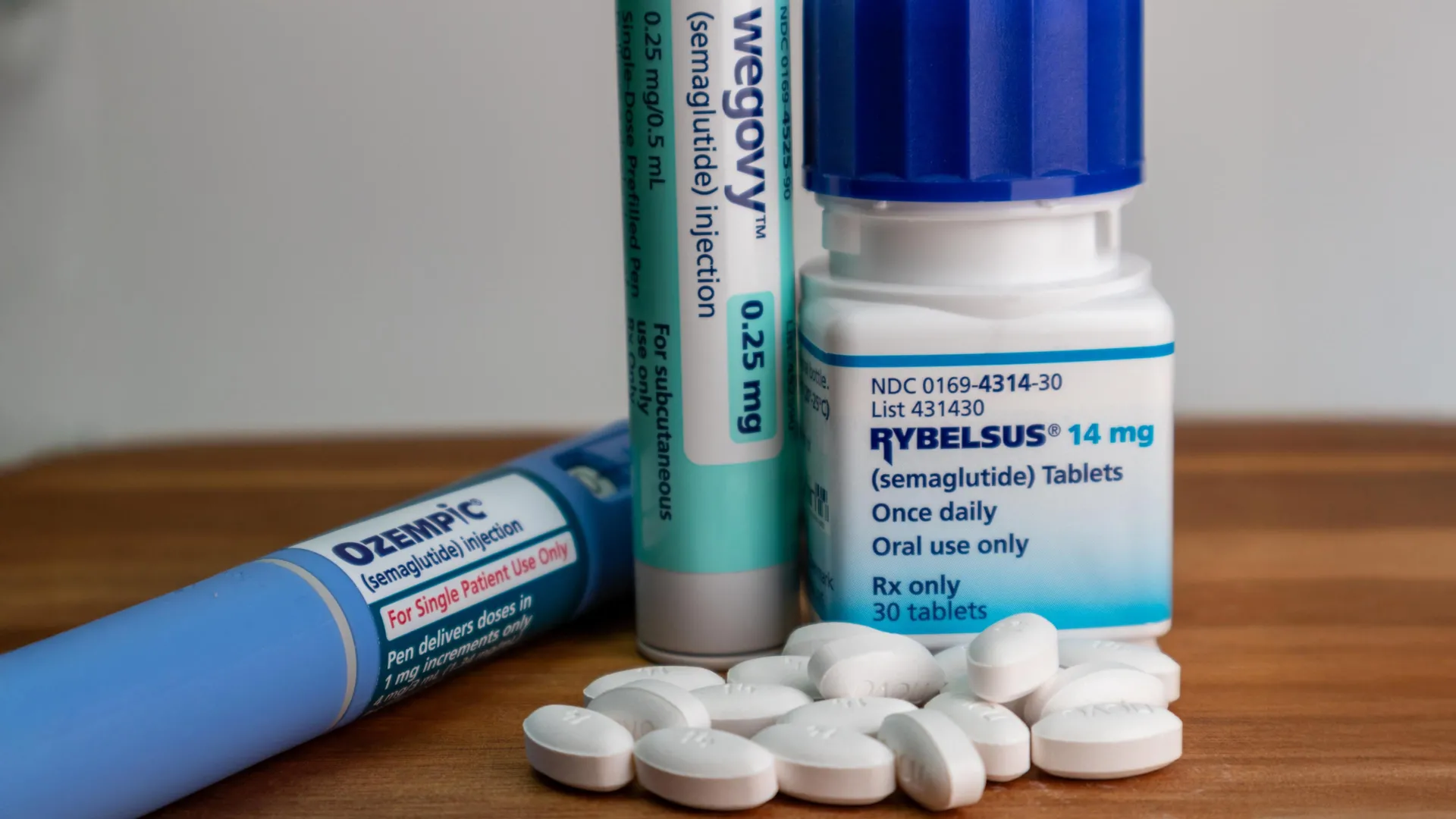
Researchers at Adelaide University are taking a closer look at the pill versions of popular weight loss medications. Their new findings suggest that salcaprozate sodium (SNAC), the compound that helps the drug get absorbed in tablet form, may have biological effects that extend beyond its intended role.
This is the first in vivo study to systematically investigate how repeated exposure to SNAC affects gut microbiota, metabolic function, and related health markers. Using an animal model over a 21 day period, scientists observed several notable changes:
- A decline in beneficial gut bacteria that break down dietary fibre
- Lower levels of short chain fatty acids, which support the gut lining and help control inflammation
- Increased levels of inflammatory markers in the blood
- Greater liver weight, a possible sign of low grade inflammation
- A smaller cecum — the part of the intestine where gut bacteria break down fibre and produce protective compounds
- Reduced levels of a brain derived protein associated with cognitive impairment
The study does not prove that SNAC is harmful. However, the results indicate that the absorption enhancer may influence the body in ways that go beyond simply allowing semaglutide to function as a pill.
Why SNAC Is Used in Semaglutide Tablets
Semaglutide is the active ingredient in widely used weight loss medications like Wegovy and Ozempic. When given by injection, the drug enters the bloodstream directly. In tablet form, it depends on SNAC to shield it from being broken down by stomach enzymes and to help it pass into the bloodstream. Without SNAC, oral semaglutide would not be effective.
The United States approved a tablet version of Wegovy late last year. Because pills are often seen as more convenient and potentially less expensive than injections, daily exposure to SNAC could rise significantly as more people choose oral options.
Rising Use of Obesity Medications
Obesity remains a major global health issue. Around 890 million adults and 160 children worldwide are living with obesity, representing roughly one in eight people. Among OECD countries, the United States has the highest rate, with 43% of people age 15 and older affected. Australia ranks sixth at 31%, above the OECD average of 25%.
Prescriptions for medications such as Ozempic and Wegovy have climbed rapidly in Australia in recent years, reflecting broader global trends.
Researchers Call for Further Investigation
Lead author Amin Ariaee, a PhD candidate at Adelaide University, said the rapid expansion of oral obesity treatments that utilize SNAC makes it important to fully understand how every ingredient in these medications affects the body over time.
“Obesity is a complex, chronic disease with serious health consequences. These medicines are highly effective and are helping many people,” Ariaee says.
“But as oral versions become more widely used, we need to understand what repeated, long-term exposure to all ingredients in the pill means for the body — not just the active drug.
“While SNAC enables semaglutide to be taken as a tablet, our study found that it was also associated with shifts in potentially harmful gut bacteria, elevated inflammatory markers and depletion of proteins linked to cognitive impairment. These findings warrant further investigation.”
Senior Research Fellow Dr. Paul Joyce emphasized that the findings come from animal research and should be interpreted with caution.
“Importantly, our findings do not prove that SNAC causes harm in humans,” Dr. Joyce says.
“However, they do show that the ingredient enabling these tablets to work may have adverse biological effects beyond drug absorption.
“These medicines are typically taken daily and often for long periods. As their use expands globally, it becomes increasingly important to evaluate all components of these therapies, not just the active compound.”
Story Source:
Materials provided by Adelaide University. Note: Content may be edited for style and length.
Journal Reference:
- Amin Ariaee, Karim Noueihad, Alex Hunter, Anthony Wignall, Hannah R. Wardill, Maya Davies, Clive A. Prestidge, Paul Joyce. Gut microbiota perturbation and systemic inflammation are associated with salcaprozate sodium (SNAC)-enabled oral semaglutide delivery. Journal of Controlled Release, 2026; 392: 114711 DOI: 10.1016/j.jconrel.2026.114711
Cite This Page:
📰 This article was curated and published by
HEALTH GUIDANCE HUB
— your trusted source for the latest health news, medical research, and wellness guidance.
Visit us at https://healthguidancehub.space/ for more health insights.
