


An experimental model reproduces creeping fat associated with Crohn’s disease and facilitates its study


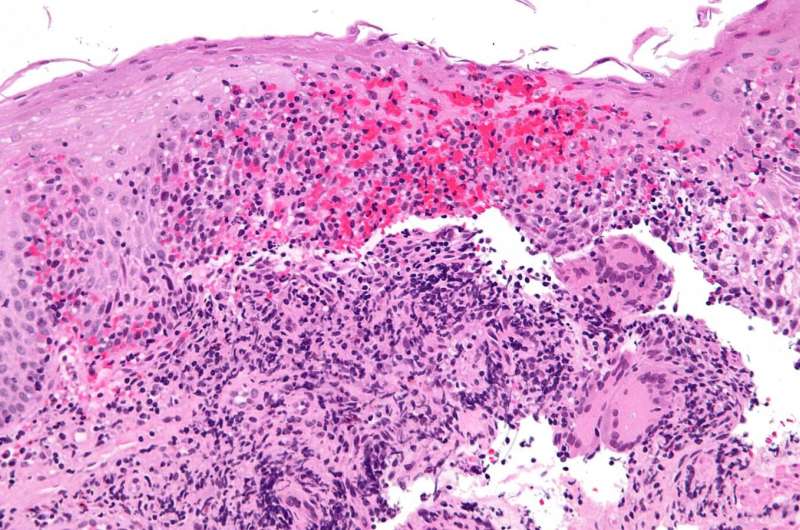
A team of researchers from the Germans Trias i Pujol Research Institute (IGTP) and the Institut de Recerca Biomèdica Catalunya Sud (IRB CatSud, formerly IISPV) has published a study in the journal Inflammatory Bowel Diseases describing an experimental rat model that reproduces key features of creeping fat, the accumulation of adipose tissue surrounding inflamed intestinal segments and one of the characteristic pathological features of Crohn’s disease.
The study shows that the colitis model induced with 2,4,6-trinitrobenzenesulfonic acid (TNBS) develops mesocolic adipose tissue hyperplasia that presents macroscopic, histological, immunological, and molecular similarities to the creeping fat observed in patients with Crohn’s disease. According to the authors, this model may facilitate the study of the role of this tissue in disease progression and its complications.
The first author of the study, Dr. Laura Clua, explains that “creeping fat is not simply a growth of adipose tissue around the inflamed intestine, but rather a metabolically and immunologically active tissue. In the model we observe a significant infiltration of immune cells and a high expression of pro-inflammatory cytokines, features that have also been described in patients.”
The results show a relationship between the severity of transmural intestinal inflammation and the development of mesocolic hyperplasia, as well as the presence of bacteria translocated to the subserosa. According to the authors, these observations support the hypothesis that the intestinal microbiota may contribute to the remodeling of mesenteric adipose tissue.
Co-author Roger Suau, corresponding author of the article, highlights that “we have characterized the model at several levels—macroscopic, histopathological, immunohistochemical, and transcriptomic—which has allowed us to compare it with the characteristics described in humans. Approximately half of the animals develop mesocolic hyperplasia with features similar to the creeping fat described in Crohn’s disease.”
For Dr. Carolina Serena (IRB CatSud), leader of the Inflammatory Bowel Diseases research group (IBODI), says this model may be useful for further investigating the mechanisms involved in the disease. “Having an experimental model that reproduces this phenomenon facilitates the study of the relationship between intestinal inflammation, bacterial translocation and remodeling of mesenteric adipose tissue.”
According to Dr. Josep Manyé, researcher in the Inflammatory Bowel Diseases Research Group (GReMII) at IGTP, “This type of experimental model may contribute to a better understanding of the role of creeping fat in Crohn’s disease and help explore new therapeutic approaches.”
Researchers from the Hospital Universitari Germans Trias i Pujol, Viladecans Hospital, and CIBEREHD also participated in the study, as well as other teams from IGTP, including the High-Content Genomics and Bioinformatics facility, led by Lauro Sumoy, and the Translational Research in Hepatic Diseases group, led by Ramon Bartolí.
The authors note that the model provides a reproducible experimental platform to study the role of mesenteric adipose tissue in inflammatory bowel disease and to facilitate the evaluation of new therapeutic strategies in preclinical research phases.
Publication details
Laura Clua et al, Characterization of mesocolic adipose hyperplasia in a rat 2,4,6-trinitrobenzenesulfonic acid colitis model and comparison to creeping fat in Crohn disease, Inflammatory Bowel Diseases (2026). DOI: 10.1093/ibd/izaf328
Journal information:
Inflammatory Bowel Diseases
Key medical concepts
Clinical categories
An experimental model reproduces creeping fat associated with Crohn’s disease and facilitates its study (2026, March 11)
retrieved 11 March 2026
from https://medicalxpress.com/news/2026-03-experimental-fat-crohn-disease.html
part may be reproduced without the written permission. The content is provided for information purposes only.
📰 This article was curated and published by
HEALTH GUIDANCE HUB
— your trusted source for the latest health news, medical research, and wellness guidance.
Visit us at https://healthguidancehub.space/ for more health insights.
