


New hypertension guideline does not recommend routine treatment for all adults over 65


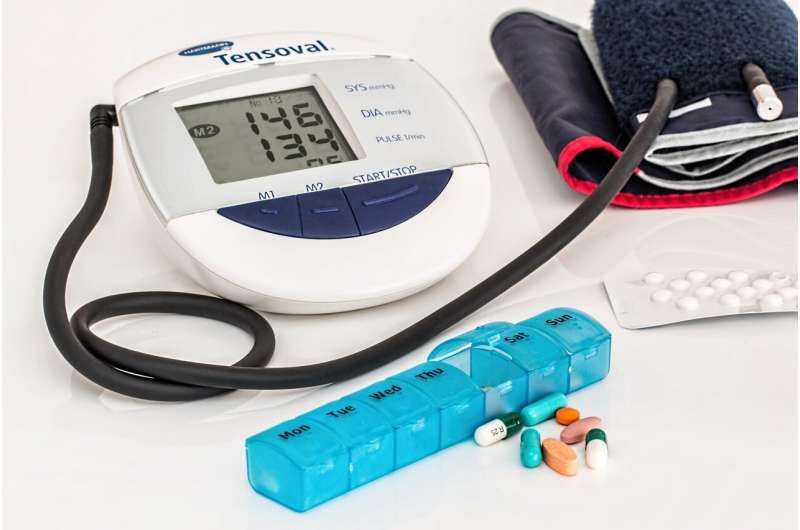
An analysis of the 2025 AHA/ACC hypertension guidelines found that under the new guidelines, about 11% of adults ages 65 to 79 with stage I hypertension would no longer qualify for blood pressure medication, a major shift from previous rules that recommended treatment for all adults in this age range. The newly exempt group is made up of generally healthy, lower-risk older adults whose predicted 10-year cardiovascular risk falls below the new treatment threshold. The analysis is published in the Annals of Internal Medicine.
Researchers from the Albert Einstein College of Medicine, Yale School of Medicine, and The Cleveland Clinic Foundation assessed how the updated 2025 hypertension guidelines, which now recommend treatment based on predicted cardiovascular risk rather than age alone, would change who qualifies for medication. Researchers analyzed national health survey data from 2013–2020 for adults ages 65 to 79, identifying those with stage I hypertension who were not already on treatment.
They found that while all older adults in this category would have been recommended medication under previous guidelines, the new risk-based approach reclassifies about 1 in 9 as not needing immediate pharmacotherapy. These individuals were typically women in their mid-60s with otherwise low cardiovascular risk scores. The authors conclude that the updated guideline better targets treatment to those most likely to benefit and reflects a shift toward more personalized, risk-based care for older adults.
Publication details
Sridhar Mangalesh et al, Risk-Guided Antihypertensive Treatment Eligibility in Older Adults Under Updated Hypertension Guidelines, Annals of Internal Medicine (2026). DOI: 10.7326/annals-25-04519
Journal information:
Annals of Internal Medicine
Clinical categories
CardiologyPreventive medicineCommon illnesses & PreventionFamily medicineHealthy aging
New hypertension guideline does not recommend routine treatment for all adults over 65 (2026, March 17)
retrieved 18 March 2026
from https://medicalxpress.com/news/2026-03-hypertension-guideline-routine-treatment-adults.html
part may be reproduced without the written permission. The content is provided for information purposes only.
📰 This article was curated and published by
HEALTH GUIDANCE HUB
— your trusted source for the latest health news, medical research, and wellness guidance.
Visit us at https://healthguidancehub.space/ for more health insights.
