


New AI tool predicts cancer spread with surprising accuracy
A new AI tool can predict which cancers will spreadâbefore itâs too late.
- Date:
- March 21, 2026
- Source:
- Université de Genève
- Summary:
- Researchers have discovered that cancer spread isnât randomâit follows a kind of biological âprogram.â By studying colon tumor cells, they identified gene patterns that signal whether a cancer is likely to metastasize. Their AI model, MangroveGS, can predict this risk with about 80% accuracy and even works across multiple cancer types. This could transform how doctors decide who needs aggressive treatment and who doesnât.
- Share:
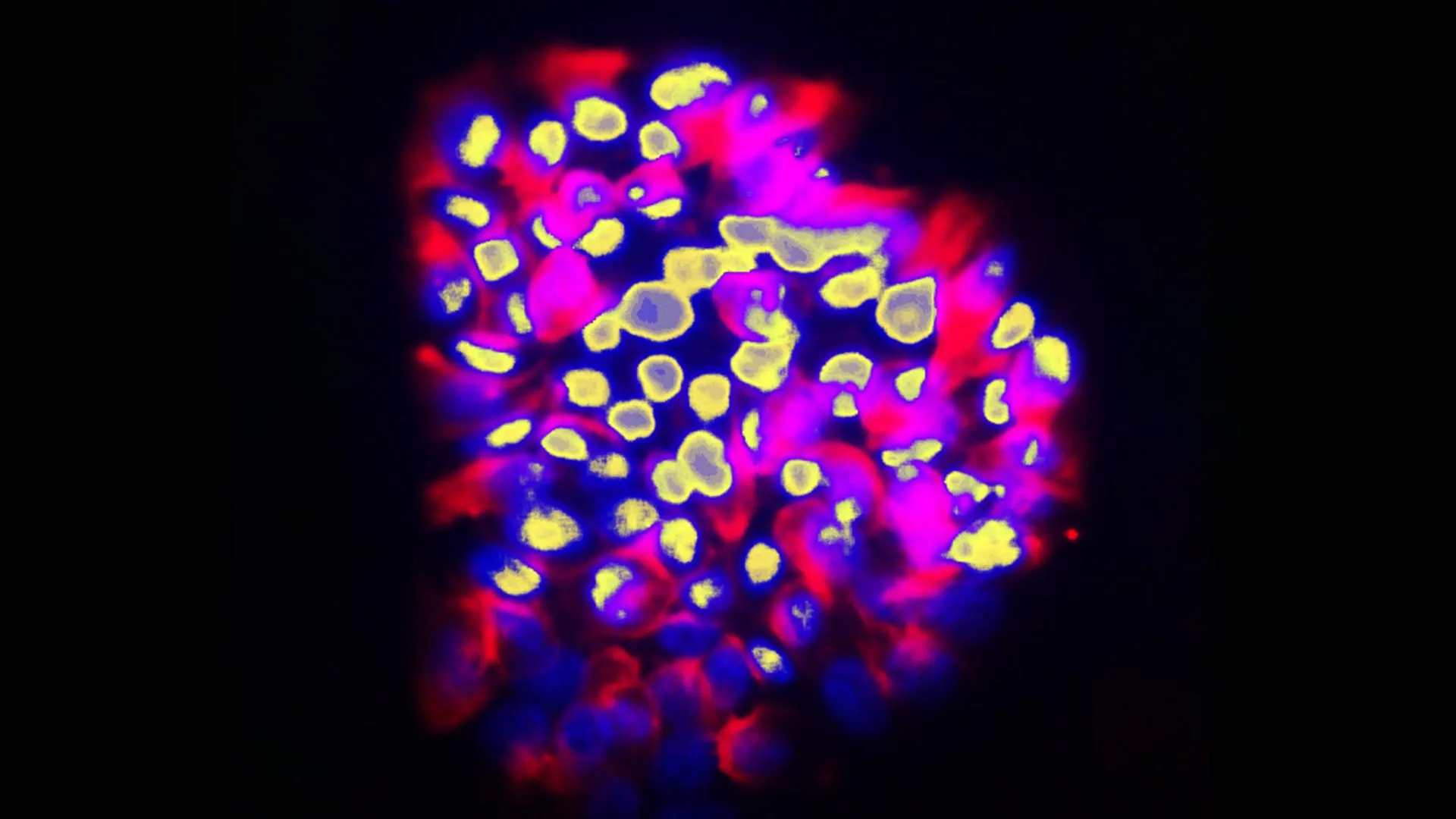
Why do some tumors spread while others remain localized? Scientists still do not fully understand what controls a cancer cell’s ability to metastasize, but answering this question is essential for improving patient care. Researchers at the University of Geneva (UNIGE) studied cells from colon cancer and identified key factors that influence whether a tumor is likely to spread. They also uncovered specific gene expression patterns that can be used to estimate that risk.
Building on these findings, the team developed an artificial intelligence tool (MangroveGS) that converts these genetic signals into highly reliable predictions across multiple cancer types. The study, published in Cell Reports, could lead to more personalized treatments and help uncover new therapeutic targets.
Cancer as a Distorted Development Process
“The origin of cancer is often attributed to ‘anarchic cells’,” explains Ariel Ruiz i Altaba, professor in the Department of Genetic Medicine and Development at the UNIGE Faculty of Medicine, who led the study. “However, cancer should rather be understood as a distorted form of development.” Genetic and epigenetic changes can reactivate biological programs that are normally turned off after early development, ultimately driving tumor formation.
Rather than being random, cancer appears to follow structured biological rules. “The challenge is therefore to find the keys to understanding its logic and form. And, in the case of metastases, to identify the characteristics of the cells that will separate from the tumor to create another one elsewhere in the body.”
Tracking Metastatic Cancer Cells
Metastasis is responsible for most cancer deaths, especially in colon, breast, and lung cancers. By the time cancer cells are detected circulating in the blood or lymphatic system, the disease has often already begun to spread. Although scientists understand many of the mutations that lead to tumor formation, no single genetic change explains why some cells break away and migrate while others remain in place.
“The difficulty lies in being able to determine the complete molecular identity of a cell – an analysis that destroys it – while observing its function, which requires it to remain alive,” explains Professor Ruiz i Altaba. To overcome this, the researchers isolated, cloned, and grew tumor cells in the lab. “These clones were then evaluated in vitro and in a mouse model to observe their ability to migrate through a real biological filter and generate metastases,” adds Arwen Conod.
Gene Signatures Linked to Cancer Spread
The team analyzed the activity of hundreds of genes in about thirty cell clones taken from two primary colon tumors. This revealed clear gene expression patterns that closely matched each cell’s ability to move and spread. Importantly, metastatic potential was not determined by a single cell’s profile, but by how groups of related cancer cells interact with each other.
AI Tool Predicts Metastasis Risk
The researchers integrated these gene signatures into an artificial intelligence system. “The great novelty of our tool, called ‘Mangrove Gene Signatures (MangroveGS)’, is that it exploits dozens, even hundreds, of gene signatures. This makes it particularly resistant to individual variations,” explains Aravind Srinivasan.
After training, the model was able to predict metastasis and colon cancer recurrence with nearly 80% accuracy, outperforming existing methods. The same gene signatures derived from colon cancer also proved useful in predicting metastatic risk in other cancers, including stomach, lung, and breast cancer.
Toward More Personalized Cancer Care
MangroveGS can work directly with tumor samples collected in hospitals. Cells are analyzed, their RNA is sequenced, and a metastasis risk score is quickly generated and shared securely with doctors and patients through an encrypted platform.
“This information will prevent the overtreatment of low-risk patients, thereby limiting side effects and unnecessary costs, while intensifying the monitoring and treatment of those at high risk,” says Ariel Ruiz i Altaba. “It also offers the possibility of optimizing the selection of participants in clinical trials, reducing the number of volunteers required, increasing the statistical power of studies, and providing therapeutic benefits to the patients who need it most.”
Story Source:
Materials provided by Université de Genève. Note: Content may be edited for style and length.
Journal Reference:
- Aravind Srinivasan, Arwen Conod, Yann Tapponnier, Marianna Silvano, Luca DallâOlio, Céline Delucinge-Vivier, Isabel Borges-Grazina, Ariel Ruiz i Altaba. Emergence of high-metastatic potentials and prediction of recurrence and metastasis. Cell Reports, 2026; 45 (1): 116834 DOI: 10.1016/j.celrep.2025.116834
Cite This Page:
📰 This article was curated and published by
HEALTH GUIDANCE HUB
— your trusted source for the latest health news, medical research, and wellness guidance.
Visit us at https://healthguidancehub.space/ for more health insights.
