


Cellular stress signal found to drive immune exhaustion and weaken cancer therapy


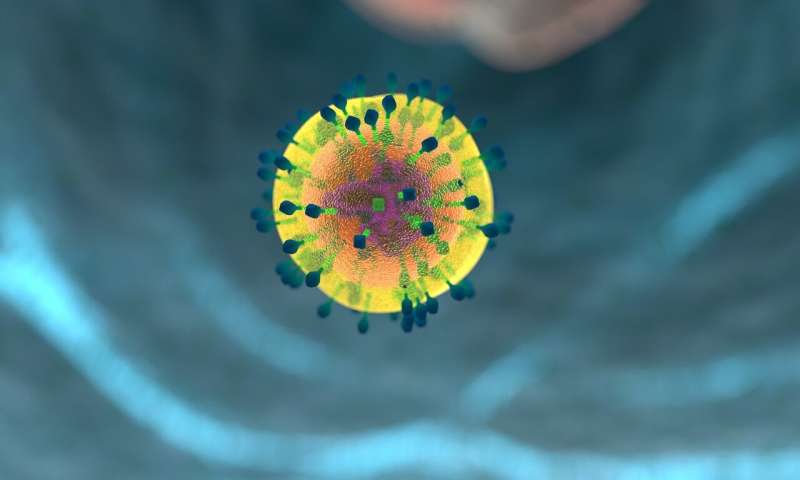
Cancer-fighting T cells do not simply “run out of energy.” They are molecularly reprogrammed. For years, mitochondrial dysfunction has been recognized as a hallmark of exhausted T cells in tumors. Yet how metabolic stress translates into stable transcriptional reprogramming remained unclear.
The new study, published in the journal Nature, uncovers a decisive molecular bridge.
When mitochondria become depolarized, CD8⁺ T cells increase proteasome activity. This heightened protein degradation selectively dismantles mitochondrial hemoproteins, releasing excess regulatory heme.
Rather than remaining a byproduct, heme becomes a signal.
It translocates to the nucleus, where it binds and destabilizes the transcription factor Bach2, relieving repression of Blimp1, a master regulator of terminal exhaustion. The collapse of the Bach2–Blimp1 axis locks T cells into a dysfunctional state and erodes their stem-like potential.
Mechanistically, the researchers identify CBLB as a driver of mitochondrial protein ubiquitination and PGRMC2 as a chaperon enabling nuclear heme transport.
A molecular switch and a therapeutic opportunity
“We uncovered a metabolic signaling switch that converts mitochondrial stress into a permanent transcriptional decision,” says Professor Ping-Chih Ho, senior author of the study. “This pathway explains how energy failure becomes immune failure.”
Crucially, the axis is actionable.
The team shows that transient low-dose bortezomib treatment during CAR-T cell manufacturing dampens proteasome-driven heme signaling, reduces exhaustion-associated programs, and promotes durable epigenetic reprogramming toward a memory-like state.
Clinical relevance is reinforced by data from B-ALL patients: CAR-T cells exhibiting high proteasome activity correlate with poorer therapeutic outcomes.
“Our last paper identified mitochondrial damage as the cause of T cell failure and this one reveals the molecular switch behind it, and how to turn exhaustion off. For a long time, mitochondrial dysfunction was an observation without a clear mechanistic explanation,” says Y. Xu, first author of the study.
“Discovering that regulatory heme acts as the signaling mediator was unexpected and it gives us a tangible way to intervene.”
Reframing T cell exhaustion
The findings redefine T cell exhaustion not merely as a consequence of chronic antigen stimulation, but as the outcome of a dysregulated metabolic signaling circuit.
Publication details
Ping-Chih Ho, Proteasome-guided haem signalling axis contributes to T cell exhaustion, Nature (2026). DOI: 10.1038/s41586-026-10250-y. www.nature.com/articles/s41586-026-10250-y
Journal information:
Nature
Key medical concepts
Clinical categories
Cellular stress signal found to drive immune exhaustion and weaken cancer therapy (2026, March 18)
retrieved 18 March 2026
from https://medicalxpress.com/news/2026-03-cellular-stress-immune-exhaustion-weaken.html
part may be reproduced without the written permission. The content is provided for information purposes only.
📰 This article was curated and published by
HEALTH GUIDANCE HUB
— your trusted source for the latest health news, medical research, and wellness guidance.
Visit us at https://healthguidancehub.space/ for more health insights.
