


New pill cuts âbadâ cholesterol by 60% in major trial
- Date:
- March 21, 2026
- Source:
- UT Southwestern Medical Center
- Summary:
- A new pill, enlicitide, reduced LDL (âbadâ) cholesterol by about 60% in a large clinical trial, matching the power of injectable therapies. Because itâs taken orally, it could overcome one of the biggest barriers keeping patients from using current treatments. Researchers say many people still donât reach safe cholesterol levelsâeven on statinsâhighlighting the need for better options.
- Share:
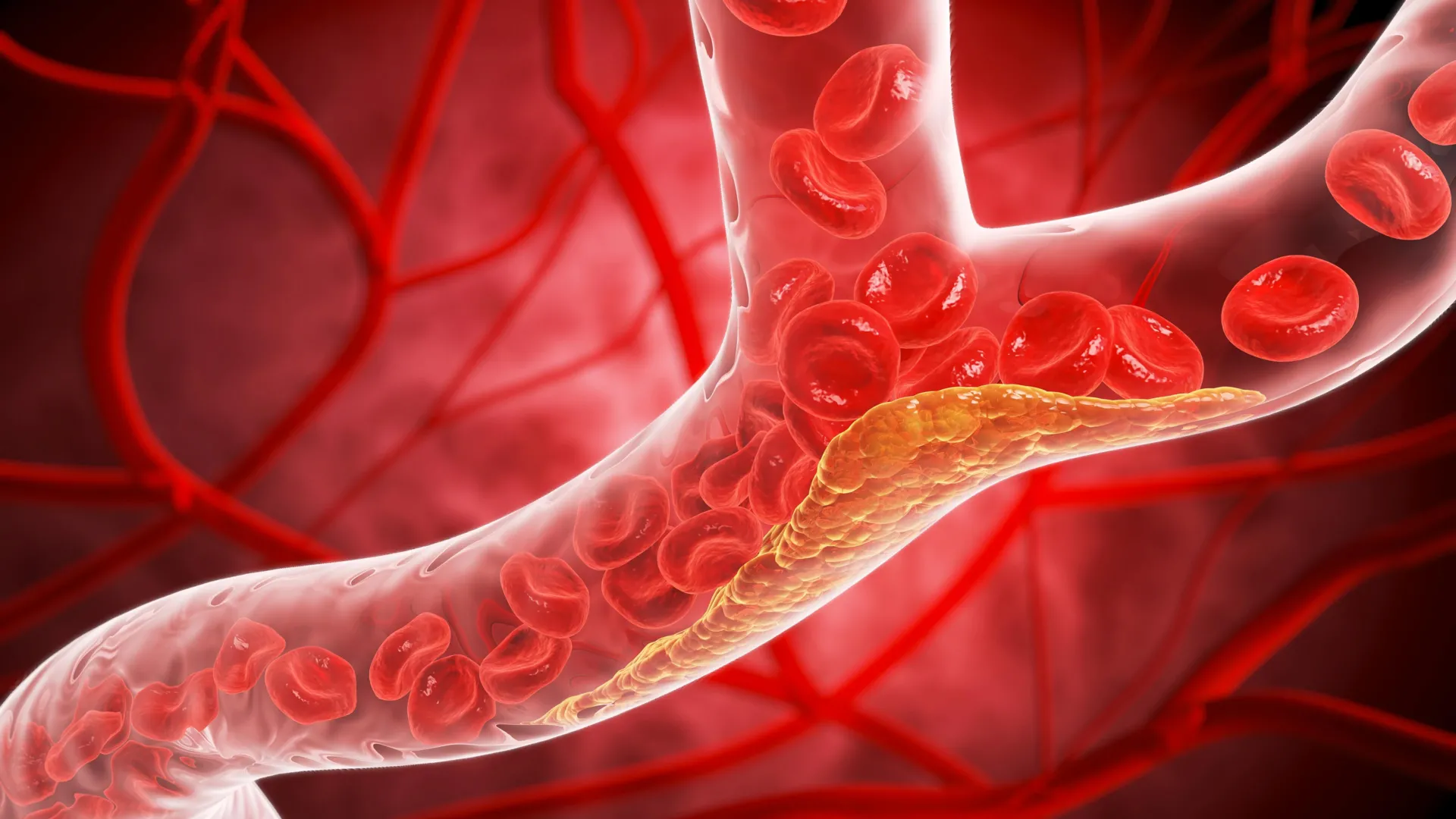
A new experimental pill called enlicitide dramatically lowered levels of low-density lipoprotein (LDL) cholesterol, often referred to as “bad” cholesterol, by as much as 60%, according to a phase three clinical trial published in The New England Journal of Medicine. If the drug receives approval from the Food and Drug Administration, it could offer millions of people in the United States a new way to reduce their risk of heart attacks and strokes.
“Fewer than half of patients with established atherosclerotic cardiovascular disease currently reach LDL cholesterol goals. An oral therapy this effective has the potential to dramatically improve our ability to prevent heart attacks and strokes on a population level,” said Ann Marie Navar, M.D., Ph.D., a cardiologist and Associate Professor of Internal Medicine and in the Peter O’Donnell Jr. School of Public Health at UT Southwestern Medical Center. Dr. Navar led the study, which was sponsored by the drugmaker Merck & Co. Inc.
Why Lowering LDL Cholesterol Matters
For decades, scientists have understood that LDL cholesterol plays a central role in cardiovascular disease. These cholesterol particles can build up inside artery walls in a process known as atherosclerosis. Over time, this buildup can block blood flow and lead to heart attacks or strokes. Because of this, reducing LDL cholesterol is a key strategy both for preventing heart disease and for lowering risk in people who already have it.
From Nobel Prize Discovery to New Treatments
According to Dr. Navar, enlicitide builds on decades of scientific work at UT Southwestern. Years ago, researchers Michael Brown, M.D., and Joseph Goldstein, M.D., identified the LDL receptor on liver cells, which helps remove LDL cholesterol from the bloodstream. Their discovery earned the Nobel Prize in Physiology or Medicine in 1985 and paved the way for statins, the most widely used cholesterol-lowering drugs today.
Later, findings from the Dallas Heart Study at UTSW, led by Helen Hobbs, M.D., and Jonathan Cohen, Ph.D., revealed that some people naturally have lower LDL cholesterol due to genetic changes that reduce production of the PCSK9 protein. This protein limits the number of LDL receptors on liver cells, making it harder for the body to clear cholesterol. That insight led to the development of injectable PCSK9 inhibitors, including monoclonal antibodies and RNA-based therapies. Drugs such as evolocumab and alirocumab can lower LDL cholesterol by about 60%.
Why Existing Treatments Are Underused
Even though these injectable treatments are highly effective, they are not widely used in everyday care. Dr. Navar noted that earlier challenges included high costs and insurance barriers. While those issues have improved, many physicians still hesitate to prescribe them. One likely reason is that these medications must be given as injections rather than taken as pills.
How Enlicitide Works
Enlicitide targets the same PCSK9 pathway as those injectable drugs, attaching to the protein in the bloodstream to help the body remove LDL cholesterol more efficiently. The key difference is that enlicitide is taken orally once a day, making it a simpler option for patients.
Clinical Trial Results Show 60% LDL Reduction
The phase three trial included 2,909 participants who either had atherosclerosis or were considered at risk due to related health conditions. About two-thirds received enlicitide, while the rest were given a placebo. Most participants were already taking statins, yet their average LDL cholesterol level remained 96 milligrams per deciliter (mg/dl), well above recommended targets of 70 mg/dl for those with atherosclerosis and 55 mg/dl for those at risk of atherosclerotic cardiovascular disease.
“The study population reflects what we see in clinical practice,” Dr. Navar said. “Even the highest intensity statins are often not enough to get people to their cholesterol goals.”
After 24 weeks, patients taking enlicitide saw their LDL cholesterol drop by about 60% compared with those on a placebo. The drug also lowered other important markers linked to cardiovascular disease, including non-HDL lipoprotein cholesterol, apolipoprotein B, and lipoprotein(a). These improvements were maintained over a full year of follow-up.
“These reductions in LDL cholesterol are the most we have ever achieved with an oral drug by far since the development of statins,” Dr. Navar said.
What Comes Next
Another clinical trial is already underway to determine whether these cholesterol reductions will translate into fewer heart attacks and strokes.
Dr. Brown, a Regental Professor, holds the Paul J. Thomas Chair in Medicine and the W.A. (Monty) Moncrief Distinguished Chair in Cholesterol and Arteriosclerosis Research. Dr. Goldstein, a Regental Professor, holds the Julie and Louis A. Beecherl, Jr. Distinguished Chair in Biomedical Research and the Paul J. Thomas Chair in Medicine. Dr. Hobbs holds the Dallas Heart Ball Chair in Cardiology Research and is a member of the Harold C. Simmons Comprehensive Cancer Center. Dr. Cohen holds the C. Vincent Prothro Distinguished Chair in Human Nutrition Research.
This study was funded by Merck Sharp & Dohme, a subsidiary of Merck.
Dr. Navar received consulting fees from Merck for part of the work on this study. She also received fees for other consulting work from Merck and from other pharmaceutical companies that make lipid-lowering drugs (as disclosed in the study).
Story Source:
Materials provided by UT Southwestern Medical Center. Note: Content may be edited for style and length.
Journal Reference:
- Ann Marie Navar, Elina Mikhailova, Alberico L. Catapano, Puja Banka, Dirk J. Blom, Alberto Cadena, Susan Kourpanidis, Norman E. Lepor, Kazuhisa Tsukamoto, Geraldine Mendizabal, Julio Nunez, Wenjuan Zhang, Pengfei Zhu, Min Zhuo, Christie M. Ballantyne. A Placebo-Controlled Trial of the Oral PCSK9 Inhibitor Enlicitide. New England Journal of Medicine, 2026; 394 (6): 529 DOI: 10.1056/NEJMoa2511002
Cite This Page:
📰 This article was curated and published by
HEALTH GUIDANCE HUB
— your trusted source for the latest health news, medical research, and wellness guidance.
Visit us at https://healthguidancehub.space/ for more health insights.
