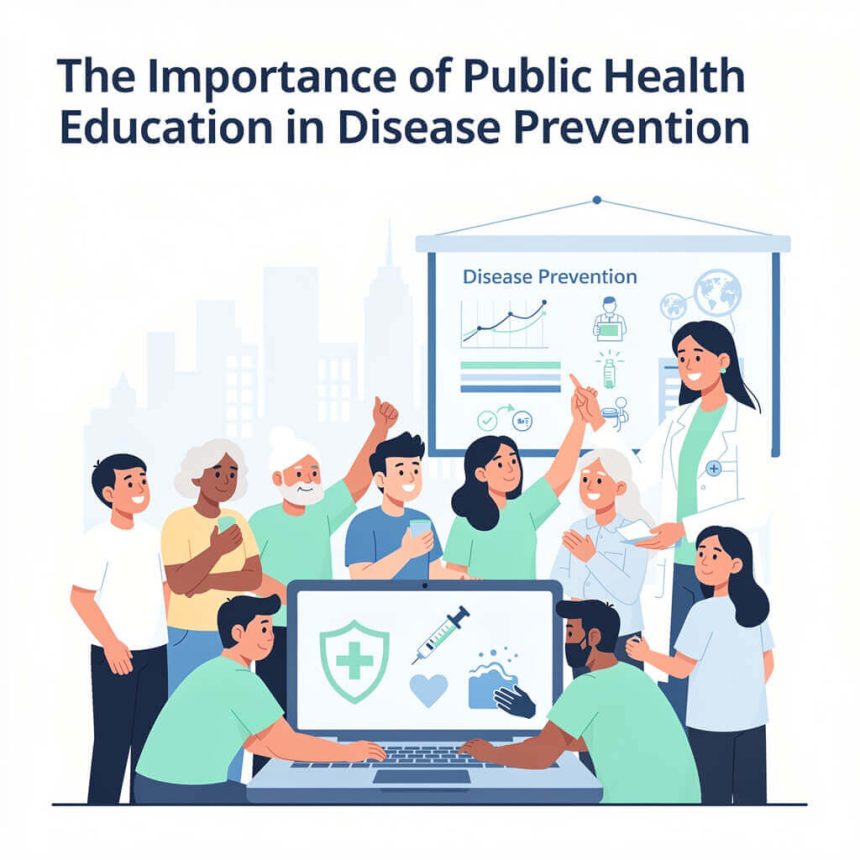
The landscape of global wellness is undergoing a seismic shift as we move deeper into 2026. For decades, the collective focus of medical systems was largely reactive, designed to treat illnesses once they manifested. However, the rising tide of chronic conditions and the astronomical costs of specialized care have forced a necessary pivot. Today, the most potent weapon in the medical arsenal is not a new drug or a surgical technique, but rather public health education. By empowering individuals with knowledge, we are witnessing a transition from a system of sick care to a true model of healthcare.
- The Evolution of Health Literacy in 2026
- The Economic Reality of Prevention over Treatment
- The Rise of P4 Medicine: Predictive, Preventive, Personalized, and Participatory
- Digital Transformation and the Role of AI in Health Education
- Addressing the Global Epidemic of Chronic Inflammation
- The One Health Approach: Human, Animal, and Environmental Synergy
- Mental Health as a Pillar of Physical Disease Prevention
- Case Studies in Successful Health Education Initiatives
- The Global Strategy for Cancer Prevention
- Diabetes Management and the Peptide Revolution
- Vaccine Literacy and Global Security
- Overcoming Barriers: Equity in Health Education
- The Future of Public Health: A Shared Responsibility
- Current 2026 Public Health Trends and Statistics
The Evolution of Health Literacy in 2026
Health literacy has evolved far beyond the basic ability to read a prescription bottle or follow a doctor’s orders. In the current era, it represents a multifaceted set of competencies that allow individuals to navigate a complex information environment. This includes the capacity to evaluate digital health data, understand the implications of genetic screenings, and make informed choices about lifestyle factors that influence long-term outcomes.
Recent data from the World Health Organization (WHO) and other leading global bodies indicates that health literacy is now one of the strongest predictors of an individual’s health status. It often outweighs income, employment status, or even education level in its impact on longevity. When people understand the “why” behind preventive measures, they are significantly more likely to adhere to vaccination schedules, participate in routine screenings, and adopt sustainable nutritional habits.
The Economic Reality of Prevention over Treatment
The financial burden of chronic diseases is reaching a breaking point for many nations. Projections for 2026 suggest that global medical costs will increase by over 10 percent, driven largely by the rising prevalence of cancer, cardiovascular disease, and metabolic disorders. In this environment, public health education is the most effective economic lever available to policymakers and healthcare administrators.
Studies consistently demonstrate a remarkable return on investment (ROI) for public health interventions. In many developed economies, every dollar invested in community health education can yield a return of fourteen dollars in the form of reduced hospitalizations, increased workforce productivity, and lower long-term care costs. This 14 to 1 ratio makes the case for prevention an economic necessity rather than just a moral one. By focusing on disease prevention through education, we can mitigate the need for expensive, late-stage medical interventions that strain both public and private insurance systems.
The Rise of P4 Medicine: Predictive, Preventive, Personalized, and Participatory
As we navigate the current year, the concept of P4 Medicine has moved from a theoretical framework into a practical reality. This approach relies heavily on the “Participatory” element, which is fueled entirely by public health education.
- Predictive: Using advanced diagnostics and AI-driven models to identify risks before they manifest.
- Preventive: Implementing lifestyle and medical interventions to stop disease progression.
- Personalized: Tailoring health advice to an individual’s unique genetic and environmental profile.
- Participatory: Engaging the individual as an active partner in their own health journey.
This shift requires a new type of education that focuses on precision health. Individuals are now learning how to interpret their own biomarkers, such as high-sensitivity C-reactive protein (hs-CRP) for inflammation or heart rate variability (HRV) for stress management. This level of engagement was once reserved for elite athletes or medical professionals, but it is now becoming a standard part of public wellness initiatives.
Digital Transformation and the Role of AI in Health Education
The integration of Artificial Intelligence into public health is perhaps the most transformative trend of 2026. AI is not just for clinical diagnosis; it is being used to democratize access to high-quality health information. Large language models and personalized health assistants are now capable of providing culturally sensitive, easy-to-understand guidance to millions of people simultaneously.
Digital health literacy is the new frontier. With the rise of “AI-assisted everything,” the challenge for public health educators is ensuring that these tools are used responsibly. We are seeing a surge in programs designed to help the public distinguish between evidence-based AI guidance and the “hallucinations” or misinformation that can occasionally plague digital platforms.
Addressing the Global Epidemic of Chronic Inflammation
One of the primary focuses of health education this year is the “inflammation conversation.” Science has increasingly linked chronic, low-grade inflammation to a host of modern ailments, from Alzheimer’s disease to cardiovascular issues. Public health campaigns are now moving beyond simple advice like “eat your vegetables” to more nuanced discussions about ultra-processed foods, gut microbiome health, and the physiological impact of chronic stress.
Education regarding the “ultra-processed food reckoning” is particularly vital. As research continues to show how these foods alter the microbiota and trigger systemic inflammation, public health officials are working to shift consumer demand toward minimally processed, nutrient-dense alternatives. This is not just a nutritional shift but a fundamental change in how the public perceives the link between the environment and internal biological health.
The One Health Approach: Human, Animal, and Environmental Synergy
In 2026, the “One Health” framework has become a cornerstone of disease prevention strategies. This approach recognizes that the health of people is closely connected to the health of animals and our shared environment. Education in this sector is critical for preventing the next pandemic.
By teaching communities about the risks of zoonotic diseases (illnesses that jump from animals to humans) and the impact of environmental degradation on public wellness, we create a more resilient global society. This includes everything from sustainable agricultural practices to responsible pet ownership and urban planning that prioritizes green spaces. The data shows that exposure to nature not only improves mental health but also boosts immune function, making it a powerful, “low-tech” preventive measure.
Mental Health as a Pillar of Physical Disease Prevention
We have finally moved past the era where mental and physical health were treated in silos. In 2026, public health education emphasizes that mental wellness is a physiological requirement for disease prevention. Chronic stress is now understood to disrupt the immune system in ways that make individuals more susceptible to both infectious diseases and chronic conditions.
Education programs are increasingly incorporating “neuroscience-informed” lifestyle strategies. These programs teach the public how sleep optimization, mindfulness, and social connection are not just “feel-good” activities but essential biological interventions. For example, loneliness is now recognized as having a mortality risk comparable to smoking, leading to a massive push for community-based social health initiatives.
Case Studies in Successful Health Education Initiatives
The Global Strategy for Cancer Prevention
Cancer remains a leading driver of healthcare costs. However, public health education regarding early detection and lifestyle modification is making a significant dent in these numbers. Campaigns focusing on the “under 40” population are particularly crucial now, as early-onset cancer rates have seen a concerning rise. By educating younger generations on the importance of screenings and the risks of environmental toxins, we are setting the stage for a future with lower incidence rates.
Diabetes Management and the Peptide Revolution
The rise of GLP-1 medications and other peptides has changed the conversation around obesity and diabetes. However, medication alone is not the answer. Public health education is vital in helping patients understand the “muscle as a metabolic marker” concept. We are teaching people that maintaining muscle mass is critical for metabolic health, especially when using modern weight-loss medications. This holistic education ensures that pharmacological advances are supported by sustainable lifestyle choices.
Vaccine Literacy and Global Security
In the wake of various global health challenges, maintaining high levels of vaccine literacy is essential. 2026 sees a focus on transparent communication regarding the science of immunization. By addressing concerns directly and providing clear, data-driven explanations of how vaccines work, public health educators are helping to maintain the “herd immunity” that protects the most vulnerable members of society.
Overcoming Barriers: Equity in Health Education
Despite the progress made, significant disparities remain. Income levels, cultural norms, and linguistic barriers can all prevent effective health education from reaching those who need it most. In 2026, the focus has shifted toward “Health Equity.”
This involves creating culturally tailored strategies that respect local traditions while providing accurate medical information. It also means addressing the “social determinants of health,” such as housing and food security, which often dictate whether an individual can act on the health education they receive. We cannot expect someone to focus on “sleep optimization” if they do not have a safe place to rest.
The Future of Public Health: A Shared Responsibility
As we look toward the end of the decade, the importance of public health education will only grow. We are moving toward a model where every individual is equipped with a “digital twin” or personalized health profile that guides their daily decisions. However, the human element remains irreplaceable. Community health workers, educators, and trusted local leaders are the bridge between complex science and daily practice.
Public health education is the foundation of a stable and prosperous society. It reduces the strain on our medical infrastructure, empowers individuals to live longer and more fulfilling lives, and creates an environment where health is seen as a collective asset. By investing in knowledge today, we are preventing the crises of tomorrow.
Current 2026 Public Health Trends and Statistics
The following data points reflect the most current information available as of early 2026:
- Global Medical Inflation: Projected to hit 10.3 percent this year, necessitating a stronger focus on low-cost preventive measures.
- Return on Investment: Public health interventions in the UK and US show an average ROI of 14 to 1 for every unit of currency spent.
- Cancer Incidence: There is a noted 74 percent increase in reports of cancer incidence in populations under the age of 40 over the last year, highlighting the need for early education.
- Digital Health Adoption: Over 60 percent of major healthcare jurisdictions have now implemented real-time, AI-driven data feeds for disease surveillance.
- Longevity Focus: “Healthspan” (the years lived in good health) is now the primary metric of success for global health organizations, rather than just “lifespan.”