


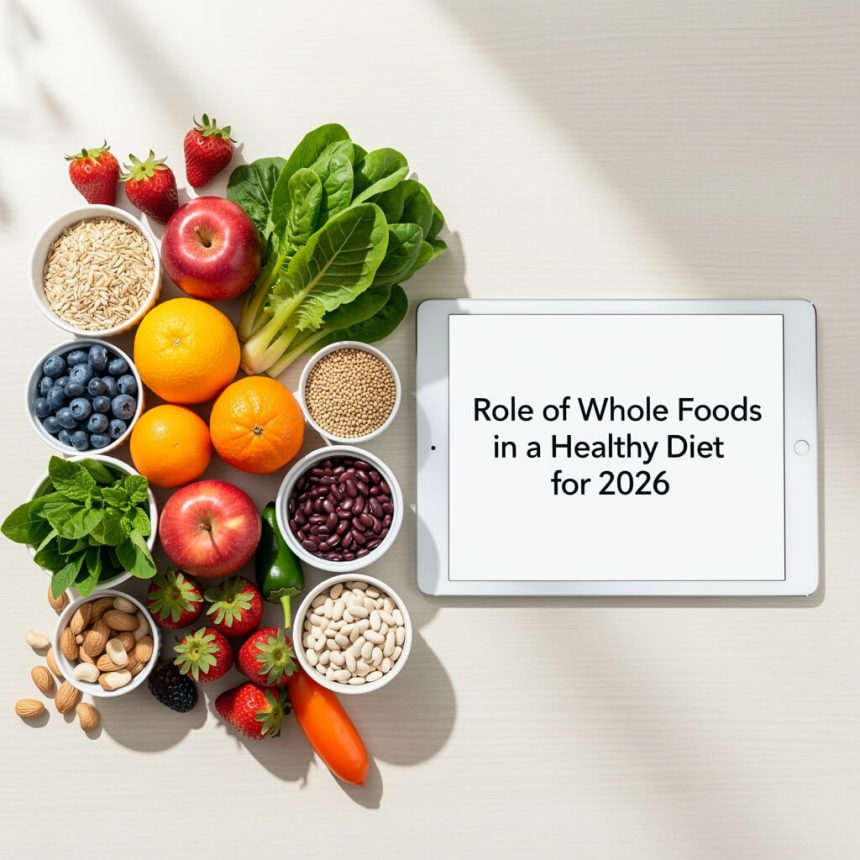
The landscape of nutrition has shifted significantly as we enter January 2026. With the rise of personalized health technology and a deeper understanding of the gut microbiome, the conversation around wellness has moved away from restrictive dieting toward a more holistic, “Food as Medicine” approach. At the center of this revolution lies one fundamental concept: the whole food.
- Understanding Whole Foods in the 2026 Nutrition Landscape
- The Science of Nutrient Density and Bioavailability
- The Gut Microbiome and the 2026 Fibermaxxing Trend
- Preventing Chronic Diseases Through Nutrition
- Type 2 Diabetes and Insulin Sensitivity
- Cardiovascular Health and Inflammation
- Cancer Prevention and Whole Plant Foods
- The Gut-Brain Axis and Mental Wellness
- The 2026 Shift Toward Personalized Nutrition
- Sustainability and the Rise of Flexitarianism
- Practical Tips for Transitioning to a Whole Food Diet
- The Future of Nutrition: Beyond 2026
- Source Links for Further Reading
Understanding the role of whole foods in a healthy diet is no longer just a recommendation from healthcare providers. It is a critical component for anyone looking to optimize metabolic health, enhance cognitive function, and increase longevity. This comprehensive guide explores the science, trends, and practical applications of whole food nutrition in the modern era.
Understanding Whole Foods in the 2026 Nutrition Landscape
Before diving into the benefits, it is essential to define what constitutes a whole food in today’s market. Whole foods are those that have undergone minimal to no processing. They remain as close to their natural state as possible, free from synthetic additives, artificial preservatives, and heavy industrial refinement.
The 2026 dietary landscape is characterized by a stark contrast between whole foods and ultra-processed foods (UPFs). Recent clinical trials, including major studies from University College London in late 2025, have shown that the human body reacts fundamentally differently to minimally processed options. Even when the calorie counts are identical, whole foods lead to better weight management and improved metabolic markers because of how the body breaks them down.
The Spectrum of Food Processing
Not all processing is harmful. For example, freezing vegetables or fermenting cabbage into sauerkraut are forms of processing that can actually preserve or enhance nutritional value. However, the 2026 focus is on avoiding ultra-processed products. These are industrial formulations often containing high levels of sodium, refined sugars, and hydrogenated fats.
- Unprocessed or Minimally Processed: Fresh fruits, vegetables, whole grains, nuts, seeds, eggs, and fresh meats.
- Processed Ingredients: Oils, flours, and vinegars used in home cooking.
- Ultra-Processed Foods: Mass-produced snacks, sugary cereals, and ready-to-eat meals that contain ingredients you would not find in a home kitchen.
The Science of Nutrient Density and Bioavailability
One of the primary reasons whole foods are superior is their nutrient density. This refers to the concentration of vitamins, minerals, and phytonutrients relative to the calorie count. In 2026, researchers are placing a higher emphasis on “synergistic nutrition,” which is the idea that nutrients work better together when consumed in their natural package rather than as isolated supplements.
Vitamins and Minerals
Whole foods provide a full spectrum of essential micronutrients. For example, an orange provides not just Vitamin C, but also fiber, potassium, and a variety of flavonoids. These components work together to enhance the absorption and efficacy of Vitamin C in the body.
Phytonutrients and Antioxidants
Plants produce phytonutrients to protect themselves from environmental stressors like UV radiation and pests. When humans consume these plants, we inherit those protective benefits. Modern research into longevity frequently highlights the role of polyphenols found in dark berries and leafy greens. These compounds help neutralize oxidative stress, which is a leading cause of cellular aging.
The Role of Bioavailability
Bioavailability is the degree to which a nutrient is absorbed and utilized by the body. Many synthetic supplements have low bioavailability because they lack the “co-factors” present in whole foods. A whole food diet ensures that the minerals like magnesium, zinc, and iron are delivered in forms that the human digestive system is biologically primed to recognize and process.
The Gut Microbiome and the 2026 Fibermaxxing Trend
If there is one keyword dominating the health world in early 2026, it is “fibermaxxing.” While protein was the focus of the previous decade, fiber has now taken center stage as the most important nutrient for gut health and metabolic regulation.
Prebiotics and Probiotics
The gut microbiome is a complex ecosystem of trillions of bacteria that influence everything from immunity to mood. Whole foods like garlic, onions, leeks, and asparagus act as prebiotics, providing the fuel these beneficial bacteria need to thrive. When we eat a diverse range of whole plant foods, we cultivate a diverse microbiome.
Fiber and Metabolic Health
Dietary fiber is essential for slowing the absorption of glucose into the bloodstream. This prevents the sharp insulin spikes associated with refined carbohydrates. In 2026, the use of continuous glucose monitors (CGMs) has become mainstream among non-diabetics. Users are seeing firsthand how a meal of whole grains and vegetables results in a stable “glucose curve,” whereas processed alternatives lead to metabolic volatility.
Preventing Chronic Diseases Through Nutrition
The “Food as Medicine” movement has gained massive momentum in 2026, supported by robust data from the World Health Organization and the American Heart Association. Whole food diets are now recognized as primary tools for preventing and even reversing chronic conditions.
Type 2 Diabetes and Insulin Sensitivity
The global rise in Type 2 Diabetes has led to a renewed focus on insulin sensitivity. Diets rich in legumes, leafy greens, and healthy fats from avocados and nuts have been shown to improve the body’s response to insulin. By choosing whole foods, individuals can manage their blood sugar levels naturally, reducing the reliance on pharmacological interventions.
Cardiovascular Health and Inflammation
Heart disease remains a leading health concern. A whole food diet addresses this by lowering systemic inflammation. Foods rich in Omega-3 fatty acids, such as wild-caught salmon, walnuts, and chia seeds, are known for their anti-inflammatory properties. Furthermore, the high potassium content in fruits and vegetables helps regulate blood pressure, further protecting the cardiovascular system.
Cancer Prevention and Whole Plant Foods
The American Institute for Cancer Research emphasizes that a diet based on whole plant foods can significantly reduce the risk of several types of cancer. The fiber in whole grains and legumes helps remove toxins from the digestive tract, while the antioxidants in colorful produce protect DNA from damage.
The Gut-Brain Axis and Mental Wellness
In 2026, the connection between what we eat and how we feel is more established than ever. The gut-brain axis is a bidirectional communication network between the central nervous system and the enteric nervous system in the gut.
Nutrition for Cognitive Longevity
Studies published in 2025 have highlighted the “MIND diet,” a hybrid of the Mediterranean and DASH diets, for its ability to protect the brain against neurodegenerative diseases like Alzheimer’s. The key components are whole foods: berries, leafy greens, nuts, and beans. These foods provide the neuroprotective compounds necessary to maintain cognitive function as we age.
Mood Regulation and Serotonin
Interestingly, about 95% of the body’s serotonin, a neurotransmitter that regulates mood, is produced in the gut. A diet high in ultra-processed foods can disrupt this production, leading to increased rates of anxiety and depression. Conversely, a whole food diet supports a healthy gut environment, which in turn promotes emotional stability and mental clarity.
The 2026 Shift Toward Personalized Nutrition
Advancements in AI and biotechnology have made personalized nutrition more accessible in 2026. Rather than following a one-size-fits-all diet, individuals are using their own biological data to tailor their whole food intake.
DNA-Based Dietary Recommendations
Genomic testing can now reveal how an individual metabolizes certain nutrients. For some, a higher intake of whole food fats is beneficial, while others may thrive on a diet higher in complex carbohydrates from tubers and ancient grains. This precision allows for the ultimate optimization of health through whole foods.
Wearable Integration
The integration of AI with wearable technology allows users to receive real-time feedback on how their diet affects their sleep, recovery, and energy levels. In 2026, apps can analyze a photo of a meal and provide data on its micronutrient profile, helping users make better choices in the moment.
Sustainability and the Rise of Flexitarianism
The choice to eat whole foods is also a choice for environmental sustainability. In 2026, the “Flexitarian” movement has become the most popular dietary trend because it balances health with ecological responsibility.
Regenerative Agriculture
Consumers are increasingly looking for whole foods grown through regenerative agricultural practices. These methods focus on soil health, which not only protects the planet but also results in crops with higher mineral content. A whole food, plant-forward diet requires fewer resources than a diet heavy in industrially raised livestock.
Economic Benefits of Whole Foods
Contrary to the myth that healthy eating is expensive, the 2026 food market has seen a shift where plant-based whole foods like lentils, beans, and seasonal produce are significantly more affordable than processed convenience foods. By purchasing in bulk and cooking from scratch, individuals can reduce their monthly food expenditure while improving their health.
Practical Tips for Transitioning to a Whole Food Diet
Making the switch to a whole food diet does not have to be overwhelming. Success in 2026 is all about gradual, sustainable changes.
- Read Labels Carefully: If a product has more than five ingredients or contains items you cannot pronounce, it is likely ultra-processed.
- Focus on the Perimeter: Most whole foods are found on the outer aisles of the grocery store, such as the produce, meat, and dairy sections.
- Meal Prep with Grains and Legumes: Prepare large batches of quinoa, brown rice, or lentils at the beginning of the week to use as a base for various meals.
- Incorporate Healthy Fats: Use extra virgin olive oil, avocados, and nuts to provide satiety and essential nutrients.
- Stay Hydrated with Whole Liquids: Replace sodas and energy drinks with water, herbal teas, or natural juices with the pulp included.
The Future of Nutrition: Beyond 2026
As we look toward the future, the role of whole foods will only become more prominent. We are seeing a move toward “Smart Whole Foods,” where traditional crops are bred for even higher nutrient density without the use of GMOs. The fusion of ancient wisdom and modern technology is creating a new era of wellness where we finally recognize that nature provides the best fuel for the human body.
Source Links for Further Reading
- World Health Organization (WHO) on Healthy Diets: https://www.who.int/news-room/fact-sheets/detail/healthy-diet
- Harvard T.H. Chan School of Public Health – The Nutrition Source: https://www.hsph.harvard.edu/nutritionsource/
- American Heart Association – Understanding Food Processing: https://www.heart.org/en/healthy-living/healthy-eating/eat-smart/nutrition-basics/processed-foods
- University College London (UCL) Research on Minimally Processed Foods: https://www.ucl.ac.uk/news/2025/aug/less-processed-diet-may-be-more-beneficial-weight-loss
- The Lancet – Global Shift Toward Ultra-Processed Diets: https://www.thelancet.com/journals/lanpub/article/PIIS2468-2667(24)00185-5/fulltext