


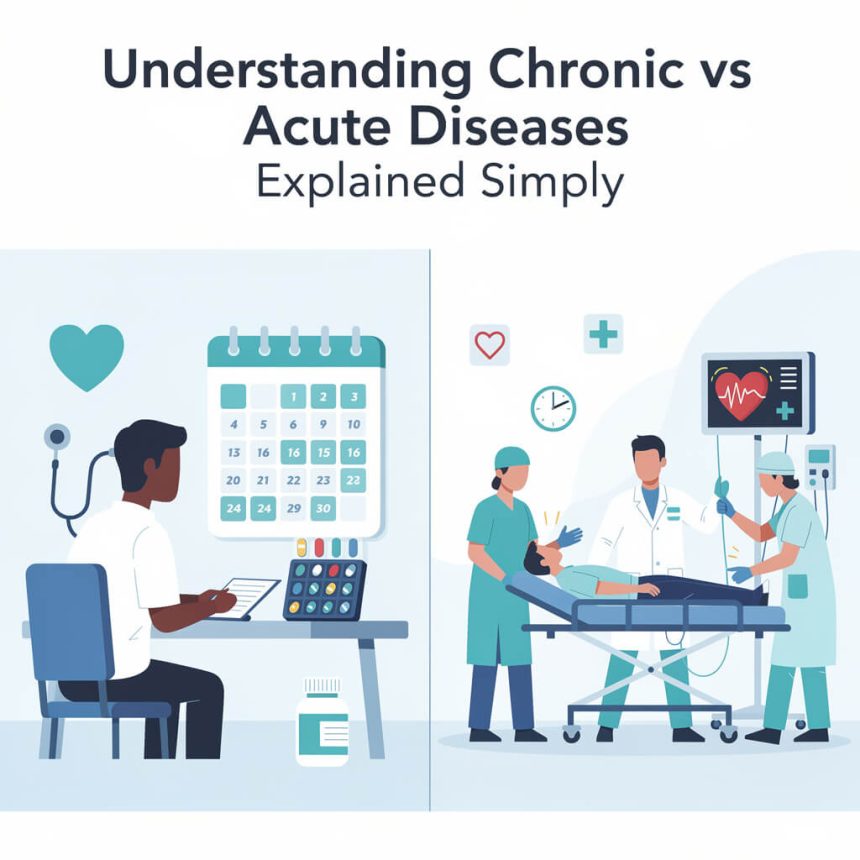
The landscape of modern healthcare is shifting rapidly. As we navigate through 2026, the distinction between various types of health conditions has become more critical for patients, caregivers, and medical professionals alike. Understanding the fundamental differences between chronic and acute diseases is not just a matter of terminology. It is the foundation for effective treatment, financial planning, and long term wellness. This comprehensive guide explores these two categories in depth, incorporating the latest 2026 medical breakthroughs, economic trends, and diagnostic advancements.
- Defining the Core Differences
- 2026 Healthcare Trends and Daily Information
- The Economic Impact: Health Insurance and Financial Planning
- 2026 Medical Breakthroughs in Chronic Care
- The Diagnostic Revolution: Identifying the Problem
- Managing Chronic Conditions: A Lifestyle Approach
- Acute Care in the Digital Age
- Policy and Legislation: The Legal Side of Health
- Conclusion: Preparing for the Future of Health
Defining the Core Differences
At its simplest, the difference between acute and chronic diseases lies in the duration and the speed of onset. However, in the current era of personalized medicine, these definitions have expanded to include how a patient interacts with the healthcare system and the specific technologies used for management.
The Nature of Acute Diseases
Acute diseases are characterized by a sudden onset of symptoms. These conditions typically progress quickly and last for a relatively short period, usually a few days to a few weeks. In 2026, the management of acute illness has been revolutionized by rapid diagnostic tools and telehealth triage systems.
Common examples of acute diseases include the following:
- Influenza and respiratory infections: These often appear suddenly with high fever and body aches.
- Acute appendicitis: A rapid inflammation that requires immediate surgical intervention.
- Bone fractures: Sudden physical trauma resulting in immediate loss of function and intense pain.
- Strep throat: A bacterial infection that resolves quickly with the right antibiotic regimen.
The primary goal of treating an acute condition is a full recovery. Once the underlying cause is addressed, the patient typically returns to their baseline state of health.
The Landscape of Chronic Diseases
Chronic diseases are defined as conditions that last for one year or more and require ongoing medical attention or limit activities of daily living. Unlike acute illnesses, chronic conditions often develop slowly over time. They may not have a definitive cure, but they can be managed with consistent care.
The global health burden in 2026 shows that chronic diseases are the leading cause of mortality and disability. Statistics from the World Health Organization (WHO) indicate that nearly one in three adults globally now lives with multiple chronic conditions, a phenomenon known as multi-morbidity.
Prominent chronic conditions include:
- Diabetes mellitus: Both Type 1 and Type 2 require lifelong monitoring of blood glucose levels.
- Hypertension: Often called the silent killer, it requires daily management to prevent stroke and heart attack.
- Autoimmune disorders: Conditions like Lupus or Rheumatoid Arthritis involve the immune system attacking the body over many years.
- Neurodegenerative diseases: Alzheimer’s and Parkinson’s represent long term challenges for both patients and the healthcare infrastructure.
2026 Healthcare Trends and Daily Information
As of January 2026, the medical community is witnessing a massive transition in how these diseases are tracked. Daily data shows a significant rise in the use of wearable biosensors that provide real time feedback to physicians. This is particularly vital for chronic disease management, where early detection of a “flare up” can prevent it from becoming an acute emergency.
The Rise of Answer Engine Optimization (AEO)
In 2026, patients are no longer just searching for keywords. They are using advanced AI interfaces to ask complex questions about their health. This shift toward Answer Engine Optimization (AEO) means that medical information must be more direct and evidence based than ever before. Patients are asking questions like, “How does the 2026 OBBBA Act affect my chronic disease coverage?” or “What are the latest clinical trial results for subcutaneous Alzheimer’s treatments?”
Real Time Monitoring and AI Diagnostics
Today, acute care is often initiated by AI driven alerts. For instance, smartwatches can now detect the early signs of atrial fibrillation (an acute cardiac event) and automatically schedule a virtual consultation. For chronic patients, AI helps in predicting disease progression by analyzing daily lifestyle data, caloric intake, and sleep patterns.
The Economic Impact: Health Insurance and Financial Planning
Understanding these diseases is also a financial necessity. In 2026, the cost of healthcare continues to rise, driven by inflation and the increasing availability of high tech treatments.
Navigating 2026 Insurance Changes
The “One Big Beautiful Bill Act” (OBBBA), which saw major implementation phases in late 2025 and early 2026, has significantly altered the insurance landscape. One of the most notable changes is the expansion of catastrophic health plans on the ACA Marketplace. These plans are designed to protect individuals from the massive costs of acute emergencies, such as major surgeries or sudden hospitalizations.
For those with chronic conditions, the 2026 insurance market has introduced more specialized “Chronic Care Management” (CCM) riders. These allow patients to pay a slightly higher premium in exchange for lower copays on daily medications and frequent specialist visits.
The Cost of Chronic vs Acute Care
Acute care costs are typically high but one time expenses. For example, a surgery for a broken leg might cost several thousand dollars, but once the leg is healed, the expenses stop. Chronic care, however, involves a continuous drain on financial resources. Patients must budget for:
- Monthly prescription costs: While some medications like GLP-1s have seen price drops to $50 copays in 2026, others remain expensive.
- Regular diagnostic testing: Blood work, MRIs, and specialized scans.
- Home based care technology: Monthly subscriptions for remote patient monitoring services.
2026 Medical Breakthroughs in Chronic Care
The year 2026 has been a landmark for neurobiology and immunology. Several highly anticipated FDA decisions are shaping the future of chronic disease treatment.
Tolebrutinib for Multiple Sclerosis
The medical community is closely watching the FDA’s decision on Tolebrutinib, a Bruton Tyrosine Kinase (BTK) inhibitor. Unlike previous therapies that only modulated the peripheral immune system, this drug is designed to cross the blood brain barrier. This could offer the first real hope for patients with non relapsing secondary progressive multiple sclerosis (nrSPMS), potentially slowing disability progression by over 30 percent.
Advances in Alzheimer’s Treatment
Another major breakthrough in 2026 is the subcutaneous version of Lecanemab. Previously, patients had to spend hours in infusion centers. The new weekly subcutaneous regimen allows for home administration, which significantly improves the quality of life for chronic patients and their caregivers.
In Vivo CAR-T Therapy
For years, CAR-T therapy was a complex, multi week process involving the extraction and engineering of a patient’s T cells. In 2026, we are seeing the first successful applications of “In Vivo” CAR-T therapy. This technology uses lipid nanoparticles to deliver genetic instructions directly into the patient’s body, effectively turning the patient into a “self manufacturing bioreactor.” This is expected to lower the cost of treating certain blood cancers and potentially some autoimmune diseases, shifting them from terminal to manageable chronic conditions.
The Diagnostic Revolution: Identifying the Problem
Accurate diagnosis is the bridge between a symptom and a treatment plan. In 2026, the tools available to doctors have moved far beyond simple blood tests.
Liquid Biopsies
One of the most significant advancements for chronic disease detection is the liquid biopsy. This non invasive test looks for circulating tumor DNA (ctDNA) or other biomarkers in the blood. In 2026, liquid biopsies are being used not just for cancer but for early detection of cardiovascular inflammation and neurodegenerative changes years before symptoms appear.
Genomic Profiling
Personalized medicine now relies on full genomic profiling. By understanding a patient’s genetic predisposition, doctors can predict whether an acute infection is likely to trigger a chronic inflammatory response. This is particularly relevant for conditions like “Long COVID,” which researchers in 2026 are increasingly classifying as a chronic post viral syndrome.
Managing Chronic Conditions: A Lifestyle Approach
While medical breakthroughs are essential, the day to day management of chronic disease remains rooted in lifestyle choices. In 2026, the concept of “Food as Medicine” has moved from the fringes to mainstream clinical guidelines.
Nutritional Interventions
For patients with Type 2 Diabetes or hypertension, specialized diets are now prescribed with the same rigor as pharmaceuticals. Digital health apps in 2026 provide real time nutritional coaching, using AI to suggest meal swaps based on the patient’s current glucose levels.
The Role of Physical Therapy
In the management of chronic pain and musculoskeletal disorders, physical therapy has seen a resurgence. New wearable exoskeletons and VR based rehabilitation programs allow chronic patients to maintain mobility and decrease their reliance on opioid based pain management.
Mental Health and Chronic Illness
There is a growing realization in 2026 that chronic physical illness often goes hand in hand with mental health challenges. Depression and anxiety are frequent comorbidities for those living with long term pain or disability. Integrated care models now include mental health screenings as a standard part of every chronic care checkup.
Acute Care in the Digital Age
The way we handle acute medical crises has also evolved. In 2026, the “Metaverse Hospital” has become a reality for initial triage.
Virtual Triage and Emergency Response
When a patient experiences acute symptoms, they can enter a virtual environment where an AI avatar or a remote nurse performs an initial assessment. This system uses the sensors in the patient’s home to check vitals, potentially preventing an unnecessary and expensive trip to the Emergency Room. If the condition is deemed a true emergency, the system automatically alerts local paramedics and transmits the patient’s entire medical history to the responding team.
Rapid Treatment for Infections
The threat of antibiotic resistance remains a concern in 2026, but new rapid sequencing technologies allow doctors to identify the exact strain of a bacterial infection within minutes. This ensures that the most effective acute treatment is administered immediately, reducing the risk of the infection causing long term chronic damage to organs.
Policy and Legislation: The Legal Side of Health
Health policy in 2026 is heavily focused on transparency and patient rights. The legal landscape for medical malpractice has shifted toward “Failure to Diagnose” cases, especially where AI tools were available but not utilized.
Patient Data Privacy
With the massive increase in remote monitoring and AI diagnostics, data privacy has become a top priority. New 2026 regulations ensure that a patient’s genomic data and daily health logs cannot be used by insurance companies to deny coverage for pre-existing chronic conditions.
The Global Impact of Health Equity
International health organizations are working to ensure that 2026 breakthroughs are not limited to wealthy nations. Efforts to distribute low cost generic versions of chronic disease medications and to provide mobile diagnostic kits for acute infections in rural areas are central to the 2026 global health agenda.
Conclusion: Preparing for the Future of Health
The distinction between chronic and acute diseases is becoming more nuanced as our technology improves. An acute event can often be the starting point of a chronic journey, while a well managed chronic condition can prevent a life threatening acute crisis.
As we move through 2026, the key to health is proactive management. Whether it is staying informed about the latest FDA approvals, choosing the right insurance plan under the OBBBA Act, or utilizing the latest AI diagnostic tools, being an informed patient is your best defense.
The future of medicine is personalized, data driven, and focused on not just surviving an acute illness, but thriving despite a chronic one. By understanding the nature of these diseases and the resources available, you can navigate the complexities of the 2026 healthcare system with confidence.


