


Why your brain may be sabotaging your balance as you age
When it comes to balance, trying harder may actually make you more likely to fall.
- Date:
- March 25, 2026
- Source:
- Society for Neuroscience
- Summary:
- Balance problems in aging and Parkinsonâs may come from the body working too hard, not too little. Scientists found that the brain and muscles become overactive during even minor disturbances, yet this actually weakens balance recovery. At the same time, muscles can stiffen against each other, making movement less stable. This unexpected pattern could help predict who is more likely to fall.
- Share:
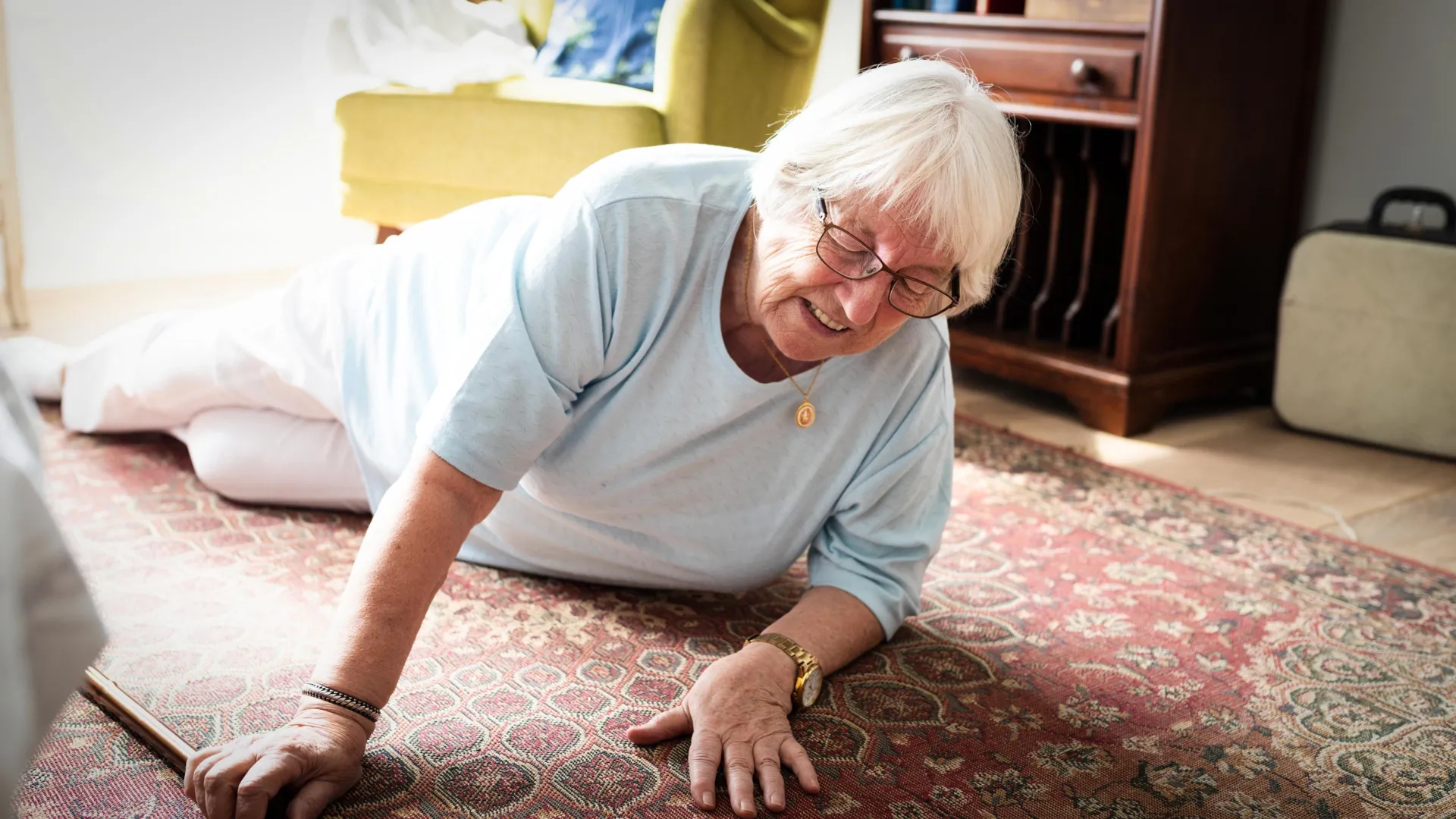
Lena Ting of Emory University and her team set out to understand how aging and Parkinson’s disease affect the way the brain and muscles respond when a person tries to regain balance.
In earlier experiments, the researchers studied young adults by suddenly destabilizing them, essentially pulling a rug out from under their feet. This triggered a rapid, automatic reaction involving the brainstem and muscles. When the balance challenge was more severe, a second wave of activity followed, involving both the brain and muscles.
In the latest study, published in eNeuro, the team examined older adults with and without Parkinson’s. They found that these individuals showed stronger brain responses and increased muscle activity even during minor balance disruptions. Ting explained, “Balance recovery takes more energy and engagement from the brain in these populations. We found that, when people require more brain activity to balance, they have less robust ability to recover their balance.”
The researchers also observed a key difference in how muscles behaved. When older adults activated one muscle to stabilize themselves, the opposing muscle often tightened at the same time. This added stiffness made movements less efficient and was associated with poorer balance performance.
The team believes their approach could eventually be used to better assess who is at risk of losing balance. While the method still needs further optimization, Ting said, “We may be able to determine whether someone has increased brain activity simply by assessing muscle activity after pulling a rug out from under you.”
If refined, this technique could help identify at risk individuals earlier, giving them a chance to improve stability through targeted balance training and exercise before a fall occurs.
Story Source:
Materials provided by Society for Neuroscience. Note: Content may be edited for style and length.
Journal Reference:
- Scott E. Boebinger, Aiden M. Payne, Jifei Xiao, Giovanni Martino, Michael R. Borich, J. Lucas McKay, Lena H. Ting. Cortically-mediated muscle responses to balance perturbations increase with perturbation magnitude in older adults with and without Parkinsonâs disease. eneuro, 2026; ENEURO.0423-25.2026 DOI: 10.1523/ENEURO.0423-25.2026
Cite This Page:
📰 This article was curated and published by
HEALTH GUIDANCE HUB
— your trusted source for the latest health news, medical research, and wellness guidance.
Visit us at https://healthguidancehub.space/ for more health insights.
