

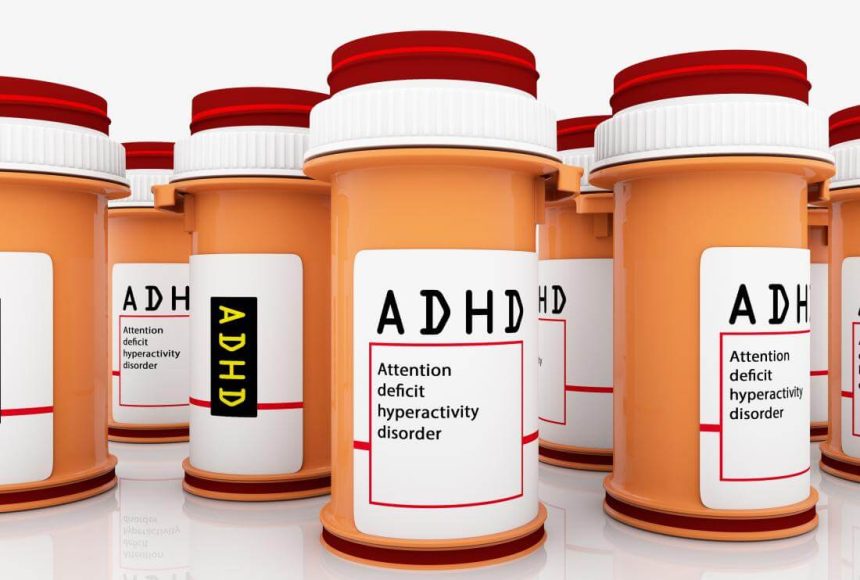
The landscape of neuropsychiatry is undergoing a monumental shift as we enter 2026. For decades, the medical community and the public alike have operated under a specific set of assumptions regarding how medications like Adderall and Ritalin function within the human brain. The prevailing wisdom suggested that these stimulants acted as a direct “tuning knob” for the brain’s attention circuits, sharpening the focus of individuals with Attention Deficit Hyperactivity Disorder (ADHD) by directly stimulating the prefrontal cortex. However, groundbreaking research published at the turn of the year has fundamentally challenged this narrative, suggesting that the primary mechanism of these drugs is far more complex and perhaps more indirect than we ever realized.
- The Traditional Paradigm: Focus as a Primary Target
- The Washington University Breakthrough: Reward and Wakefulness
- The Sleep Connection: Masking the Deficit
- 2026 Market Trends: Global Shortages and New Solutions
- Comparing Stimulant vs. Non-Stimulant Pathways
- The Rise of Adult ADHD: A Modern Epidemic?
- Clinical Neurobiology: Beyond the Synapse
- Management Strategies: A Holistic Approach for 2026
- Cognitive Behavioral Therapy (CBT) and Coaching
- The Role of Nutrition and Exercise
- Sleep Hygiene as a Core Treatment
- Precision Medicine: The Future of ADHD Care
- Summary of Key Takeaways from the New Research
- Educational Resources and Source Information
- Conclusion: A More Nuanced View of Mental Health
The Traditional Paradigm: Focus as a Primary Target
To understand why recent discoveries are so significant, one must first look at the historical context of ADHD pharmacology. Since the mid 20th century, the focus of treatment has been the catecholamine hypothesis. This theory posits that ADHD symptoms arise from a deficiency or dysregulation of dopamine and norepinephrine in the brain regions responsible for executive function.
Under this model, stimulant medications were thought to work by inhibiting the reuptake of these neurotransmitters. By keeping more dopamine in the synaptic cleft, the drugs were believed to “power up” the attention networks, allowing a person to filter out distractions and maintain a steady stream of concentration. This explanation was elegant and intuitive: if a person cannot focus, give them a drug that activates the focus centers.
Yet, clinicians often noticed a curious paradox. While many patients reported better performance, their subjective experience was not always one of “increased focus.” Instead, they often described feeling more motivated, more awake, or simply more capable of “getting started.” This discrepancy between clinical theory and patient experience provided the initial spark for the research we are seeing today in 2026.
The Washington University Breakthrough: Reward and Wakefulness
A landmark study published in the journal Cell by researchers at the Washington University School of Medicine in St. Louis has provided the most definitive evidence to date that our understanding was incomplete. By utilizing advanced resting state functional MRI (rs-fMRI) data from a massive cohort of nearly 6,000 children, the team led by Dr. Benjamin Kay and Dr. Nico Dosenbach discovered something startling.
When participants took their stimulant medication, the brain scans did not show a significant increase in activity within the traditional attention networks, such as the dorsal attention network or the prefrontal cortex. Instead, the activation was concentrated in the brain’s reward and wakefulness centers.
This finding suggests that Adderall and similar stimulants do not directly “fix” attention. Instead, they appear to work by:
- Increasing Arousal Levels: Boosting the general wakefulness of the brain, making it easier for the individual to remain alert.
- Enhancing Reward Anticipation: Making the task at hand feel more rewarding or “interesting” than it would otherwise be.
Essentially, the medication provides a “pre-reward” to the brain. For a child or adult with ADHD, a mundane task like math homework or filing taxes can feel physically painful due to a lack of dopamine signaling. The medication bridges this gap not by making the task easier to understand, but by making the brain want to do it. The “attention” that follows is actually a secondary effect of being more alert and motivated.
The Sleep Connection: Masking the Deficit
Perhaps the most provocative aspect of this 2026 research is the link between stimulants and sleep. The study found that stimulant medications produce a brain signature that almost perfectly mimics the effect of being well-rested. In participants who were chronically sleep-deprived, taking a stimulant “erased” the neurological markers of fatigue.
This has profound implications for how ADHD is diagnosed and treated today. In our fast-paced, digital-heavy society, sleep deprivation is rampant. Because the symptoms of poor sleep (irritability, lack of focus, and impulsivity) mirror the symptoms of ADHD, and because stimulants “mask” the brain’s need for sleep, there is a risk that many individuals are being treated for a neurodevelopmental disorder when they may actually be suffering from a chronic sleep deficit.
The researchers pointed out that while the medication helps people function despite a lack of sleep, it does not replace the restorative biological functions of actual rest. This “performance enhancement” comes at a potential long-term cost, as the brain’s waste clearing systems only function optimally during natural sleep cycles.
2026 Market Trends: Global Shortages and New Solutions
As we navigate the first weeks of 2026, the practical application of this research is meeting a challenging reality in the pharmaceutical market. Global supply chain issues for methylphenidate and amphetamine salts continue to impact patients worldwide.
In response to these ongoing shortages, health authorities in various regions are shifting their protocols. For instance, as of February 1, 2026, new regulations in some territories allow specifically trained general practitioners and nurse practitioners to diagnose and initiate treatment for adult ADHD, a move intended to reduce the massive backlog in psychiatric clinics.
Furthermore, the pharmaceutical industry is pivoting toward new formulations. We are seeing a rise in “next generation” stimulants and non-stimulant alternatives that aim to target these newly identified reward and wakefulness pathways more precisely, with fewer cardiovascular side effects. Brands such as Sandoz XR and Rubifen LA are becoming more prominent as they enter funded markets to stabilize the supply.
Comparing Stimulant vs. Non-Stimulant Pathways
With the realization that stimulants act primarily on reward and arousal, the role of non-stimulant medications is being re-evaluated. Drugs like Atomoxetine (Strattera) and Viloxazine (Qelbree) work differently, primarily by modulating norepinephrine.
While stimulants provide a rapid “boost” in motivation and wakefulness, non-stimulants often require weeks to build up in the system. However, for patients who struggle with the “crash” associated with stimulants or those who have underlying anxiety, non-stimulants offer a more leveled approach. The 2026 clinical guidelines increasingly recommend a “hybrid” model: using low-dose stimulants for immediate task engagement while maintaining a baseline of non-stimulant medication for emotional regulation and executive function stability.
The Rise of Adult ADHD: A Modern Epidemic?
The prevalence of adult ADHD diagnoses has skyrocketed in the last few years. This is partly due to better screening and less stigma, but it also reflects the changing nature of work in 2026. Our current economy demands high levels of executive function, constant task-switching, and prolonged digital engagement.
For many adults, the “executive function gap” only becomes apparent when the demands of their professional lives exceed their natural capacity to self-regulate. When these adults take Adderall, they aren’t necessarily becoming “smarter.” Instead, they are gaining the arousal and motivation needed to sustain effort in an environment that is naturally unrewarding to the human brain’s evolved state.
Clinical Neurobiology: Beyond the Synapse
To fully appreciate the “work differently than thought” angle, we must look at the cellular level. Newer research is moving beyond the simple “more dopamine” explanation to look at how these drugs affect neuroplasticity and astrocyte function.
Astrocytes, the star-shaped glial cells in the brain, play a massive role in regulating the environment around neurons. It is now believed that stimulants may influence how these cells manage the “background noise” of the brain. By quieting this background noise, the reward signal for a specific task becomes clearer. This “signal-to-noise ratio” theory aligns perfectly with the findings from the Washington University study: the medication makes the “signal” (the task) feel more important and rewarding, while the “noise” (distractions) becomes less relevant.
Management Strategies: A Holistic Approach for 2026
Given that stimulants are now understood more as “arousal and reward boosters” rather than “focus injectors,” the way we manage ADHD must change. Relying solely on a pill to provide focus is like relying on caffeine to provide intelligence. It provides the energy and the drive, but the individual still needs the skills to direct that energy.
Cognitive Behavioral Therapy (CBT) and Coaching
Because the medication makes tasks feel more rewarding, it creates a “window of opportunity” where an individual can actually practice new habits. CBT for ADHD is particularly effective when used in tandem with medication. It helps patients build the organizational structures and time-management skills that the medication itself cannot provide.
The Role of Nutrition and Exercise
Exercise has been shown to naturally boost dopamine and norepinephrine levels, effectively acting as a “natural stimulant.” In 2026, clinicians are increasingly prescribing structured exercise regimens as a first-line adjunct to pharmacological treatment. Similarly, diet plays a role in neurotransmitter synthesis; ensuring adequate intake of protein (which provides the amino acid precursors for dopamine) is essential for medication efficacy.
Sleep Hygiene as a Core Treatment
If stimulants mask sleep deprivation, then optimizing sleep is no longer just a “good idea”—it is a clinical necessity. Patients are being encouraged to use wearable technology to track deep sleep and REM cycles, ensuring that their medication dosage isn’t interfering with their long-term neurological health.
Precision Medicine: The Future of ADHD Care
Looking forward into the rest of 2026 and beyond, the goal of the psychiatric community is “Precision Medicine.” This involves using genetic testing to determine how a person metabolizes certain drugs and using neuroimaging to see which specific pathways (attention, reward, or arousal) are most affected in that individual.
Instead of a “one size fits all” approach with Adderall, we are moving toward a future where a patient might receive a customized blend of medications that target their specific neurobiological profile. For someone whose primary deficit is reward-seeking, a traditional stimulant might be best. For someone whose issue is purely executive dysfunction, a different class of drugs might be more appropriate.
Summary of Key Takeaways from the New Research
The shift in our understanding can be summarized in several key points:
- Mechanism of Action: Stimulants primarily target the brain’s reward and wakefulness (arousal) systems, not the attention circuitry directly.
- Secondary Focus: The improvement in attention is a secondary effect. Because the person is more awake and finds the task more rewarding, they naturally pay more attention.
- Sleep Masking: These drugs can “erase” the brain’s signature of sleep deprivation, which may lead to misdiagnosis or the ignoring of critical sleep needs.
- Performance vs. Intelligence: Stimulants are best understood as “performance enhancers” that help people do what they are already capable of doing by increasing motivation and decreasing boredom.
Educational Resources and Source Information
For those looking to dive deeper into the primary research and stay updated on the daily developments of ADHD science, the following sources provide comprehensive data:
- Journal Cell: The original study titled “Stimulant medications affect arousal and reward, not attention networks” provides the raw neuroimaging data. [Source: Cell.com]
- Washington University School of Medicine: Detailed press releases and interviews with Dr. Benjamin Kay regarding the clinical implications. [Source: medicine.wustl.edu]
- FDA Drug Shortage Database: For daily live updates on the availability of ADHD medications. [Source: fda.gov]
- CHADD (Children and Adults with Attention-Deficit/Hyperactivity Disorder): Provides updated clinical guidelines and support for the 2026 landscape. [Source: chadd.org]
- Psychology Today Health News: Offers layperson breakdowns of recent neuropsychiatric breakthroughs. [Source: psychologytoday.com]
Conclusion: A More Nuanced View of Mental Health
The discovery that ADHD drugs work differently than we thought is not a reason for alarm; rather, it is an opportunity for better care. By acknowledging that these medications are tools for arousal and motivation, we can move away from the “magic pill” myth and toward a more integrated, holistic view of mental health.
As we move through 2026, the focus will remain on balancing the incredible benefits of these pharmacological interventions with a deep respect for the brain’s natural rhythms, particularly the need for sleep and the importance of behavioral skill-building. The future of ADHD treatment is not just about “focusing harder,” but about understanding the complex interplay of drive, reward, and the biological necessity of rest.