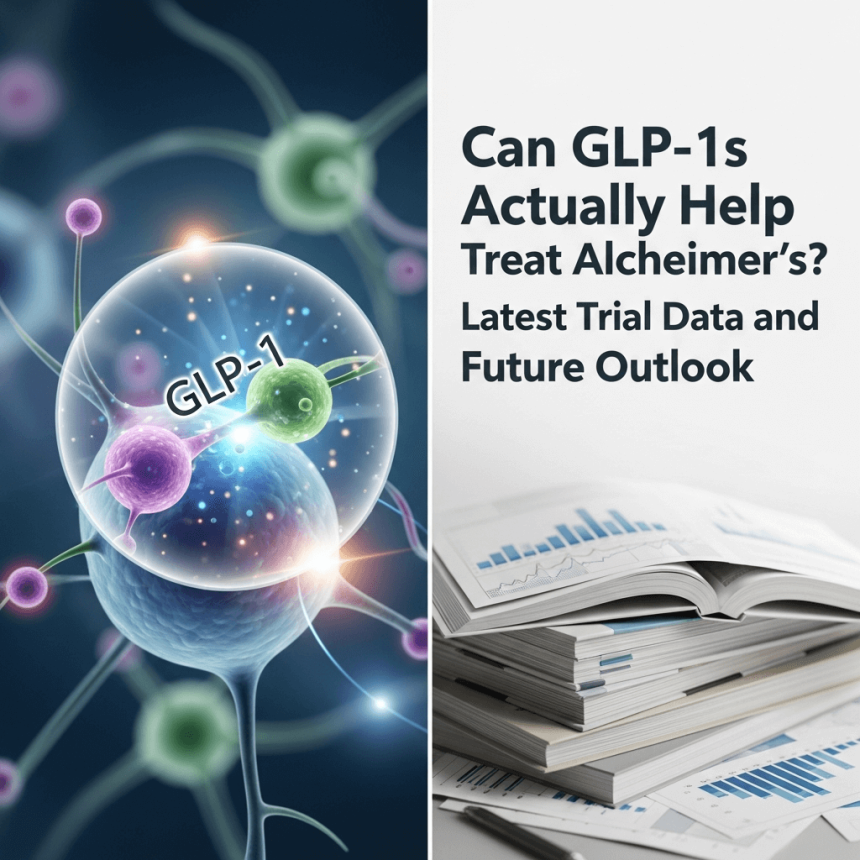
The search for an effective treatment for Alzheimer’s disease has been one of the most challenging journeys in modern medicine. For decades, researchers focused primarily on clearing amyloid plaques from the brain. While recent approvals like lecanemab and donanemab have shown that this approach can slow the disease, they are not a cure. This has led scientists to look toward other pathways, particularly the metabolic and inflammatory systems. One of the most exciting developments in this field involves a class of drugs originally designed for type 2 diabetes and weight loss: glucagon-like peptide-1 (GLP-1) receptor agonists.
- The Metabolic Connection: Why Diabetes Drugs for Dementia?
- The Liraglutide Breakthrough: Insights from the ELAD Trial
- The EVOKE and EVOKE Plus Trials: Analyzing the Phase 3 Results
- Current Landscape: Where We Stand in January 2026
- Biological Mechanisms: How GLP-1 Agonists Protect the Brain
- Looking Ahead: Clinical Readouts to Watch in 2026
- Conclusion: A Pivot, Not a Stop
- Source Links for Further Reading
As of early 2026, the medical community is processing a wealth of new data from landmark clinical trials. From the promising signals of phase 2 studies to the more complex results of large-scale phase 3 trials, the story of GLP-1s in neurology is evolving rapidly. This article provides a comprehensive deep dive into the latest evidence, the biological mechanisms at play, and what the future holds for this therapeutic class.
The Metabolic Connection: Why Diabetes Drugs for Dementia?
The link between metabolic health and cognitive function is not new. In fact, some researchers have referred to Alzheimer’s as “Type 3 Diabetes.” People with type 2 diabetes have a significantly higher risk of developing dementia, often cited as being twice as likely as those without the condition. This correlation is rooted in how the brain uses energy.
Glucose is the primary fuel for the brain. In the early stages of Alzheimer’s, the brain’s ability to metabolize glucose begins to decline, often years before symptoms appear. This “starvation” of neurons leads to oxidative stress, inflammation, and eventual cell death. GLP-1 receptors are found throughout the brain, particularly in areas responsible for memory and learning, such as the hippocampus. When these receptors are activated, they don’t just help manage blood sugar; they appear to protect neurons from damage, reduce neuroinflammation, and improve synaptic plasticity.
The Liraglutide Breakthrough: Insights from the ELAD Trial
One of the first major signals that GLP-1s could impact the human brain came from the Evaluating the Effects of the Novel GLP-1 Analogue Liraglutide in Alzheimer’s Disease (ELAD) trial. Led by researchers at Imperial College London and presented at the Alzheimer’s Association International Conference, this phase 2b trial provided a crucial foundation for the field.
The study involved 204 patients with mild Alzheimer’s disease across the United Kingdom. Participants received daily injections of liraglutide or a placebo for one year. While the trial did not meet its primary endpoint of changing the glucose metabolic rate in the brain, the secondary and exploratory results were remarkable.
Patients treated with liraglutide showed a nearly 50 percent reduction in brain volume loss in key areas like the frontal, temporal, and parietal lobes. These are the regions most affected by the disease. Furthermore, the researchers observed an 18 percent slower decline in cognitive function over the 12-month period compared to the placebo group. This suggested that while the drug might not have radically changed glucose metabolism in the short term, it was exerting a powerful neuroprotective effect.
The EVOKE and EVOKE Plus Trials: Analyzing the Phase 3 Results
Following the success of phase 2 studies, the pharmaceutical industry moved toward massive phase 3 trials to confirm these benefits. The EVOKE and EVOKE Plus trials, sponsored by Novo Nordisk, were designed to test oral semaglutide in over 3,800 participants with early-stage symptomatic Alzheimer’s disease.
The results, which became fully available in late 2025 and early 2026, have been met with a mix of disappointment and cautious optimism. The primary endpoint for these trials was a change in the Clinical Dementia Rating-Sum of Boxes (CDR-SB) score over 104 weeks. Unfortunately, the data showed that oral semaglutide did not demonstrate a statistically significant reduction in cognitive decline compared to the placebo.
However, the trials were not a total loss. Sub-analyses revealed significant shifts in several Alzheimer’s-related biomarkers. There were notable reductions in markers of neuroinflammation and neurodegeneration. This indicates that the drug is indeed reaching the brain and interacting with the intended biological pathways. The failure to meet the primary cognitive endpoint suggests that for patients who already have established symptoms, semaglutide alone might not be strong enough to reverse or halt the progression within a two-year window.
Current Landscape: Where We Stand in January 2026
As of January 6, 2026, the focus has shifted toward refining how we use these medications. The scientific consensus is that GLP-1s likely have a role to play, but perhaps not as a standalone treatment for advanced stages of the disease.
Current daily updates from the research field suggest several new directions:
- Focus on Prevention: Observational data continues to show that people taking GLP-1s for diabetes or obesity have a 40 to 70 percent lower risk of being diagnosed with Alzheimer’s years later. This suggests the drugs are most effective when started long before cognitive symptoms appear.
- Targeting Neuroinflammation: Researchers are looking at how GLP-1s might be used specifically to calm the “brain on fire” state seen in neurodegenerative diseases.
- Combination Therapies: There is growing excitement about combining GLP-1s with anti-amyloid treatments. If lecanemab clears the “trash” (amyloid) and semaglutide protects the “engines” (neurons) and reduces inflammation, the combined effect could be significantly more powerful.
Biological Mechanisms: How GLP-1 Agonists Protect the Brain
The reason these drugs are so intriguing is their multi-modal action. Unlike many drugs that target just one protein, GLP-1 agonists appear to affect the brain in several ways:
- Reduction of Oxidative Stress: They help cells manage the byproducts of energy production, preventing “rusting” of the neurons.
- Anti-Inflammatory Effects: They inhibit the activation of microglia, the brain’s immune cells, which can become overactive and destructive in Alzheimer’s.
- Improved Synaptic Plasticity: They enhance the ability of neurons to communicate with one another, which is the biological basis of memory.
- Vascular Health: By improving the health of blood vessels, they ensure the brain receives a steady supply of oxygen and nutrients.
Looking Ahead: Clinical Readouts to Watch in 2026
While the EVOKE results were a hurdle, the pipeline remains full. Several smaller trials are currently looking at different versions of these drugs, including dual agonists that target both GLP-1 and GIP receptors. These “next-gen” molecules might provide even stronger neuroprotective signals than semaglutide or liraglutide alone.
Furthermore, real-world evidence from millions of patients using these drugs for weight loss will continue to provide a “natural experiment” for researchers. By tracking these populations over the next decade, we will get a clearer picture of whether long-term use can effectively prevent the onset of dementia in the general population.
Conclusion: A Pivot, Not a Stop
The latest trial data on GLP-1s for Alzheimer’s marks a critical turning point. While oral semaglutide did not meet the high bar of a phase 3 cognitive trial in symptomatic patients, the biological signals it produced cannot be ignored. The field is pivoting away from the idea of a “magic pill” for Alzheimer’s and toward a more nuanced, personalized approach.
For now, GLP-1s remain a powerful tool for metabolic health, which is a major risk factor for dementia. As we move through 2026, the integration of these drugs into broader treatment regimens and prevention strategies offers a new horizon of hope for millions of families worldwide.
Source Links for Further Reading
- Alzheimer’s Association: GLP-1s and Alzheimer’s Research
- Novo Nordisk: EVOKE Phase 3 Clinical Trial Results
- National Institutes of Health (NIH): The Link Between Diabetes and Dementia
- Journal of Neuroinflammation: Mechanisms of GLP-1 in the Brain
- AlzDiscovery.org: The 2025 Alzheimer’s Drug Development Pipeline