The landscape of urban public health changed forever in early 2026. As federal enforcement operations intensified under the banner of Operation Metro Surge, the city of Minneapolis became the epicenter of a quiet but profound medical revolution. When healthcare spaces, traditionally seen as sanctuaries, began to feel like surveillance hubs, a group of dedicated professionals and community leaders made a radical choice. They moved medicine underground.
- The Genesis of the Shadow Medical Network
- How the Minneapolis Underground Operates
- The Economic Case for Secret Networks
- Legal and Ethical Implications for Providers
- Should Other Cities Follow Suit?
- Daily Updates: The State of Play on March 5, 2026
- A Roadmap for Urban Resilience
- Comprehensive Sources and Further Reading
- The New Standard of Care
Today, on March 5, 2026, the data from the Twin Cities tells a story of both desperation and defiance. With over 12,000 new federal agents deployed nationally following the passage of the One Big Beautiful Bill Act of 2025, the presence of enforcement vehicles in hospital parking lots has become a daily reality. In response, Minneapolis has developed a sophisticated, secret health support network that bypasses traditional institutions entirely. The question facing every other major American city today is no longer if they should consider such a model, but rather how quickly they can implement one.
The Genesis of the Shadow Medical Network
The shift toward underground healthcare did not happen in a vacuum. It was the direct result of a breakdown in trust between the immigrant community and the formal medical establishment. By late 2025, reports from the Kaiser Family Foundation indicated that nearly 48 percent of undocumented adults were avoiding even emergency medical care due to fears of enforcement.
In Minneapolis, this fear turned into a localized public health crisis. Appointment cancellation rates at community clinics soared to 50 percent. Diabetic patients began rationing insulin because they were too terrified to visit pharmacies, and pregnant women were attempting home births without any professional assistance to avoid being “processed” at the hospital.
The tipping point arrived in January 2026, following the tragic shooting of Alex Pretti, an ICU nurse, during an enforcement action near a medical facility. This event galvanized the local medical community. Doctors, nurses, and social workers realized that the only way to fulfill their Hippocratic Oath was to deliver care where the patients felt safe: in their living rooms, in church basements, and through encrypted digital channels.
How the Minneapolis Underground Operates
Unlike traditional charitable clinics, the Minneapolis shadow network is designed for invisibility. It operates on a decentralized model that prioritizes patient anonymity and physical safety. Understanding the mechanics of this system is crucial for other cities looking to replicate its success.
Encrypted Communication and Triage
The network relies heavily on secure messaging platforms. Patients or their family members contact a rotating group of triage coordinators via Signal or other end-to-end encrypted apps. These coordinators are often community leaders who speak the patient’s native language. They assess the severity of the medical need and dispatch a volunteer “medical courier” or a mobile clinician. This system prevents the creation of a centralized database that could be subpoenaed or breached.
The Mobile Clinic Model
Instead of asking patients to travel to a fixed location, the healthcare comes to them. Volunteer physicians and nurse practitioners carry “go-bags” equipped with essential diagnostic tools, portable ultrasound machines, and a supply of common medications. This allows for the management of chronic conditions like hypertension and asthma without the patient ever stepping foot in a facility monitored by license plate readers or facial recognition software.
Private Transport Infrastructure
When a case is too severe for home treatment, the network utilizes a fleet of private vehicles driven by vetted volunteers. These “medical transporters” know the routes that avoid high-traffic enforcement zones. They coordinate with specific sympathetic staff members at local hospitals to ensure a “warm handoff” that bypasses the public waiting room, where the risk of encountering federal agents is highest.
The Economic Case for Secret Networks
Critics often argue that underground medical systems are a drain on local resources and operate outside the legal framework of the state. However, the economic reality of 2026 suggests the opposite. When preventative care is ignored, the resulting emergency cases are exponentially more expensive for the public.
A patient with untreated cellulitis may eventually require a week-long hospital stay and limb-saving surgery costing upwards of $50,000. That same patient could have been treated for $50 worth of antibiotics through an underground network. By maintaining the health of the immigrant workforce, Minneapolis is effectively protecting its local economy. The “retribution” cuts to federal health grants, such as the $42 million recently stripped from Minnesota’s public health infrastructure by the CDC, have only made the efficiency of these volunteer networks more vital.
Legal and Ethical Implications for Providers
The legality of these networks is a subject of intense debate among legal scholars in 2026. While the Emergency Medical Treatment and Labor Act (EMTALA) requires hospitals to stabilize patients, it does not provide a roadmap for “shadow” medicine. Providers in the Minneapolis network often operate in a grey area, balancing their professional licenses against their moral obligations.
However, the ethical argument is clear. When a policy environment makes a hospital feel like a trap, the hospital ceases to be a place of healing. In this context, civil disobedience becomes a tool of public health. By providing care in secret, Minneapolis doctors are arguing that the right to health is universal and should not be contingent on one’s immigration status or the current political climate.
Should Other Cities Follow Suit?
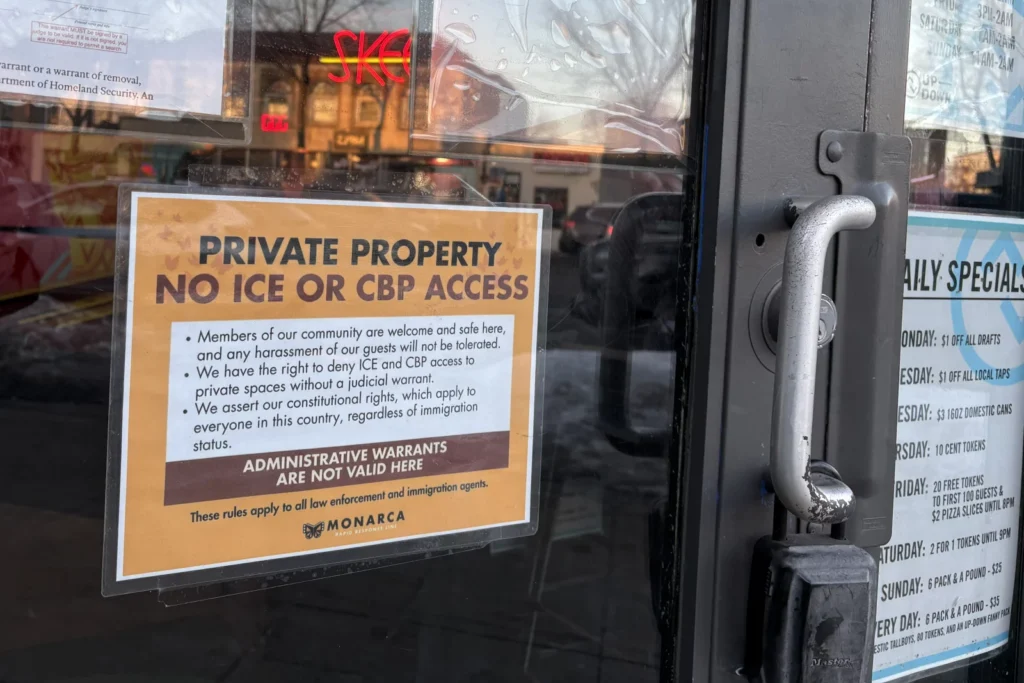
The Minneapolis model is currently being studied by officials in Chicago, Los Angeles, and Denver. These cities are facing similar pressures from federal operations and the looming expiration of state-level healthcare subsidies for non-citizens.
Why the Model is Scalable
The beauty of the Minneapolis system is its low overhead. It does not require a billion-dollar bond or a new department of city government. It requires a coalition of willing professionals and a foundation of trust. For cities with large, vulnerable populations, the creation of a “Plan B” medical system is a pragmatic necessity. It serves as an insurance policy against the complete collapse of community trust in public institutions.
The Risks of Implementation
No city should enter into this lightly. The risks of federal prosecution under “harboring” or “shielding” statutes are real, though rarely applied to medical professionals providing standard care. Furthermore, the lack of traditional oversight in underground networks means that quality control must be managed rigorously by the internal community of practitioners.
Daily Updates: The State of Play on March 5, 2026
As of this morning, federal enforcement remains active in several Minneapolis neighborhoods, including the Cedar-Riverside area. The local “Shadow Network” has reported a 15 percent increase in requests for home-based prenatal care in just the last 48 hours.
Meanwhile, at the federal level, the introduction of the No Federal Tax Dollars for Illegal Aliens Health Insurance Act of 2026 by Representative Lauren Boebert highlights the growing legislative push to further restrict access to formal care. This move is expected to drive even more individuals into the underground systems, making the Minneapolis blueprint more relevant than ever.
A Roadmap for Urban Resilience
For a city to successfully transition to this model, several steps are necessary. First, there must be a secret census of willing medical volunteers who are prepared to work outside of their official shifts. Second, a secure digital infrastructure must be established before a crisis hits. Finally, local law enforcement and city officials must be educated on the public health benefits of these networks, ensuring they do not inadvertently interfere with “mercy missions.”
Minneapolis has shown that a city can protect its residents even when federal policy is hostile. They have proven that healthcare is not just a service provided by the state, but a commitment made by a community to itself.
Comprehensive Sources and Further Reading
For those looking to dive deeper into the data and reports mentioned in this article, the following sources provide the necessary context.
- KFF Health News: As ICE Moved In, Minnesotans Set Up a Shadow Medical System. (Published March 5, 2026)
- The BMJ: Fear of immigration enforcement is driving a public health crisis in Minnesota. (Updated February 2026)
- Department of Homeland Security: DHS Sets the Stage for Record-Breaking Year Under Operation Metro Surge. (Official Release, January 2026)
- The Commonwealth Fund: What Recent Policy Changes Mean for Immigrant Health Coverage in 2026.
- National Association of County and City Health Officials (NACCHO): Refugee, Immigrant, and Migrant Programs Toolkit.
The New Standard of Care
The Minneapolis secret health support network is a testament to the ingenuity of the human spirit when faced with systemic exclusion. By removing the barriers of fear and surveillance, they have restored the sanctity of the doctor-patient relationship. As we move further into 2026, the success of this model will likely determine the health outcomes of millions of urban residents across the country. It is time for city leaders to look north and ask themselves: are we prepared to do what is necessary to keep our people alive?