


AI boosts breast cancer detection by 10.4% in UK screening evaluation


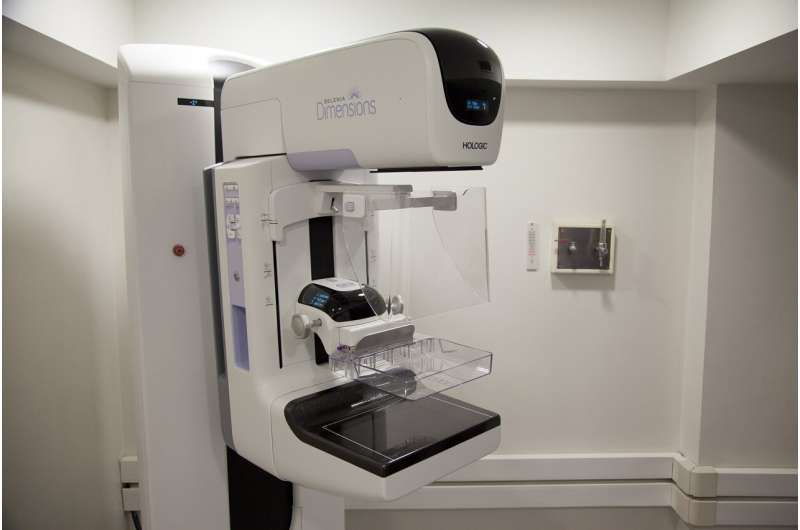
The UK’s first comprehensive evaluation of the use of Artificial Intelligence (AI) in breast cancer screening found that it can increase breast cancer detection by 10.4% and has the potential to reduce the workload of health care workers by more than 30% compared to the current clinical process. Published today in Nature Cancer, the evaluation was carried out by a team of scientists, clinicians and software developers from the University of Aberdeen, NHS Grampian, and Kheiron Medical Technologies, now part of DeepHealth Inc.
The study found that not only did AI help detect more cancers, most of which were invasive and high grade, it could also reduce the time to notify affected women from 14 days to just three days. This, the authors say, is “hugely significant given that the earlier detection of primarily high-grade cancers enables earlier treatment, which has a greater likelihood of treatment success.”
The researchers also found that using AI as part of the large-scale screening program could reduce the number of women recalled unnecessarily for further assessment, including unnecessary biopsies. This, the team say, will significantly reduce patient stress and worry while also saving health care resources and costs.
The evaluation, led by the University of Aberdeen, followed NHS Grampian’s GEMINI (Grampian’s Evaluation of Mia in an Innovative National breast screening Initiative) project which was facilitated by the North of Scotland NHS Innovation Hub.

The team assessed how an AI software tool, Mia, developed by Kheiron, could be used to support health care workers in the routine breast screening of 10,889 women in NHS Grampian.
Dr. Clarisse de Vries, Lecturer in Data Science at the University of Glasgow, lead author and former Research Fellow at the University of Aberdeen, explains why this GEMINI evaluation is so impactful for thousands of women:
“As part of the UK breast screening program all women aged between 50 and 70 years old in the UK are invited for mammograms every three years. This results in over 2 million mammogram examinations being performed annually.
“Currently, in the UK, to reduce the number of cancers missed, two radiologists read every mammogram. However, some breast cancers are extremely hard to detect, and it is not always clear from mammograms whether breast cancer is present. So, when there is the suspicion of cancer on a mammogram, the woman is recalled for additional investigations.
“Despite this, approximately 20% of cancers are missed using this process. Furthermore, many more women are recalled for further assessments than are diagnosed with cancer. For each five women recalled, approximately one will be diagnosed with breast cancer. So, they have had unnecessary, often invasive tests—not to mention the additional worry for the patient.
“This is why our findings are so important—not only did we find optimal ways to detect breast cancer, quicker and more accurately, we also found ways to reduce the number of women having to return for unnecessary tests.”
Niccolo Stefani, MD, Business and Product Leader Population Health & Clinical AI, DeepHealth added, “This study demonstrates how AI can do more than enhance clinical accuracy, it can reimagine how we deliver care.
“By detecting more cancers at an earlier stage and reducing unnecessary interventions, we’re not only helping to improve outcomes for women today but also setting a new standard for scalable, proactive care. It’s a real-world example of how AI-powered solutions can potentially stage shift disease.”
The team found that AI could support breast screening by performing tasks similar to those that human experts perform, such as examining mammograms and highlighting potential areas of concern.
To comprehensively evaluate the different ways in which AI could support breast screening, seventeen different scenarios were tested by incorporating AI into the existing breast screening workflow at various points and with different operating point configurations.
The results showed that combining AI as a second reader—substituting one human reader, and as an extra reader serving as a safeguard, resulted in the best combination of workload savings and increased early cancer detection without recalling more women for additional tests.
Dr. Clarisse de Vries said, “Health care and radiology are facing substantial challenges due to high workload, a shortfall of clinical radiologists, and an aging population.
“However, despite the promise of AI, the UK National Screening Committee does not recommend the use of AI in the NHS breast screening program. They previously highlighted that both the quality and quantity of the evidence base were insufficient. Our work adds high-quality evidence to the scientific literature in support of AI. It also demonstrates that AI use can be tailored to local health care needs to enhance service delivery.”
Dr. Annie Ng, Science Lead at DeepHealth explains, “We are incredibly proud to show the real-world impact of clinical AI solutions for large scale screening to improve patient experience and outcomes. Programs like GEMINI are meaningful to build trust and accelerate AI adoption.”
Professor Lesley Anderson, Interdisciplinary Institute Director—Health, Nutrition and Wellbeing and Chair in Health Data Science at the University of Aberdeen explains how they did it: “Our unique trial design lets us simulate real-world use of AI in multiple ways, something never done before in this field.
“This pioneering approach allows health care service providers and policymakers to understand better how AI could be operationally integrated into clinical workflows to support breast screening and provide services with different options depending on their needs.”
Professor Gerald Lip, Clinical Director for breast screening in the North East of Scotland in NHS Grampian and Lead for Artificial Intelligence in Clinical Practice at the University of Aberdeen, added, “Our results show that AI could effectively support breast screening services by increasing cancer detection and reducing doctors’ workload.
“Ultimately, for radiologists, AI augments practice. Along with picking up more cancers, in UK and European screening programs where mammograms are read by two humans, partial substitution of one of the human readers for normal examinations can deliver real workload savings and reduce burnout. The bottom line here is—without AI, doctors would not have caught these cancers as early.
“The translation of AI into clinical practice is one of the operational challenges in the coming decade. Our findings and the novel way we have conducted this prospective study will inform the conversation around using AI in health care.”
The study’s findings help address several of the evidence gaps identified by the UK National Screening Committee. While further research is needed to fully quantify the benefits and any potential harms, this work provides an important foundation for next steps in the field. It directly supports the upcoming EDITH trial, which will expand this work to evaluate the use of AI in breast screening across sites throughout the UK. The Scottish element of the trial will be led jointly by the University of Aberdeen, NHS Grampian and University of Glasgow.
Professor Mike Lewis, NIHR Scientific Director for Innovation, said, “By generating high-quality evidence on the safe and effective use of AI in breast cancer screening, the team has shown its potential to improve detection, reduce unnecessary stress for patients, and ease pressure on the NHS workforce. This is exactly the kind of innovation we want to see delivering tangible improvements across the health system.”
Publication details
Prospective evaluation of artificial intelligence integration into breast cancer screening in multiple workflow settings: the GEMINI study. Nature Cancer (2026). doi.org/10.1038/s43018-026-01126-1 www.nature.com/articles/s43018-026-01126-1
Journal information:
Nature Cancer
Key medical concepts
Artificial IntelligenceBreast Cancer Early DetectionMammography
Clinical categories
Diagnostic radiologyWomen’s healthOncologyCommon illnesses & Prevention
AI boosts breast cancer detection by 10.4% in UK screening evaluation (2026, March 10)
retrieved 11 March 2026
from https://medicalxpress.com/news/2026-03-ai-boosts-breast-cancer-uk.html
part may be reproduced without the written permission. The content is provided for information purposes only.
📰 This article was curated and published by
HEALTH GUIDANCE HUB
— your trusted source for the latest health news, medical research, and wellness guidance.
Visit us at https://healthguidancehub.space/ for more health insights.
