

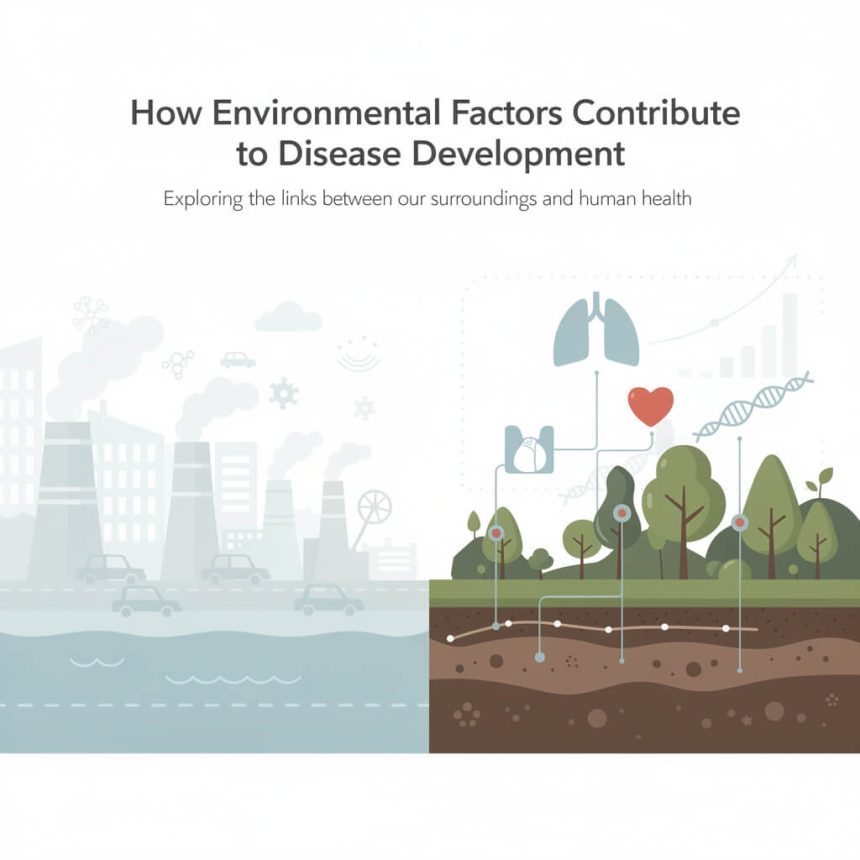
In the modern era, the relationship between human health and the surrounding environment has become more intricate than ever before. While genetics provide the biological script, the environment acts as the director, determining which chapters of disease development are actually written. As we navigate the complexities of 2026, understanding the external triggers of chronic and acute illnesses is not just a scientific pursuit but a necessity for survival and long term vitality. This comprehensive analysis explores the multifaceted ways that environmental stressors orchestrate the onset of disease, from the microscopic level of DNA methylation to the macroscopic impact of global climate shifts.
- The Air We Breathe: Particulate Matter and Systemic Inflammation
- Cardiovascular Consequences of Air Pollution
- Respiratory Disorders and the Rise of Adult Onset Asthma
- The Toxic Legacy of Heavy Metals: Neurological and Renal Risks
- Water Contamination: The Invisible Threat in Our Taps
- The Legal and Financial Landscape of Environmental Illness
- The Microbiome and Environmental Interactions
- Climate Change: An Indirect Driver of Disease
- Daily Live Updates: The State of the Environment Today
- Conclusion and Future Outlook
The Air We Breathe: Particulate Matter and Systemic Inflammation
Air quality remains the most significant environmental risk factor for global mortality in 2026. Recent data from the Institute for Health Metrics and Evaluation indicates that ambient particulate matter is now the second leading cause of death worldwide. The mechanisms are complex but well documented. When we inhale fine particles, particularly PM2.5, these microscopic invaders bypass the body’s natural filtration systems in the nose and throat.
Once they reach the deep alveoli of the lungs, they trigger a localized immune response. However, the damage rarely stays confined to the respiratory system. These particles can cross the blood air barrier, entering the systemic circulation. This process triggers a state of chronic low grade inflammation, which is the precursor to a staggering array of conditions.
Cardiovascular Consequences of Air Pollution
The heart and blood vessels are particularly sensitive to air pollutants. Chronic exposure is linked to the acceleration of atherosclerosis, the hardening of the arteries. In 2026, clinical studies have shown that high pollution days correlate with immediate spikes in emergency room visits for myocardial infarction and stroke. The pollutants induce oxidative stress, which damages the endothelial lining of the vessels, making them more prone to plaque buildup and rupture.
Respiratory Disorders and the Rise of Adult Onset Asthma
While asthma was traditionally viewed as a childhood condition, 2026 has seen a significant rise in adult onset asthma linked to urban air quality. Nitrogen dioxide, a common byproduct of traffic emissions, acts as a potent irritant. Long term exposure leads to permanent changes in lung architecture, reducing lung function and increasing susceptibility to chronic obstructive pulmonary disease.
The Toxic Legacy of Heavy Metals: Neurological and Renal Risks
Heavy metals such as lead, mercury, cadmium, and arsenic continue to persist in our soil, water, and consumer products. Unlike organic pollutants that might eventually degrade, heavy metals are elemental and permanent. They accumulate in human tissues over decades, a process known as bioaccumulation.
Lead Exposure and Cognitive Decline
Even at low levels previously thought to be safe, lead exposure is now recognized as a driver of cognitive decline in older adults. Lead mimics calcium in the body, allowing it to cross the blood brain barrier where it disrupts neurotransmitter signaling. Research in 2026 highlights a strong correlation between historic lead exposure and the early onset of neurodegenerative symptoms similar to those found in Alzheimer’s disease.
Cadmium and Kidney Function
Cadmium, often found in industrial runoff and certain fertilizers, is a major threat to renal health. It has an exceptionally long half life in the human body, often exceeding twenty years. The kidneys act as the primary filtration site for cadmium, and over time, the metal causes damage to the proximal tubules. This can lead to chronic kidney disease, a condition that requires expensive long term management and significantly alters quality of life.
Water Contamination: The Invisible Threat in Our Taps
Access to clean water is a fundamental human right, yet chemical contamination remains a pervasive issue in 2026. Emerging contaminants, particularly per- and polyfluoroalkyl substances, often called forever chemicals, have been detected in water systems across the globe.
Endocrine Disruption and Metabolic Syndrome
PFAS and other industrial chemicals act as endocrine disruptors. They mimic or block natural hormones, interfering with the body’s metabolic processes. There is a growing body of evidence linking waterborne chemical exposure to the rising rates of obesity, Type 2 diabetes, and thyroid disorders. Because these chemicals do not break down, they stay in the human bloodstream for years, continuously exerting their disruptive effects.
Pathogens and Waterborne Outbreaks
Beyond chemical threats, environmental changes are altering the landscape of waterborne pathogens. Warmer water temperatures in 2026 have facilitated the growth of harmful algal blooms and bacteria like Vibrio. These biological factors contribute to acute gastrointestinal illnesses and can even lead to systemic infections in vulnerable populations.
The Legal and Financial Landscape of Environmental Illness
For individuals affected by environmental toxins, the path to recovery often involves significant financial and legal hurdles. This intersection of health and law is a critical component of the modern disease landscape.
Seeking Justice for Toxic Exposure
Legal frameworks have evolved to allow victims of environmental negligence to seek compensation. Whether it is a community affected by industrial runoff or workers exposed to carcinogenic chemicals, personal injury law now heavily incorporates environmental science. Proving causation remains the biggest challenge, requiring expert testimony and advanced longitudinal health data.
Insurance and Long Term Care
The cost of treating chronic diseases linked to the environment can be astronomical. Health insurance providers are increasingly looking at environmental risk factors when determining coverage and premiums. For many, the financial burden of managing a condition like chronic obstructive pulmonary disease or heavy metal poisoning requires specialized insurance products and long term financial planning.
The Microbiome and Environmental Interactions
One of the most exciting areas of research in 2026 is the impact of the environment on the human microbiome. Our internal ecosystem of bacteria, fungi, and viruses plays a vital role in immune function. Environmental factors, from the food we eat to the air we breathe, directly influence the diversity and health of this microbiome.
The Gut Brain Axis and Environmental Toxins
There is a bidirectional communication channel between the gut and the brain. Pesticides and heavy metals can alter the composition of gut bacteria, which in turn can send signals to the brain that trigger neuroinflammation. This connection is being studied as a potential factor in the development of Parkinson’s disease and various mood disorders.
Urbanization and Microbial Diversity
Living in highly sanitized urban environments can lead to a lack of exposure to beneficial microbes. This lack of diversity is linked to the hygiene hypothesis, which suggests that our immune systems become hypersensitive when they are not challenged by natural environmental microbes. This hypersensitivity manifests as allergies and autoimmune diseases.
Climate Change: An Indirect Driver of Disease
As we move through 2026, the indirect effects of climate change on health are becoming more apparent. Shifting weather patterns are not just about temperature; they are about the fundamental reorganization of disease vectors.
Vector Borne Disease Expansion
Warmer climates allow mosquitoes and ticks to thrive in regions where they were previously unknown. Diseases like Lyme disease, Malaria, and Dengue fever are expanding their geographical footprints. This requires new public health strategies and increased awareness in areas that were once considered safe.
Extreme Weather and Mental Health
The psychological impact of environmental instability cannot be overlooked. The increase in frequency and severity of extreme weather events in 2026 has led to a rise in eco anxiety and post traumatic stress disorder among affected populations. The loss of homes and livelihoods due to environmental disasters is a significant social determinant of health.
Daily Live Updates: The State of the Environment Today
As of early January 2026, global monitoring stations are reporting record high levels of atmospheric carbon dioxide. In urban centers across Asia and parts of North America, air quality alerts have been issued due to stagnant weather patterns trapping industrial emissions. Health officials are advising individuals with pre existing respiratory conditions to limit outdoor activity and use high quality filtration systems indoors.
In the realm of water safety, several new regulatory standards for PFAS have gone into effect this week, forcing municipalities to upgrade their filtration infrastructure. This move is expected to significantly reduce the incidence of chemical related endocrine issues over the next decade.
Conclusion and Future Outlook
The path toward a healthier future requires a dual approach: personal mitigation and systemic change. While we can take steps to reduce our individual exposure through air purifiers, water filters, and mindful consumption, the broader solution lies in policy and environmental stewardship. The diseases of the 21st century are largely products of our environment, and therefore, the cure must also be environmental.
By understanding the link between our surroundings and our biology, we can make informed decisions that protect our health and the health of future generations. The integration of environmental science into clinical practice is no longer optional; it is the cornerstone of modern medicine.
Sources and References
- World Health Organization. (2025). Global Air Quality Guidelines and Health Impacts. WHO Environmental Health
- Institute for Health Metrics and Evaluation. (2025). Global Burden of Disease Study. IHME Data Visualizations
- National Institute of Environmental Health Sciences. (2026). The Impact of Heavy Metals on Human Development. NIEHS Research
- International Agency for Research on Cancer. (2025). Environmental Carcinogens: 2025 Report. IARC Monographs
- Environmental Protection Agency. (2026). Emerging Contaminants in Drinking Water. EPA Water Standards