

Understanding the intricate link between family history and disease risk has moved from simple observation to a high-tech discipline known as precision medicine. In 2026, the intersection of genomic data, artificial intelligence, and personalized healthcare has transformed how we view our biological inheritance. For many years, we relied on the standard medical family tree to guess what health challenges might lie ahead. Today, we use sophisticated diagnostic tools to look directly at the code that builds us. This article explores the profound impact of familial background on health outcomes and how modern science allows us to rewrite our personal health narratives through early detection and targeted intervention.
- The Evolution of Hereditary Health Assessment in 2026
- Decoding the Non-Coding Genome: The DNA Dark Matter
- Precision Oncology: Redefining Hereditary Cancer Risk
- Cardiovascular Legacies: Managing the Risk of Heart Disease
- Metabolic Health and the Rise of Precision Diabetology
- Neurogenetics and the Future of Brain Health
- The Integration of Artificial Intelligence in Genetic Diagnostics
- Ethical Considerations: Data Privacy and Insurance in the Genomic Age
- Practical Steps: How to Navigate Your Family Health History
- The Outlook for 2026 and Beyond
The Evolution of Hereditary Health Assessment in 2026
As we move further into 2026, the medical community has undergone a significant shift. We no longer treat family history as a static record of the past but as a dynamic predictor of the future. The rise of Next-Generation Sequencing (NGS) has made it possible for individuals to gain a comprehensive view of their genetic landscape at a fraction of the cost seen in previous decades. This accessibility has fueled a surge in proactive healthcare where the focus is on prevention rather than reaction.
Recent reports from global health organizations indicate that genomic technologies are now central to clinical practice. This shift is largely driven by the integration of multi-omics, which combines genomics with proteomics and metabolomics to provide a multi-layered view of a person’s health. By looking at how genes interact with proteins and metabolic processes, doctors can identify the earliest signs of disease long before physical symptoms appear. This level of precision is particularly vital for those with a known family history of chronic conditions.
Decoding the Non-Coding Genome: The DNA Dark Matter
One of the most exciting breakthroughs in early 2026 involves the study of what scientists call DNA dark matter. For a long time, researchers focused almost exclusively on the 2 percent of the genome that codes for proteins. However, we now know that the non-coding regions of our DNA play a crucial role in regulating gene expression. Many hereditary risks are hidden in these regulatory segments.
Recent discoveries in the National Genomic Research Library have uncovered new neurodevelopmental disorders linked to the non-coding genome. These findings emphasize that a lack of “known” genetic markers in a family history does not necessarily mean a lack of risk. It simply means we are now developing the tools to see what was previously invisible. This discovery is a game-changer for families who have suffered from unexplained conditions for generations, finally offering answers and a path toward treatment.
Precision Oncology: Redefining Hereditary Cancer Risk
Cancer remains one of the most significant concerns for those with a strong family history of the disease. In 2026, precision oncology has moved beyond the well-known BRCA1 and BRCA2 genes. While these markers are still critical for identifying risks for breast and ovarian cancer, we now utilize multi-gene panel testing to analyze dozens of genes simultaneously.
These expanded panels help identify risks for colorectal, pancreatic, and prostate cancers that were often overlooked in the past. The data suggests that approximately 5 to 10 percent of all cancers are directly influenced by inherited gene mutations. However, having a genetic predisposition is not a guarantee of a diagnosis. Current research highlights the importance of environmental factors and lifestyle choices in “turning on” or “turning off” these genetic switches, a field known as epigenetics.
The Impact of Early Screening in Oncology
For individuals with a family history of cancer, the standard screening age is often too late. In 2026, personalized screening protocols are becoming the norm. If a parent was diagnosed with colorectal cancer at age 50, current guidelines may recommend that their children begin screening as early as 30 or 40. This proactive approach, supported by liquid biopsies and advanced imaging, is significantly increasing survival rates by catching cellular changes at their most treatable stage.
Cardiovascular Legacies: Managing the Risk of Heart Disease
Heart disease often runs in families, but the mechanisms can be complex. It is rarely the result of a single “bad” gene. Instead, it is typically a combination of shared genetic variants and shared environmental habits. However, certain conditions like Familial Hypercholesterolemia (FH) are directly inherited and can lead to extremely high cholesterol levels from birth.
In 2026, the use of polygenic risk scores has become a standard tool in cardiology. By analyzing thousands of small genetic variations, doctors can provide a single score that reflects an individual’s overall genetic susceptibility to coronary artery disease. When combined with traditional risk factors like blood pressure and smoking status, these scores allow for highly tailored prevention plans.
The Role of Lifestyle in Counteracting Genetic Predisposition
One of the most empowering findings of recent years is that a healthy lifestyle can substantially mitigate even the highest genetic risks for heart disease. A study published late in 2025 demonstrated that individuals with a high genetic risk of stroke who maintained an optimal lifestyle profile (regular exercise, heart-healthy diet, and no smoking) reduced their risk by over 50 percent. This highlights that our family history is a roadmap, not a final destination.
Metabolic Health and the Rise of Precision Diabetology
Diabetes, particularly Type 2, has a strong hereditary component. If both parents have Type 2 diabetes, the risk for their offspring can be as high as 70 percent. In the 2026 healthcare landscape, we are seeing the rise of precision diabetology. This approach uses genetic data to determine which specific medications will work best for an individual’s unique metabolic profile.
Researchers are also exploring the “thrifty gene” hypothesis in more detail. This theory suggests that certain genes which helped our ancestors survive periods of famine are now contributing to obesity and diabetes in an environment of food abundance. By understanding these evolutionary remnants, personalized nutrition plans can be developed to help high-risk individuals manage their blood sugar more effectively.
Neurogenetics and the Future of Brain Health
Neurological conditions like Alzheimer’s and Amyotrophic Lateral Sclerosis (ALS) are among the most feared hereditary diseases. While early-onset Alzheimer’s is often linked to specific gene mutations (PSEN1, PSEN2, and APP), the more common late-onset form is influenced by a complex web of factors, including the APOE-e4 allele.
In 2026, advancements in AI-driven participant matching have accelerated clinical trials for neuroprotective therapies. We are now seeing the emergence of base editing technologies that can potentially correct genetic errors at the individual base pair level. While these treatments are still in the early stages, they offer a glimmer of hope for families with a history of neurodegenerative disorders. The goal is to intervene decades before the first sign of cognitive decline appears.
The Integration of Artificial Intelligence in Genetic Diagnostics
The sheer volume of data produced by whole-genome sequencing is staggering. Manually interpreting this information would take years. In 2026, AI has become the primary engine for genomic analysis. Advanced algorithms can now sift through billions of DNA base pairs to identify clinically significant variants in a matter of hours.
One notable development is the CHANGE-seq-BE platform, which helps scientists evaluate the specificity of base editors. This ensures that genetic interventions are both safe and accurate, minimizing the risk of off-target effects. This technology is crucial for the development of gene therapies for hereditary immune diseases and rare genetic disorders.
Ethical Considerations: Data Privacy and Insurance in the Genomic Age
As genetic testing becomes more common, the question of who owns and controls this data has become a major topic of debate. In 2026, data privacy in genomics is a top priority for regulators. While the potential for personalized care is enormous, there are legitimate concerns about how this information could be used by third parties.
The insurance industry, in particular, is navigating a complex landscape. Global health insurance costs are projected to rise significantly in 2026, driven in part by the costs of new medical technologies. There is an ongoing discussion about the “information asymmetry” that occurs when an individual knows their genetic risk but the insurer does not. Finding a balance that protects consumer privacy while maintaining a sustainable insurance market is one of the great challenges of our time.
Practical Steps: How to Navigate Your Family Health History
Knowing your family history is the first step toward taking control of your health. Here is how you can effectively use this information in 2026:
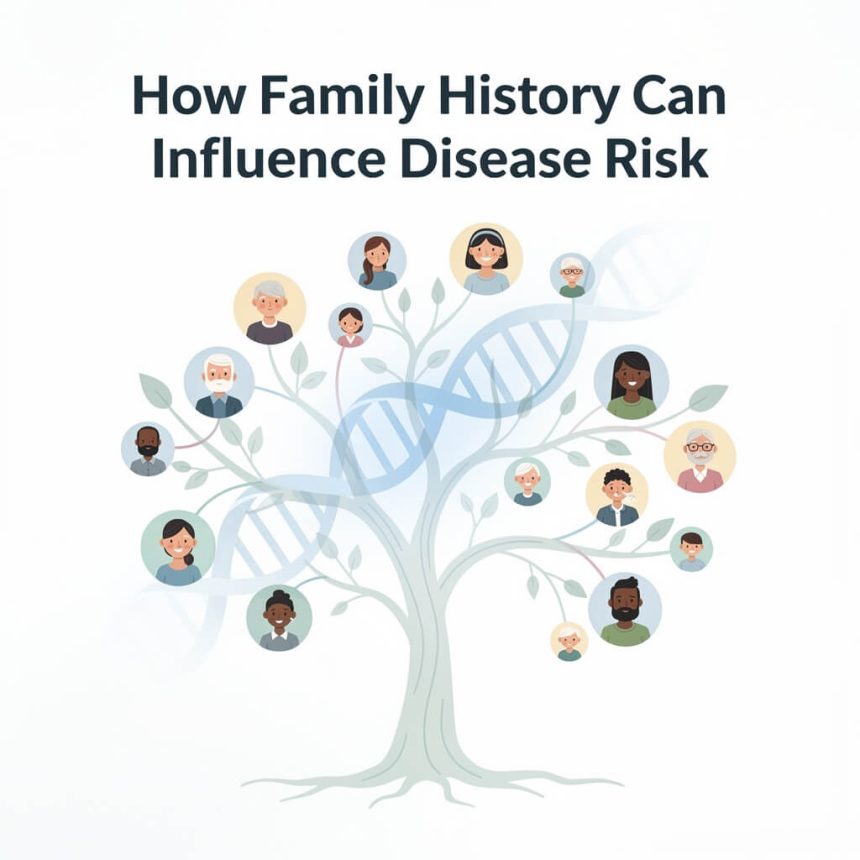
- Create a Detailed Health Tree: Go back at least three generations. Record the age of diagnosis and the cause of death for each relative.
- Consult a Genetic Counselor: These professionals are trained to interpret complex family patterns and can help you decide if genetic testing is right for you.
- Opt for High-Quality Clinical Testing: Avoid recreational ancestry tests for medical decisions. Instead, look for clinical-grade whole-genome or multi-gene panel testing.
- Discuss Results with Your Primary Care Provider: Your doctor can help you integrate your genetic findings into a comprehensive wellness plan.
- Focus on Modifiable Factors: Remember that genetics is only one part of the equation. Diet, exercise, and stress management remain the cornerstones of health.
The Outlook for 2026 and Beyond
The future of medicine is undeniably personalized. As we continue to uncover the mysteries of our DNA, the focus will shift even further toward prevention. We are moving toward a world where “one-size-fits-all” medicine is a thing of the past. For those with a significant family history of disease, the 2026 landscape offers more tools, more clarity, and more hope than ever before.
By embracing the power of precision medicine and staying informed about the latest scientific breakthroughs, we can transform our genetic legacy from a burden into a blueprint for a long and healthy life.
Sources for Further Reading
- World Health Organization (WHO) – Genomics Page: https://www.who.int/health-topics/genomics
- National Institutes of Health (NIH) – Precision Medicine Initiative: https://allofus.nih.gov/
- Centers for Disease Control and Prevention (CDC) – Genomics and Health: https://www.cdc.gov/genomics/famhistory/index.htm
- AstraZeneca Precision Medicine Research: https://www.astrazeneca.com/r-d/precision-medicine.html
- St. Jude Children’s Research Hospital – 2026 Science News: https://www.stjude.org/media-resources/news-releases/2026-medicine-science-news.html