

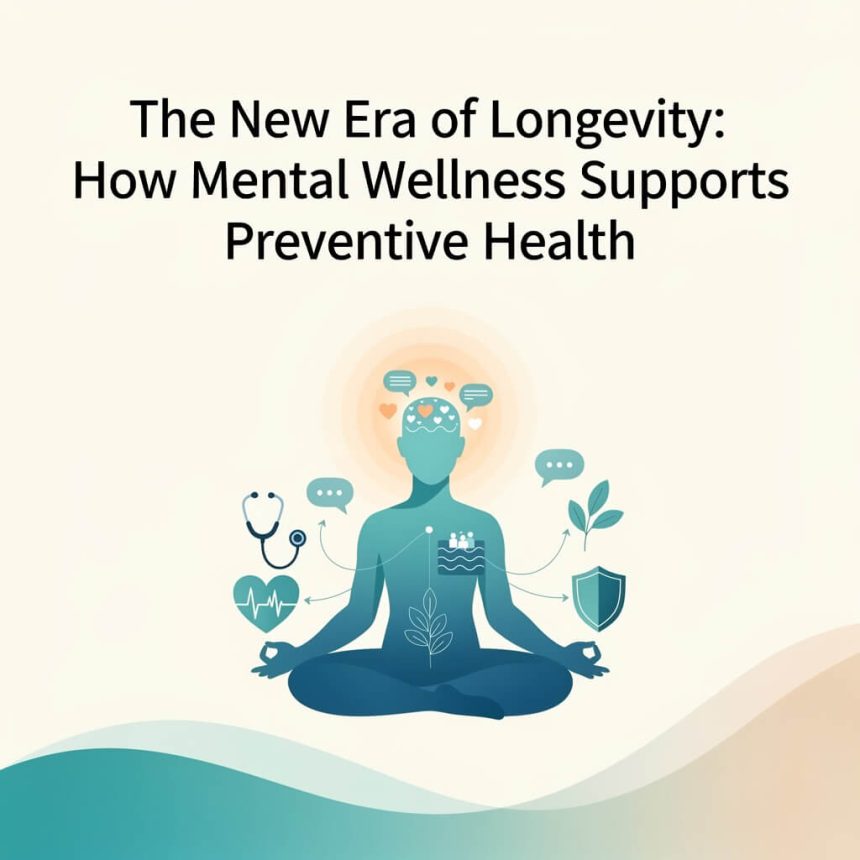
The landscape of global health has undergone a seismic shift as we move into 2026. For decades, the medical community treated the mind and the body as two separate entities, often operating in silos. Today, however, the paradigm of “Whole-Person Health” has taken center stage. We now understand that mental wellness is not just a secondary benefit of a healthy lifestyle but the very foundation of preventive medicine. By prioritizing psychological resilience and emotional balance, we are effectively building a shield against the most common chronic diseases of the twenty-first century.
- The Biological Connection: How Your Mind Programs Your Body
- Preventive Health and the Chronic Disease Crisis
- The Pillars of Mental – Based Preventive Care
- 1. Sleep Hygiene and Circadian Bioharmony
- 2. Nutritional Psychiatry and the Gut – Brain Axis
- 3. Social Connectivity and Longevity
- Digital Wellness and AI: The 2026 Tech Landscape
- Workplace Wellness: Preventing Burnout to Save Hearts
- The Future of Preventive Therapy: From Crisis to Maintenance
- Daily Information: Current Health Trends for January 6, 2026
- The Holistic Path Forward
- Sources and References
This guide explores the intricate biological and behavioral pathways that link our mental state to our physical longevity. From the regulation of the nervous system to the latest advancements in bioharmony nutrition, we will uncover why your mental health is your most powerful preventive tool in 2026.
The Biological Connection: How Your Mind Programs Your Body
To understand how mental wellness prevents disease, we must look at the physiological bridges between the brain and the body. The most significant of these is the Hypothalamic – Pituitary – Adrenal (HPA) axis. This system governs our response to stress. When mental wellness is compromised by chronic anxiety or unresolved trauma, the HPA axis remains in a state of hyper – activation.
In 2026, clinical research has solidified the link between “Silent Inflammation” and mental distress. Chronic stress triggers the release of pro – inflammatory cytokines. Over time, these chemicals erode our cellular health, leading to early – onset cardiovascular disease, insulin resistance, and neurodegeneration. Conversely, individuals who practice consistent emotional regulation show significantly lower levels of C – reactive protein, a primary marker for systemic inflammation.
The Role of Vagal Tone in Immune Defense
One of the most trending topics in current preventive health is the Vagus Nerve. As the primary component of the parasympathetic nervous system, the Vagus Nerve acts as a two – way communication highway between the brain and the gut. High “vagal tone” is associated with a greater ability to bounce back from stress. It also plays a crucial role in preventing autoimmune flare – ups and managing the body’s inflammatory response.
In 2026, “Nervous System Regulation” has moved from niche biohacking circles into mainstream clinical practice. By using techniques such as coherent breathing and somatic movement, individuals are actively “training” their Vagus Nerve to maintain a state of “Rest and Digest” rather than “Fight or Flight.” This proactive management is now recognized as a vital preventive measure against hypertension and metabolic syndrome.
Preventive Health and the Chronic Disease Crisis
The World Health Organization (WHO) and the OECD have released updated data for early 2026 indicating that mental health conditions now impact over one billion people globally. The economic cost of lost productivity due to depression and anxiety has surpassed $1 trillion annually. However, the more alarming statistic for preventive medicine is the “mortality gap.” People with severe mental health conditions often face a lifespan that is 10 to 20 years shorter than the general population, largely due to preventable physical ailments like heart disease and diabetes.
By addressing mental wellness early, we can intervene in this cycle. Preventive mental health care is no longer about waiting for a crisis. It is about “Emotional Fitness,” a proactive approach where we strengthen our mental agility to prevent the physical breakdowns that follow chronic mental exhaustion.
The Pillars of Mental – Based Preventive Care
1. Sleep Hygiene and Circadian Bioharmony
As of January 2026, sleep is no longer viewed as a luxury. It is classified as a “Mental Health Signal.” Disruptions in sleep are often the first indicator of shifting mental stability. From a preventive standpoint, poor sleep hygiene is a direct precursor to cognitive decline and obesity.
The 2026 trend of “Chrononutrition” and “Rhythmic Health” emphasizes aligning our eating and sleeping patterns with our internal biological clock. By maintaining a stable mental state through optimized sleep, the body can perform essential “glymphatic drainage” – the process by which the brain clears out metabolic waste. This is perhaps our best natural defense against Alzheimer’s and other forms of dementia.
2. Nutritional Psychiatry and the Gut – Brain Axis
What we eat directly influences how we feel, and how we feel influences how our body processes nutrients. The field of “Bioharmony Nutrition” has gained massive traction this year. It focuses on using prebiotic fibers and anti – inflammatory fats to support the gut microbiome. A healthy microbiome produces the vast majority of our serotonin and dopamine.
In the context of prevention, a diet rich in polyphenols and magnesium doesn’t just improve mood; it prevents the metabolic “crashes” that lead to Type 2 diabetes. The shift toward personalized, biomarker – based nutrition in 2026 allows individuals to tailor their diets to their specific genetic and psychological needs.
3. Social Connectivity and Longevity
The “Longevity Doctor” movement of 2026 has highlighted a surprising truth: social isolation is as detrimental to your health as smoking fifteen cigarettes a day. Meaningful human connection acts as a biological buffer. When we feel socially supported, our bodies release oxytocin, which has natural heart – protective properties.
Preventive health strategies now include “Social Prescribing,” where doctors recommend community involvement and group – based wellness activities. In early 2026, we are seeing a rise in “Social Wellness Clubs” – spaces designed for collective movement and shared purpose – which have been shown to reduce the risk of stroke and heart attack in older adults.
Digital Wellness and AI: The 2026 Tech Landscape
The start of 2026 has seen an explosion in “Precision Wellness” technology. AI wellness coaches and wearable devices (such as smart rings and bio – patches) now provide real – time feedback on our “Stress Recovery Score.” These tools allow us to see the immediate physical impact of our mental state.
For example, if a wearable device detects a drop in Heart Rate Variability (HRV), it may suggest a cognitive reset or a breathing protocol before the physical symptoms of stress – such as a tension headache or elevated blood pressure – even manifest. This “Continuous Care” model is the future of prevention. It moves us away from annual check – ups toward a daily, data – driven understanding of our health.
Workplace Wellness: Preventing Burnout to Save Hearts
In 2026, “Quiet Burnout” has become a major focus for HR departments and health insurers alike. Companies are realizing that an overstressed workforce is a physical liability. New corporate wellness protocols now include “Stress Recovery Rooms,” “Circadian – Friendly Lighting,” and “Mental Health Skill – Building.”
By addressing burnout as a legitimate medical concern rather than a personal failure, we are preventing a wave of stress – related cardiovascular events. The integration of mental health support into the workplace is one of the most effective preventive health measures of the current era.
The Future of Preventive Therapy: From Crisis to Maintenance
We are witnessing a shift where psychotherapy is being used as a “maintenance tool” similar to dental cleanings or gym memberships. “Preventive Therapy” helps individuals identify emotional triggers before they lead to the behavioral patterns (such as overeating, sedentary behavior, or substance use) that cause chronic disease.
The OECD’s “Prompt Mental Health Care” simulation suggests that scaling these early interventions could prevent over 26 million cases of mental disorders by mid – century, which in turn would significantly reduce the global burden of non – communicable diseases.
Daily Information: Current Health Trends for January 6, 2026
As of today, January 6, 2026, several key trends are defining the intersection of mental and physical health:
- Somatic Movement as Medicine: There is a surge in interest for body – based emotional processing. Exercises that focus on “releasing” stored tension are being used to manage chronic pain and inflammatory markers.
- The Peptide Revolution: Peptides that support both cognitive function and metabolic resilience are becoming a central part of longevity protocols.
- Mitochondrial Support: There is a growing understanding that “mental energy” is tied to our cellular power plants. Supplements and habits that support mitochondrial health are being used to combat both depression and physical fatigue.
- Nature – Based Healing: “Forest Bathing” and “Grounding” are being prescribed more frequently by clinicians to lower cortisol levels and reset the nervous system.
The Holistic Path Forward
The evidence is undeniable: we cannot have physical health without mental wellness. In 2026, the most effective “medicine” for preventing heart disease, cancer, and diabetes is a resilient mind. By regulating our nervous systems, fostering social bonds, and utilizing the latest in precision health technology, we are not just living longer; we are living better.
Preventive health is a daily practice. It is found in the way we breathe, the way we connect, and the way we care for our internal world. As we navigate the complexities of this new year, let us remember that our mental well – being is the greatest investment we can make in our future health.
Sources and References
- World Health Organization (WHO): Mental Health Report 2025 – 2026 Updates on Global Disease Burden. https://www.who.int/health-topics/mental-health
- OECD iLibrary: Health at a Glance 2025: Focus on Mental Health Promotion and Prevention. https://www.oecd.org/en/publications/health-at-a-glance-2025
- National Academies of Sciences, Engineering, and Medicine: Report on Preventive Interventions for Mental and Behavioral Disorders (2025). https://www.nationalacademies.org/news/mental-and-behavioral-health-disorders-are-increasing-in-u-s
- American College of Sports Medicine (ACSM): Top Fitness and Wellness Trends for 2026. https://acsm.org/top-fitness-trends-2026/
- PubMed Central: Action Plan on Healthy Lifestyles and Clinical Education (2023 – 2026). https://pubmed.ncbi.nlm.nih.gov/40856934/
Deep Dive: Understanding the “Whole – Person” Health Model in 2026
To truly appreciate the scope of this topic, we must examine the specific mechanisms of preventive care.
The Cortisol – Insulin Connection
When the mind is perpetually stressed, cortisol levels remain elevated. High cortisol signals the liver to release glucose for energy, leading to spikes in insulin. Over years, this “stress – induced hyperglycemia” leads to Type 2 diabetes. Mental wellness practices like mindfulness and cognitive reframing are now considered “metabolic interventions” because they help stabilize blood sugar by lowering the stress response.
Inflammation and the Brain
New research from the “European Union Horizon Europe Work Programme 2026” highlights that neuroinflammation is a primary driver of both depression and systemic disease. By using anti – inflammatory lifestyles – including Omega – 3 supplementation and high – intensity interval training (HIIT) balanced with recovery – we can protect the brain’s white matter and prevent long – term physical decline.
The Power of Purpose
In 2026, “Purpose – Driven Longevity” is a major buzzword. Studies show that individuals with a strong sense of “Ikigai” or life purpose have lower rates of cardiovascular events. This sense of purpose reduces the “allostatic load” (the wear and tear on the body) and encourages positive health behaviors, such as adherence to medical screenings and better nutritional choices.
Somatic Therapies and Pain Prevention
Chronic pain is often a physical manifestation of stored emotional trauma. In 2026, somatic therapies like Rolfing and Structural Integration are being integrated into preventive health plans. By addressing the “fascia” and the nervous system’s physical holding patterns, patients can prevent the development of chronic musculoskeletal conditions that often lead to sedentary lifestyles and subsequent obesity.
Digital Detox and Cognitive Recovery
With the rise of “Always – On” AI culture, digital fatigue is a significant health risk. 2026 wellness trends emphasize “Cognitive Recovery” – periods of the day dedicated to being screen – free. This practice allows the brain to return to its “Default Mode Network,” which is essential for creativity, emotional processing, and reducing the risk of burnout – related illness.
The Role of Community Health Clubs
Moving away from traditional gyms, 2026 has seen the rise of “Social Wellness Hubs.” These facilities combine fitness with social connection and recovery tech (like red light therapy and cold plunges). The focus is on “Collective Resilience.” When we move in a group, we produce more endorphins and experience less perceived exertion, making the preventive habit of exercise more sustainable over the long term.
Conclusion of the Deep Dive
As we look forward to the rest of 2026, it is clear that the integration of mental and physical health is the key to solving the global chronic disease crisis. By investing in our mental wellness today, we are securing our physical health for the decades to come.