


New iron nanomaterial wipes out cancer cells without harming healthy tissue
- Date:
- March 1, 2026
- Source:
- Oregon State University
- Summary:
- Scientists at Oregon State University have engineered a powerful new nanomaterial that zeroes in on cancer cells and destroys them from the inside out. Designed to exploit cancerâs unique chemistryâits acidity and high hydrogen peroxide levelsâthe tiny iron-based structure sparks not one but two intense chemical reactions, flooding tumors with cell-damaging oxygen molecules. This dual attack overwhelms cancer cells with oxidative stress while sparing healthy tissue.
- Share:
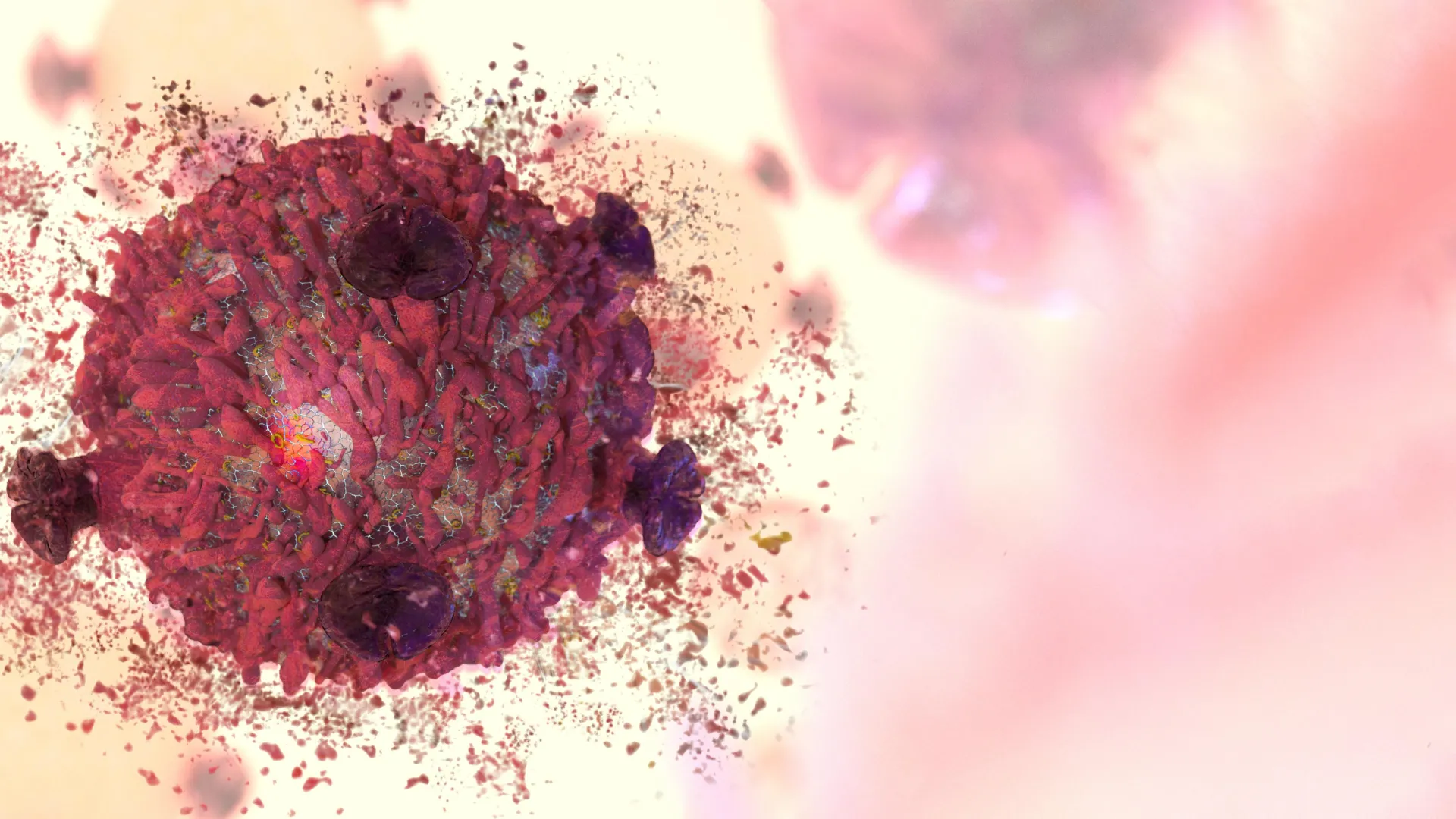
Researchers at Oregon State University have created a new nanomaterial designed to destroy cancer cells from the inside. The material activates two separate chemical reactions once inside a tumor cell, overwhelming it with oxidative stress while leaving surrounding healthy tissue unharmed.
The work, led by Oleh Taratula, Olena Taratula, and Chao Wang from the OSU College of Pharmacy, was published in Advanced Functional Materials.
Advancing Chemodynamic Therapy
The discovery strengthens the growing field of chemodynamic therapy or CDT. This emerging cancer treatment strategy takes advantage of the unique chemical conditions found inside tumors. Compared with normal tissue, cancer cells tend to be more acidic and contain higher levels of hydrogen peroxide.
Traditional CDT uses these tumor conditions to spark the formation of hydroxyl radicals, highly reactive molecules made of oxygen and hydrogen that contain an unpaired electron. These reactive oxygen species damage cells through oxidation, stripping electrons from essential components such as lipids, proteins, and DNA.
More recent CDT approaches have also succeeded in generating singlet oxygen inside tumors. Singlet oxygen is another reactive oxygen species, named for its single electron spin state rather than the three spin states seen in the more stable oxygen molecules present in the air.
Overcoming Limits of Existing CDT Agents
“However, existing CDT agents are limited,” Oleh Taratula said. “They efficiently generate either radical hydroxyls or singlet oxygen but not both, and they often lack sufficient catalytic activity to sustain robust reactive oxygen species production. Consequently, preclinical studies often only show partial tumor regression and not a durable therapeutic benefit.”
To address these shortcomings, the team developed a new CDT nanoagent built from an iron-based metal-organic framework or MOF. This structure is capable of producing both hydroxyl radicals and singlet oxygen, increasing its cancer-fighting potential. The MOF demonstrated strong toxicity across multiple cancer cell lines while causing minimal harm to noncancerous cells.
Complete Tumor Regression in Mice
“When we systemically administered our nanoagent in mice bearing human breast cancer cells, it efficiently accumulated in tumors, robustly generated reactive oxygen species and completely eradicated the cancer without adverse effects,” Olena Taratula said. “We saw total tumor regression and long-term prevention of recurrence, all without seeing any systemic toxicity.”
In these preclinical experiments, tumors disappeared entirely and did not return, and the animals showed no signs of harmful side effects.
Next Steps Toward Broader Cancer Treatment
Before moving into human trials, the researchers plan to test the treatment in additional cancer types, including aggressive pancreatic cancer, to determine whether the approach can be effective across a wide range of tumors.
Other contributors to the study included Oregon State researchers Kongbrailatpam Shitaljit Sharma, Yoon Tae Goo, Vladislav Grigoriev, Constanze Raitmayr, Ana Paula Mesquita Souza, and Manali Parag Phawde. Funding was provided by the National Cancer Institute of the National Institutes of Health and the Eunice Kennedy Shriver National Institute of Child Health and Human Development.
Story Source:
Materials provided by Oregon State University. Note: Content may be edited for style and length.
Journal Reference:
- Chao Wang, Kongbrailatpam Shitaljit Sharma, Yoon Tae Goo, Vladislav Grigoriev, Constanze Raitmayr, Ana Paula Mesquita Souza, Manali Parag Phawde, Olena R. Taratula, Oleh Taratula. Structurally Engineered Ferrous MetalâOrganic Framework as a Chemodynamic Therapy Nanoagent for Concurrent Hydroxyl Radical and Singlet Oxygen Generation. Advanced Functional Materials, 2026; DOI: 10.1002/adfm.202529194
Cite This Page:
📰 This article was curated and published by
HEALTH GUIDANCE HUB
— your trusted source for the latest health news, medical research, and wellness guidance.
Visit us at https://healthguidancehub.space/ for more health insights.
