

The landscape of human health is undergoing a seismic shift as we navigate the first week of 2026. For decades, the conversation around diet focused almost exclusively on calories, macros, and weight loss. Today, the focus has pivoted toward a much more complex and vital metric: the degree of food processing. As new research from late 2025 and the beginning of 2026 continues to emerge, it is becoming clear that the physical structure of what we eat is just as important as its chemical composition.
- Introduction: The Invisible Revolution in Our Kitchens
- The Rise of Ultra-Processed Foods (UPF): Understanding the NOVA Scale
- Group 1: Unprocessed or Minimally Processed Foods
- Group 2: Processed Culinary Ingredients
- Group 3: Processed Foods
- Group 4: Ultra-Processed Foods (UPFs)
- Why 2026 is the Year of Fiber: Beyond the Protein Obsession
- The GLP-1 Effect: How Weight Loss Innovations are Changing the Food Industry
- The Gut Microbiome Breakthroughs: Leaky Gut and Modern Processing
- Chemical Additives and the Organ System Crisis: Insights from The Lancet
- The Processing Paradox: Can Processed Food Ever Be Healthy?
- Front-of-Package Labeling: The New Global Regulatory Standard
- Personalized AI Nutrition: Tailoring Your Diet to Your DNA
- Practical Strategies for a Low-UPF Lifestyle
- Conclusion: Reclaiming Our Biological Heritage
Introduction: The Invisible Revolution in Our Kitchens
As of January 6, 2026, the global food environment is more scrutinized than ever before. We are no longer just looking at the back of the box for sugar and fat content. Instead, we are looking at the front of the package for regulatory warnings and “High-In” symbols that have recently become mandatory in several major economies. The impact of processed foods on nutrition is not just a matter of “empty calories.” It is a matter of how industrial manufacturing alters the way our bodies perceive, digest, and react to nutrients.
The modern diet is now dominated by ultra-processed foods (UPFs), which account for over 60 percent of the average caloric intake in many developed nations. These are not just foods that have been cooked or preserved. They are industrial formulations that use additives, emulsifiers, and high-intensity sweeteners to create products that are “hyper-palatable.” This evolution in food production has led to a nutrition crisis that simple calorie counting cannot solve.
The Rise of Ultra-Processed Foods (UPF): Understanding the NOVA Scale
To understand the current state of nutrition in 2026, one must understand the NOVA classification system. Developed by researchers at the University of Sao Paulo, this system categorizes food based on the extent and purpose of industrial processing. It is now the gold standard for nutritional research and public health policy.
Group 1: Unprocessed or Minimally Processed Foods
These are the edible parts of plants and animals. Think of fresh fruits, vegetables, seeds, and eggs. Processing is minimal: chilling, freezing, or vacuum packaging to preserve the original state.
Group 2: Processed Culinary Ingredients
These are substances derived from Group 1 foods by processes like pressing, refining, or grinding. Examples include olive oil, butter, and honey. They are rarely eaten alone and are used to season and cook Group 1 foods.
Group 3: Processed Foods
These are relatively simple products made by adding sugar, oil, or salt to Group 1 foods. Bottled vegetables, canned fish, and freshly baked breads fall into this category. They are still recognizable as their original source.
Group 4: Ultra-Processed Foods (UPFs)
This is where the health concerns of 2026 are focused. These are industrial formulations typically made with five or more ingredients. They often include substances not used in home kitchens, such as hydrolyzed proteins, modified starches, and hydrogenated oils. This category includes carbonated drinks, packaged snacks, instant noodles, and reconstituted meat products.
Why 2026 is the Year of Fiber: Beyond the Protein Obsession
For the last five years, protein was the king of the nutrition world. However, in 2026, we are witnessing the “Fiber Revolution.” Market data from the first week of January shows that consumers are now prioritizing fiber-rich ingredients like chicory root, psyllium husk, and ancient grains over isolated protein powders.
The impact of processed foods on nutrition is most evident in the loss of dietary fiber. During the refining process, the fibrous outer layers of grains and vegetables are stripped away to create a smoother texture and longer shelf life. This results in a “nutritional void” that speeds up the absorption of sugars into the bloodstream, leading to insulin spikes and metabolic dysfunction.
Recent 2026 trends show a surge in “Fibermaxxing,” a movement where individuals aim for 50 grams of fiber per day to support metabolic health and gut integrity. Processed foods, which are inherently low in fiber, are the primary obstacle to reaching these health goals.
The GLP-1 Effect: How Weight Loss Innovations are Changing the Food Industry
One of the most significant shifts in 2026 is the impact of GLP-1 weight loss medications on dietary habits. As of early 2026, nearly 18 percent of US consumers are utilizing these medications, which fundamentally change appetite and portion sizes.
This has created a crisis for the ultra-processed food industry. Users of these medications report a decreased desire for high-sugar and high-fat processed snacks. In response, food manufacturers are racing to develop “GLP-1 Friendly” products. These products focus on high nutrient density in small volumes, specifically targeting the muscle loss and constipation risks associated with rapid weight loss.
The 2026 market is seeing a move away from “bulk” processed foods toward “functional” small-batch meals that provide essential vitamins and minerals without the inflammatory oils typically found in convenience foods.
The Gut Microbiome Breakthroughs: Leaky Gut and Modern Processing
The most profound impact of processed foods on nutrition is happening in our gut. New studies published in early 2026 have confirmed that certain emulsifiers found in processed foods, such as carboxymethylcellulose and polysorbate 80, act like detergents in our digestive tract.
These chemicals break down the protective mucus layer of the gut, allowing bacteria to come into direct contact with the intestinal lining. This phenomenon, often called “leaky gut,” triggers systemic inflammation. Inflammation is the underlying driver of almost every chronic disease we face today, from heart disease to autoimmune disorders.
Furthermore, processed foods lack the “prebiotics” needed to feed beneficial bacteria like Akkermansia muciniphila. A lack of this specific microbe is strongly linked to obesity and type 2 diabetes. In 2026, the focus has shifted from simply taking probiotics to avoiding the processed chemicals that kill our internal ecosystem.
Chemical Additives and the Organ System Crisis: Insights from The Lancet
In late 2025, The Lancet published a landmark series on ultra-processed foods that has dominated the health news cycle in early 2026. The research suggests that UPFs harm every major organ system in the human body.
The Brain and Mental Health
There is now a clear “Gut-Brain Axis” connection. Diets high in processed foods are linked to a 25 percent higher risk of depression and anxiety. This is likely due to the lack of omega-3 fatty acids and the presence of artificial dyes that interfere with neurotransmitter function.
The Heart and Metabolic System
Processing often involves the use of “interesterified fats,” which were introduced to replace trans fats. However, 2026 research indicates these fats may be just as damaging to arterial health. High sodium levels in processed foods continue to drive global hypertension rates, despite industry efforts at “reformulation.”
The Liver
The high fructose corn syrup found in many processed beverages is a primary cause of Non-Alcoholic Fatty Liver Disease (NAFLD). Unlike glucose, fructose is processed almost entirely in the liver, where it is converted directly into fat.
The Processing Paradox: Can Processed Food Ever Be Healthy?
As we look at the trends of 2026, we must address the “Processing Paradox.” Not all processing is bad. For example, the fermentation of yogurt, the flash-freezing of vegetables, and the pressure-cooking of legumes are all forms of processing that can enhance nutrition.
The danger lies in “Ultra-Processing.” The difference is the intention. Minimally processed foods are designed to preserve nutrition. Ultra-processed foods are designed to maximize profit, shelf life, and “craveability.”
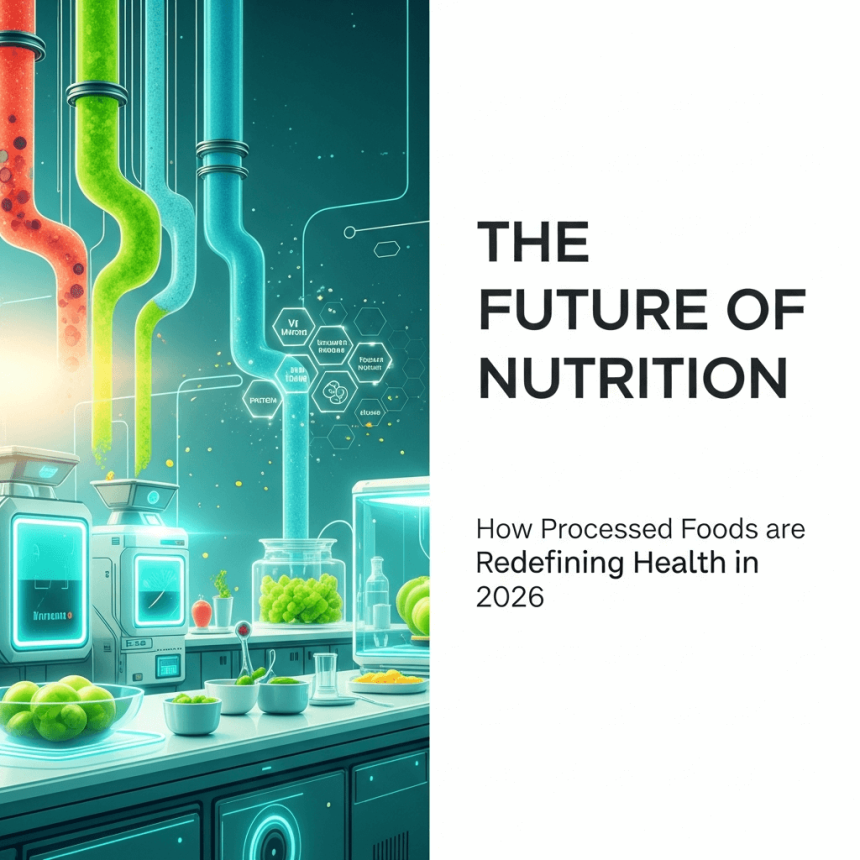
Today, in 2026, we are seeing the emergence of “Positive Processing.” Companies are using AI-driven precision fermentation to create proteins and fibers that mimic whole foods without the need for harmful additives. This represents the high-tech future of nutrition where the benefits of convenience are finally decoupled from the harms of industrial chemistry.
Front-of-Package Labeling: The New Global Regulatory Standard
January 1, 2026, marked a turning point in food regulation. Following the lead of countries like Chile and Canada, many more nations have implemented mandatory “warning labels” on processed foods.
These labels use a simple magnifying glass or stop-sign icon to alert consumers when a product exceeds the daily threshold for:
- Saturated Fat
- Added Sugars
- Sodium
- Artificial Additives
This transparency is fundamentally changing how people shop. Recent data shows a 30 percent decline in the purchase of “high-in” cereals and snacks in the first week of 2026. This regulatory shift is forcing the processed food industry to either innovate or face obsolescence.
Personalized AI Nutrition: Tailoring Your Diet to Your DNA
Another trending topic in early 2026 is the use of AI to manage the impact of processed foods. We now have access to “Real-Time Nutrition Platforms” that connect to continuous glucose monitors (CGMs) and DNA data.
These platforms can tell a user exactly how a specific processed snack will affect their blood sugar and inflammation markers before they even take a bite. This level of personalization is helping people navigate the “processed minefield” by identifying which additives their specific body can handle and which ones they must avoid at all costs.
Practical Strategies for a Low-UPF Lifestyle
In a world filled with convenient processed options, how do we protect our nutrition in 2026? Here are the top strategies recommended by leading nutritionists today:
- The Five-Ingredient Rule: If a product has more than five ingredients, or contains ingredients you cannot find in a standard kitchen, it is likely ultra-processed.
- Focus on “Whole Form” Snacks: Instead of a processed “protein bar,” opt for raw almonds and an apple. The fiber-to-sugar ratio is much more favorable for your metabolism.
- Use “Sensory Sips”: Replace sugary sodas with the new generation of 2026 functional beverages. Look for drinks that use natural fruit pulps and botanical extracts like ginger and turmeric for flavor rather than artificial sweeteners.
- Batch Cooking 2.0: Use modern kitchen tech like smart pressure cookers to prepare whole grains and legumes in bulk. This provides the “convenience” of processed food without the nutritional cost.
- Prioritize Fermented Foods: Incorporate kimchi, sauerkraut, or kefir into your daily diet to rebuild the gut barrier that processed foods may have damaged.
Conclusion: Reclaiming Our Biological Heritage
The impact of processed foods on nutrition is the defining health challenge of 2026. We are living in a biological mismatch: our bodies are designed for the nutrient-dense, fiber-rich whole foods of our ancestors, but our environment is filled with the chemical formulations of modern industry.
However, the news in 2026 is not all grim. With the rise of better regulations, the “Fibermaxxing” movement, and the help of AI-personalized nutrition, we are finally gaining the tools to reclaim our health. By choosing “real food” over “industrial products,” we can reverse the trend of chronic disease and build a future where nutrition truly serves as our best medicine.