

The healthcare landscape of 2026 is undergoing a monumental shift. We are moving away from a reactive model (treating illness after it takes hold) toward a proactive, predictive model of care. At the heart of this transformation lies a single, powerful concept: the recognition of early symptoms. For the modern patient, understanding the subtle whispers of the body is no longer a passive interest; it is a critical skill that determines long-term survival, quality of life, and financial stability.
- The Evolving Landscape of Proactive Health in 2026
- Oncology: Why Stage One is the Golden Hour of Survival
- Lung Cancer and Robotic Assisted Bronchoscopy
- Breast Cancer: Moving Beyond Traditional Mammography
- Colorectal Cancer: The Shift to Non-Invasive Screening
- Neurological Frontiers: Detecting Cognitive Decline Before it Starts
- The Cardiovascular Sentinel: AI and Wearable Integration
- Metabolic Health and the GLP-1 Revolution
- The Financial and Legal Importance of Early Symptom Recognition
- Emerging Technologies: CRISPR and Genomic Precision
- Psychological Barriers to Awareness
- Conclusion: Empowering the Modern Patient
The Evolving Landscape of Proactive Health in 2026
As of January 2026, the global medical community has reached a consensus that “early awareness” is the most effective medicine available. With the integration of Artificial Intelligence and high-fidelity diagnostic tools into everyday life, the gap between a symptom appearing and a diagnosis being made is shrinking. However, technology is only as effective as the human awareness behind it.
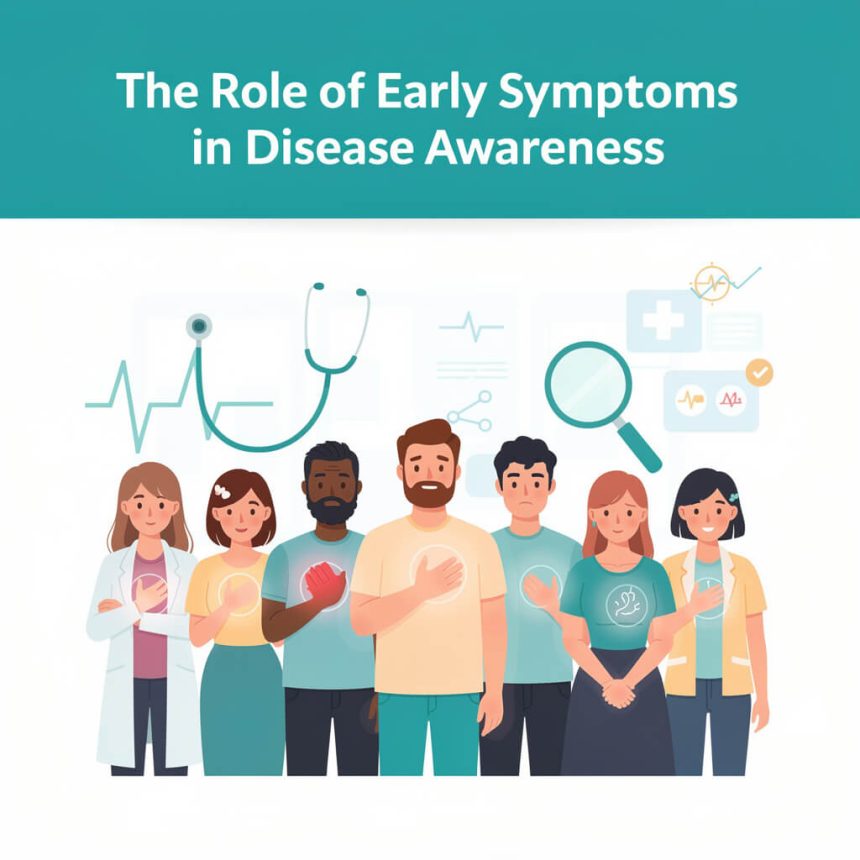
The role of early symptoms in disease awareness serves as the primary bridge between potential pathology and successful intervention. When individuals can identify specific markers of physiological change, they move from being victims of circumstance to active participants in their own longevity. This guide explores the most critical areas where early detection is currently making the largest impact on global health outcomes.
Oncology: Why Stage One is the Golden Hour of Survival
In the field of oncology, the timing of a diagnosis is often more influential than the treatment itself. Data from the World Health Organization and recent 2025-2026 clinical reports highlight a staggering disparity in survival rates based on the stage of detection.
Lung Cancer and Robotic Assisted Bronchoscopy
Lung cancer remains one of the most challenging conditions to catch early because the lungs lack pain receptors. However, 2026 has seen the widespread adoption of robotic-assisted bronchoscopy (RAB). This technology allows clinicians to reach sub-centimeter nodules deep within the lung tissue that were previously inaccessible.
The early symptoms to watch for include a persistent cough that does not resolve after three weeks, unexplained weight loss, and subtle shortness of breath during routine activities. In 2026, survival rates for Stage 1 lung cancer have climbed toward 60% in high-access regions, compared to a devastating 5% for Stage 4. This underscores why recognizing a “minor” cough can be a life-altering event.
Breast Cancer: Moving Beyond Traditional Mammography
The introduction of FDA-approved AI tools like Clairity has revolutionized breast cancer awareness. These systems can now predict a woman’s risk of developing cancer up to five years in advance by identifying microscopic patterns in breast tissue.
While self-examinations remain vital, awareness now includes understanding “density” as a risk factor. Symptoms such as skin dimpling, localized heat, or changes in nipple texture are being taught as high-priority signals. In 2026, over 90% of women diagnosed at Stage 1 survive for at least five years, making the “wait and see” approach a relic of the past.
Colorectal Cancer: The Shift to Non-Invasive Screening
Colorectal health awareness has spiked due to the rising incidence of early-onset cases in individuals under 50. Awareness campaigns in 2026 emphasize that changes in bowel habits lasting more than a few days, or persistent abdominal discomfort, warrant immediate genomic-based stool testing. When caught at Stage 1, the survival rate is nearly 98%, yet it drops to below 45% once it reaches the metastatic stage.
Neurological Frontiers: Detecting Cognitive Decline Before it Starts
Neurology is perhaps the most exciting field in 2026 regarding early symptom awareness. For decades, diseases like Alzheimer’s were diagnosed only after significant cognitive loss had occurred. Today, the focus has shifted to “pre-symptomatic” awareness.
Alzheimer’s Disease and New Electrical Brain Signals
Groundbreaking research from the Carney Institute for Brain Science at Brown University, published in early January 2026, has identified specific electrical signals in the brain that predict Alzheimer’s progression up to two and a half years before clinical symptoms manifest.
For the general public, awareness now involves monitoring “micro-lapses” in short-term memory or sudden changes in spatial orientation. These are no longer dismissed as “senior moments.” Instead, they are recognized as early physiological shifts that can be managed with emerging neuro-protective therapies and lifestyle interventions like aerobic exercise, which has been proven to enhance dopamine release.
Parkinson’s Disease and Motor Performance
Awareness of Parkinson’s has expanded to include non-motor symptoms. Early signs now include a decreased sense of smell (anosmia), vivid dreaming, and small handwriting (micrographia). By the time a visible tremor appears, significant dopamine-producing neurons may already be lost. Therefore, 2026 health initiatives focus on these subtle “pre-tremor” signals to initiate early physical therapy and metabolic support.
The Cardiovascular Sentinel: AI and Wearable Integration
Heart disease remains a leading cause of mortality, but the “silent” nature of the condition is being challenged by wearable technology.
Atrial Fibrillation and Real Time Monitoring
In 2026, smartwatches have moved beyond simple step counting. They now serve as medical-grade ECG monitors capable of detecting Atrial Fibrillation (AFib) with 98% accuracy. Awareness in this sector involves understanding “heart rate variability” and “irregular rhythm notifications.”
Data from Stanford University shows that users who act on these early wearable alerts see a 38% reduction in cardiovascular-related hospitalizations. The symptom is often a fluttering sensation or a sudden bout of unexplained fatigue, which the device validates, prompting the user to seek a professional cardiology consultation.
Heart Failure and Asymptomatic Dysfunction
The Mayo Clinic has deployed AI algorithms that analyze standard ECGs to find “asymptomatic left ventricular dysfunction.” This is a fancy term for a heart that is beginning to weaken but hasn’t yet caused obvious symptoms like swollen ankles or intense breathlessness. Awareness of this early stage allows for the introduction of ACE inhibitors or beta-blockers that can prevent full-scale heart failure.
Metabolic Health and the GLP-1 Revolution
The rise of GLP-1 medications (like those used for diabetes and weight management) has shifted the conversation around metabolic health. In 2026, awareness of early metabolic syndrome symptoms (increased waist circumference, slightly elevated fasting glucose, and persistent sugar cravings) is at an all-time high.
Treating these “pre-diabetic” symptoms is now seen as a primary defense against the long-term complications of Type 2 Diabetes, such as neuropathy, retinopathy, and kidney disease. Google’s ARDA (Automated Retinal Disease Assessment) is now widely used in rural clinics to catch diabetic retinopathy by looking for early microscopic changes in the eye, long before the patient notices vision loss.
The Financial and Legal Importance of Early Symptom Recognition
The role of early symptoms extends beyond the biological. There is a significant socio-economic component to disease awareness.
Reducing the Cost of Care
Treating advanced-stage disease is exponentially more expensive than managing early-stage conditions. For example, the cost of treating Stage 4 cancer can be ten times higher than Stage 1. By recognizing symptoms early, patients can access less invasive treatments, reducing the need for expensive surgeries or long-term hospital stays. This is a critical factor for families managing health insurance premiums and out-of-pocket expenses in 2026.
Medical Advocacy and Legal Rights
From a legal perspective, early symptom awareness empowers patients to advocate for themselves. If a patient presents with early symptoms and a healthcare provider fails to investigate, the patient has a documented trail of their proactive efforts. This is essential in cases of medical malpractice or insurance claims where “timely intervention” is a key legal benchmark.
Emerging Technologies: CRISPR and Genomic Precision
As we look toward the remainder of 2026, genomic screening is becoming a household term. New breakthroughs in CRISPR technology allow for “epigenetic editing,” which can turn off disease-causing genes without cutting DNA.
Awareness now includes “Genomic Literacy.” Knowing your genetic predispositions (such as carrying the BRCA1 gene or the APOE4 allele) changes how you interpret early symptoms. A minor symptom in a person with a high genetic risk is treated with much greater urgency, leading to faster diagnostic pathways and personalized treatment plans.
Psychological Barriers to Awareness
Despite the technology, fear remains a barrier. Many people avoid acknowledging symptoms because they are afraid of the diagnosis. In 2026, psychological health is integrated into disease awareness. We are learning that “knowledge is power” is not just a cliché; it is a clinical reality. Understanding that an early diagnosis usually leads to a manageable condition, rather than a terminal one, is the key to overcoming the “ostrich effect” (burying one’s head in the sand).
Conclusion: Empowering the Modern Patient
The role of early symptoms in disease awareness is the cornerstone of 2026 medicine. By staying informed about the latest diagnostic trends, utilizing wearable technology responsibly, and listening to the body’s subtle signals, we can significantly alter the trajectory of global health.
Proactive health is not about living in fear of illness; it is about living with the confidence that you are the most informed guardian of your own well-being. Whether it is a change in a mole, a slight tremor, or a persistent cough, these symptoms are invitations to act. In the modern age, the most successful patients are those who don’t wait for a crisis to start caring for their health.