

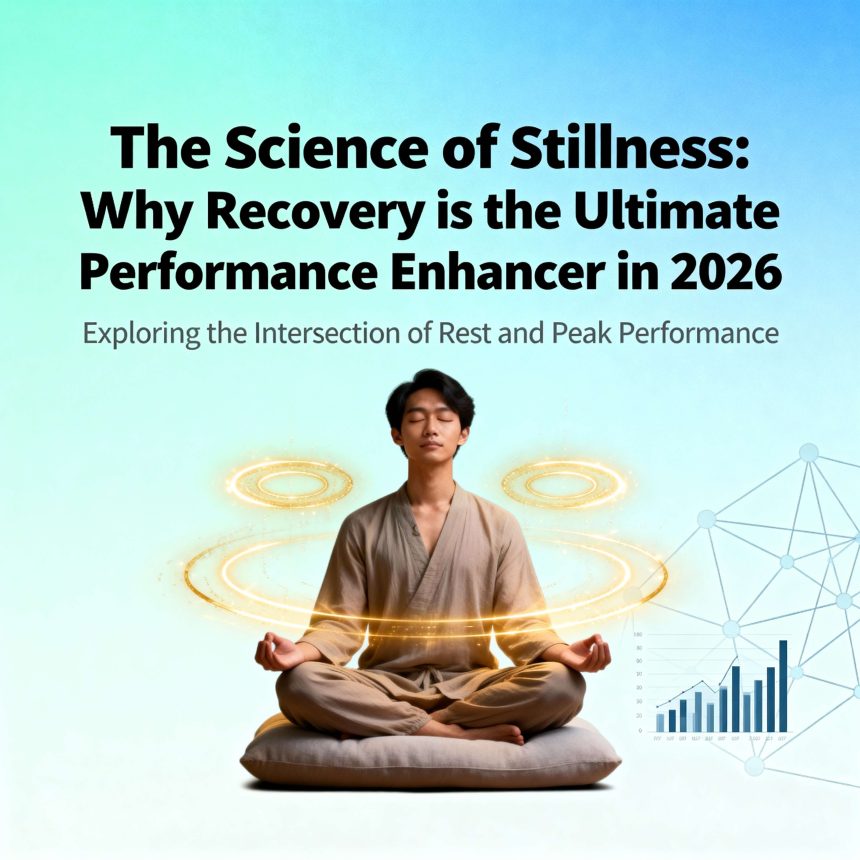
The fitness landscape has undergone a radical transformation over the last decade. In the early 2010s, the mantra was “no pain, no gain.” By 2020, we began to see the rise of biohacking. Now, in January 2026, we have officially entered the era of Regenerative Fitness. Today, the most elite athletes and high performers are not defined by how hard they can push in the gym, but by how effectively they can recover outside of it.
- The Biological Necessity of Rest in 2026
- The Sleep Revolution: Deep Dive into 2026 Research
- High-Tech Recovery Modalities for 2026
- Photobiomodulation (Red Light Therapy)
- Cryotherapy and Cold Plunge Dynamics
- Hyperbaric Oxygen Therapy (HBOT)
- Nutrition for Performance Longevity
- Active Recovery: The Power of Low-Intensity Movement
- The Mental Aspect of Recovery
- Wearable Technology and Data Integration in 2026
- 2026 Daily Recovery Protocol (Sample)
- Sources and Further Reading
If you are looking to maximize your physical potential, whether that involves building significant muscle mass, torching body fat, or enhancing cognitive longevity, you must understand that the “workout” is merely the stimulus. The actual progress, the adaptation that makes you stronger and faster, happens exclusively during periods of rest. This guide explores the cutting-edge science and professional protocols that define recovery in 2026.
The Biological Necessity of Rest in 2026
The human body is an incredibly adaptive machine, but it operates on a principle known as General Adaptation Syndrome. When you lift weights or engage in high-intensity interval training, you are essentially causing controlled damage to your tissues. You are creating micro-tears in your muscle fibers and placing significant stress on your Central Nervous System (CNS).
In 2026, researchers have pinpointed exactly how this recovery window works at a cellular level. According to recent studies from the University of California, Berkeley, released in late 2025, the release of growth hormone during deep sleep is the primary driver of adult metabolism and tissue repair. This research emphasizes that without the specific hormonal cascades that occur during rest, the body remains in a catabolic state, meaning it is breaking itself down rather than building itself up.
The Role of Muscle Protein Synthesis
Muscle growth, or hypertrophy, is the result of Muscle Protein Synthesis (MPS) exceeding Muscle Protein Breakdown (MPB). When you train, MPB increases. It is only during the post-exercise window, specifically when the body is in a parasympathetic (rest and digest) state, that MPS can take over.
In 2026, elite trainers are using AI-powered biometrics to track MPS markers in real-time. We now know that the “anabolic window” is much longer than the thirty minutes previously suggested by old-school bodybuilding lore. However, its effectiveness is strictly capped by the quality of your recovery. If you are chronically stressed or sleep-deprived, your body produces excess cortisol, a hormone that actively inhibits MPS and promotes the storage of visceral fat.
The Sleep Revolution: Deep Dive into 2026 Research
Sleep is no longer seen as a luxury. It is the most powerful performance-enhancing “drug” available to humans. In 2026, we categorize sleep into specific “recovery buckets” based on sleep architecture.
Non-REM Stage 3: The Growth Window
This is the phase of deep sleep where the heavy lifting of physical recovery occurs. During NREM Stage 3, blood flow is redirected from the brain to the muscles, delivering oxygen and nutrients that facilitate repair. The 2025 Berkeley study discovered specific brainstem feedback mechanisms that regulate the release of Growth Hormone (GH) during this phase. If your deep sleep is interrupted, your GH levels can drop by up to 50 percent, effectively neutralizing your hard work in the gym.
REM Sleep: The Neuromuscular Connection
Rapid Eye Movement (REM) sleep is where cognitive and neuromuscular recovery happens. This is crucial for “skill-based” fitness. If you are learning a new Olympic lift or a complex yoga flow, your brain “replays” these movements during REM sleep to solidify the neural pathways. A lack of REM sleep leads to “brain fog” and a significant decrease in reaction time and coordination, which increases the risk of injury during your next session.
High-Tech Recovery Modalities for 2026
We have moved beyond simple foam rolling. The year 2026 has brought medical-grade technology into the home of the dedicated fitness enthusiast. These modalities are designed to speed up the removal of metabolic waste and reduce systemic inflammation.
Photobiomodulation (Red Light Therapy)
Red and Near-Infrared (NIR) light therapy has become a staple in 2026 recovery protocols. The science, known as photobiomodulation, involves using specific wavelengths of light (typically 660nm and 850nm) to penetrate the skin and interact with the mitochondria in your cells.
Research published in the Journal of Photochemistry and Photobiology in 2025 confirms that this process increases the production of Adenosine Triphosphate (ATP). ATP is the energy currency of your cells. By “charging” the mitochondria, you allow your muscle cells to repair themselves at an accelerated rate. Many top-tier athletes now use full-body red light panels for fifteen minutes every morning to prime their systems and every evening to dampen inflammation.
Cryotherapy and Cold Plunge Dynamics
The “cold plunge” trend has evolved into a precise science. In 2026, we understand the difference between reducing soreness and hindering adaptation. While cold exposure is excellent for reducing Delayed Onset Muscle Soreness (DOMS) and improving mental resilience, doing it immediately after a hypertrophy-focused lifting session can actually blunt the inflammatory response needed for muscle growth.
The current 2026 protocol suggests waiting at least six to eight hours after strength training before cold exposure, or using it on dedicated active recovery days to “reset” the nervous system and boost norepinephrine levels.
Hyperbaric Oxygen Therapy (HBOT)
Once reserved for professional sports teams and medical facilities, portable HBOT chambers are now a common sight in high-end home gyms. By breathing pure oxygen in a pressurized environment, you increase the amount of oxygen dissolved in your blood plasma. This hyper-oxygenation accelerates the healing of tendons, ligaments, and muscle tissue, which traditionally have lower blood flow than other parts of the body.
Nutrition for Performance Longevity
Recovery is not just about what you don’t do: it is about what you consume to facilitate repair. In 2026, nutrition is focused on “anti-inflammatory loading” and “biochemical signaling.”
The Rise of Adaptogens
To manage the cortisol spikes associated with heavy training, 2026 fitness nutrition relies heavily on adaptogens like Ashwagandha, Rhodiola Rosea, and medicinal mushrooms like Cordyceps and Reishi. These substances help the body maintain homeostasis, ensuring that the “stress” of exercise does not turn into “chronic distress” that halts progress.
Precision Hydration and Electrolyte Mapping
We have moved past the “gallon of water a day” advice. Today, we use wearable sensors that track sweat sodium concentration. Recovery is dependent on the electrical conductivity of your cells. If your electrolytes (magnesium, potassium, sodium, and calcium) are out of balance, your muscles cannot contract or relax efficiently, leading to cramping and poor performance.
Active Recovery: The Power of Low-Intensity Movement
A common mistake is thinking that a rest day means sitting on the couch for 24 hours. In 2026, the concept of “Zone Zero” training has gained massive traction. Active recovery involves performing very low-intensity movement to stimulate blood flow without adding to the body’s total stress load.
Ideal Active Recovery Activities for 2026
- Mobility and Flow: Using dynamic stretching to maintain joint health and range of motion.
- Zone 1 Walking: A brisk walk where your heart rate remains below 50 percent of its maximum. This promotes lymphatic drainage and the removal of lactic acid.
- Contrast Bathing: Alternating between hot and cold water to create a “pumping” effect in the blood vessels.
The Mental Aspect of Recovery
Overtraining is often misunderstood as a purely physical phenomenon. In reality, it is usually the Central Nervous System that fails first. In 2026, “Neuro-Fitness” is a major trend, focusing on the brain’s role in physical performance.
Mindfulness and the Vagus Nerve
The Vagus nerve is the “on-switch” for the parasympathetic nervous system. Elite performers in 2026 use breathwork protocols (like Box Breathing or the 4-7-8 technique) to manually stimulate the Vagus nerve after a workout. This shifts the body from a “fight or flight” state into a “rest and digest” state almost instantly, kickstarting the recovery process hours earlier than it would occur naturally.
Preventing Burnout with “JOMO”
The “Joy of Missing Out” (JOMO) is a psychological trend for 2026. It encourages athletes to intentionally step away from the data and the pressure of competition to allow for mental “defragging.” Chronic mental fatigue is just as detrimental to muscle growth as physical fatigue, as it lowers dopamine levels and reduces “drive” or intensity in the gym.
Wearable Technology and Data Integration in 2026
According to the American College of Sports Medicine (ACSM), wearable technology remains the number one fitness trend for 2026. However, the way we use these devices has changed. We are no longer just counting steps.
Biometric Markers to Watch
- Heart Rate Variability (HRV): This is the gold standard for measuring recovery. A high HRV indicates a rested and resilient nervous system. A significant drop in HRV is a “stop sign” from your body, suggesting that you should trade your heavy squats for a light walk.
- Continuous Glucose Monitoring (CGM): Now used by non-diabetics to see how their bodies process fuel. Proper recovery requires stable blood sugar levels to prevent energy crashes and systemic inflammation.
- Skin Temperature and Respiratory Rate: Sudden increases in these metrics often predict overtraining or illness before physical symptoms appear.
2026 Daily Recovery Protocol (Sample)
To help you visualize how these elements fit together, here is a standard high-performance recovery schedule used by elite practitioners today:
- 07:00 AM: Wake up and check HRV and Sleep Score on your smart ring or watch.
- 07:15 AM: 15 minutes of Red Light Therapy while performing light mobility work.
- 08:30 AM: Training Session (Strength or Hypertrophy).
- 10:00 AM: Post-workout nutrition: High-quality protein + anti-inflammatory fats (Omega-3s).
- 01:00 PM: 20-minute “Power Nap” or NSDR (Non-Sleep Deep Rest) session.
- 05:00 PM: Active Recovery: 30-minute walk in nature.
- 08:00 PM: Magnesium supplementation and blue-light blocking protocols.
- 10:00 PM: Sleep in a room cooled to 18 degrees Celsius (64 degrees Fahrenheit) to optimize NREM Stage 3.
Sources and Further Reading
For those who wish to dive deeper into the clinical data supporting these claims, please refer to the following peer-reviewed sources and current 2026 industry reports:
- UC Berkeley News (Sept 2025): New Research on Sleep and Growth Hormone
- ACSM Worldwide Fitness Trends 2026: The Rise of Wearables and Regenerative Fitness
- MDPI Journal of Clinical Medicine: Sleep and Athletic Performance: A Multidimensional Review
- ResearchGate: The Effect of Photobiomodulation on Muscle Regeneration
- Frontiers in Physiology: Systematic Review of Inter-set Rest Intervals for Hypertrophy