


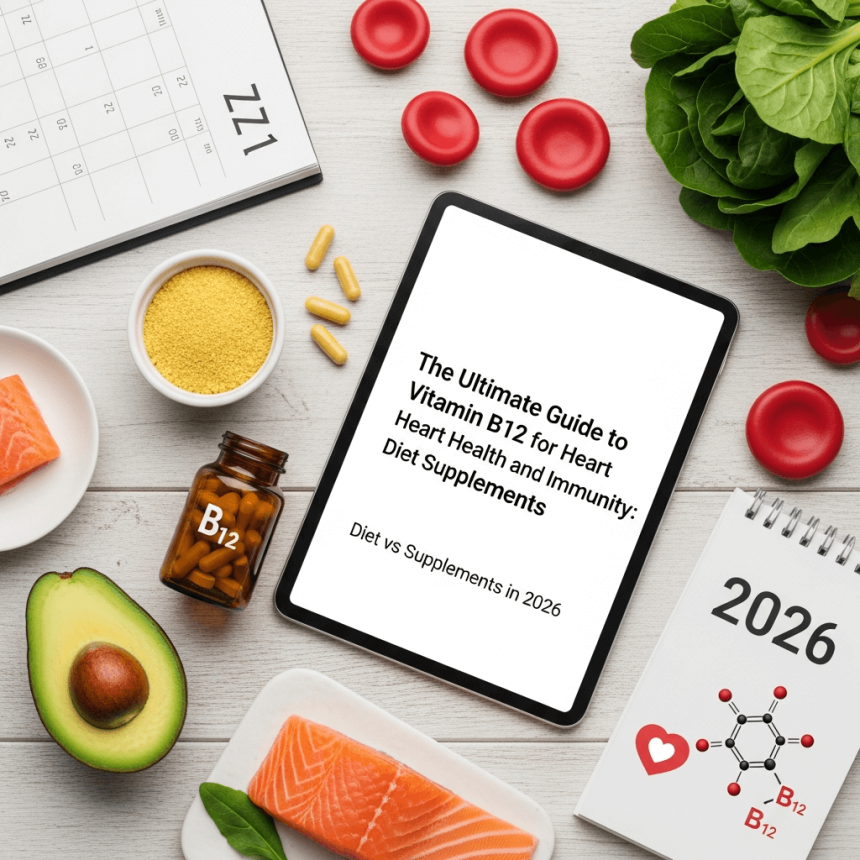
The landscape of personal health and longevity has shifted dramatically in 2026. With the rise of personalized nutrition and advanced metabolic testing, the conversation around essential nutrients has moved from basic survival to optimized performance. Among these nutrients, Vitamin B12, or cobalamin, stands as a cornerstone of human vitality. This complex water-soluble vitamin is not just a fuel for energy but a critical regulator of cardiovascular integrity and immune resilience.
- The Vital Role of Vitamin B12 in the Human Body
- Heart Health: The Homocysteine Connection
- Immunity: B12 as an Immune System Modulator
- Vitamin B12 from Diet: The Natural Bioavailability
- Vitamin B12 Supplements: Precision and Potency
- Diet vs. Supplements: Which is Better?
- Daily Live Health Information: January 6, 2026
- Maximizing Absorption: Expert Tips for 2026
- Understanding the Risks of Deficiency
- The Future of B12: Personalized Nutrition
- References and Sources
- Crafting Your B12 Strategy
As we navigate the complexities of modern diets, from the surge in plant-based lifestyles to the precision of biohacking, one question remains central to the wellness community: Is it better to obtain Vitamin B12 from whole food sources or through high-potency supplements? This guide explores the latest clinical research, bioavailability data, and physiological impacts to help you make an informed decision for your heart and your immune system.
The Vital Role of Vitamin B12 in the Human Body
Vitamin B12 is unique among vitamins because it contains a metal ion, cobalt. This structure is essential for two critical enzymatic reactions in the human body. The first is the conversion of homocysteine to methionine, a process vital for DNA methylation and the prevention of toxic amino acid buildup. The second is the conversion of methylmalonyl-CoA to succinyl-CoA, which is necessary for energy production within the mitochondria.
Without adequate B12, these processes stall, leading to a cascade of health issues. Historically, B12 was primarily associated with preventing megaloblastic anemia and permanent nerve damage. However, in 2026, medical science has recognized that even subclinical deficiencies, levels that once fell within the “normal” range, can significantly impair cognitive function, heart health, and the body’s ability to fight off viral pathogens.
Heart Health: The Homocysteine Connection
The relationship between Vitamin B12 and cardiovascular wellness is primarily centered on the management of homocysteine. Homocysteine is an amino acid that, when present in high concentrations, acts as a pro-inflammatory agent within the vascular system. Elevated levels are a recognized risk factor for atherosclerosis, stroke, and myocardial infarction.
Homocysteine Metabolism and Arterial Integrity
Vitamin B12 works in tandem with folate (Vitamin B9) and Vitamin B6 to recycle homocysteine. When B12 levels are low, homocysteine accumulates, leading to oxidative stress and damage to the endothelial lining of the blood vessels. This damage facilitates the formation of arterial plaques, which can eventually lead to blockages.
Recent longitudinal studies in 2025 and early 2026 have highlighted that maintaining “optimal” rather than just “sufficient” B12 levels is crucial. Research from the Framingham Heart Study suggests that individuals with higher active B12 levels, specifically holotranscobalamin, show significantly less arterial stiffness over a ten-year period compared to those at the lower end of the reference range.
The U-Shaped Risk Curve in Cardiovascular Mortality
While deficiency is a clear danger, 2026 research has also shed light on the potential risks of excessively high serum B12 levels. A study published in the journal medRxiv in January 2025 indicated a non-linear relationship between B12 levels and cardiovascular mortality. Both very low and very high levels were associated with increased risk, though the high-level risk is often a biomarker for underlying liver or kidney issues rather than a result of supplement intake itself. This underscores the importance of targeted, data-driven supplementation rather than a “more is better” approach.
Immunity: B12 as an Immune System Modulator
The role of Vitamin B12 in the immune system is multifaceted, affecting both the production and the function of immune cells. In an era where respiratory viruses and chronic inflammatory conditions are prevalent, understanding this link is more important than ever.
White Blood Cell Production and DNA Synthesis
The immune system relies on the rapid proliferation of cells to respond to threats. Because B12 is essential for DNA synthesis, it is a limiting factor in the production of white blood cells, particularly lymphocytes and Natural Killer (NK) cells. A deficiency in B12 can lead to a reduced immune response, leaving the body vulnerable to infections.
B12 and Viral Defense Mechanisms
Clinical reviews conducted in late 2025 have explored the specific impact of B12 on viral defense. Data suggests that methylcobalamin, the active form of B12, can enhance the activity of T-lymphocytes. Furthermore, there is emerging evidence that B12 may help modulate the “cytokine storm” associated with severe viral infections, including recent variants of SARS-CoV-2. By supporting cellular health and reducing systemic inflammation, B12 acts as a foundational pillar for a resilient immune system.
Vitamin B12 from Diet: The Natural Bioavailability
For the majority of human history, Vitamin B12 was obtained exclusively through the consumption of animal products. The bacteria in the digestive tracts of animals synthesize B12, which is then absorbed into their tissues.
Top Dietary Sources for Heart and Immune Support
- Organ Meats: Beef liver and kidneys are the most concentrated sources of B12, providing over 3,000 percent of the Daily Value (DV) per serving.
- Seafood: Clams, sardines, and salmon are excellent choices. Salmon, in particular, offers the added benefit of Omega-3 fatty acids, which further support heart health.
- Dairy Products: Interestingly, research indicates that the B12 in dairy (milk, cheese, yogurt) may be more bioavailable than the B12 found in meat. A study from the Office of Dietary Supplements notes that bioavailability is about three times higher in dairy products compared to meat and fish.
- Eggs: While eggs contain B12, the absorption rate is lower than other animal sources, often cited at around 9 percent.
- Fortified Foods: For those following plant-based diets, fortified nutritional yeast and breakfast cereals are vital sources.
The Mechanics of Food-Based Absorption
Dietary B12 is bound to proteins. In the stomach, hydrochloric acid and pepsin release the B12 from these proteins. It then binds to “intrinsic factor,” a protein secreted by the stomach lining, which allows it to be absorbed in the small intestine. This process is highly efficient for small doses but can be easily disrupted by age, medication, or digestive disorders.
Vitamin B12 Supplements: Precision and Potency
As we move through 2026, the supplement industry has evolved to offer highly targeted forms of Vitamin B12. Supplements are often preferred for their convenience and their ability to bypass certain absorption barriers.
Forms of Supplemental B12
- Cyanocobalamin: A synthetic form that is highly stable and cost-effective. The body must convert it into active forms (methylcobalamin or adenosylcobalamin) before it can be used.
- Methylcobalamin: The naturally occurring active form. It is often marketed as being superior for absorption and neurological health, though clinical trials show that both cyanocobalamin and methylcobalamin are effective at raising serum levels.
- Adenosylcobalamin: Another active form that is particularly important for mitochondrial energy metabolism.
- Hydroxocobalamin: Often used in clinical settings via injection, this form has a high affinity for transport proteins and stays in the system longer.
Advantages of Supplementation
The primary advantage of supplements is the dose. While a serving of salmon might provide 5 micrograms of B12, a standard supplement might offer 1,000 micrograms. This high dose allows a small percentage (about 1 percent) to be absorbed through passive diffusion, bypassing the need for intrinsic factor. This is a game-changer for older adults or those with pernicious anemia.
Diet vs. Supplements: Which is Better?
The “better” choice depends heavily on your physiological needs, age, and lifestyle.
Why Diet Might Be Better
For a healthy individual with a robust digestive system, a diet rich in animal products provides a balanced spectrum of nutrients. When you eat salmon for B12, you also get Vitamin D, Selenium, and Protein. The synergistic effect of whole foods is often superior for overall health maintenance. Natural food sources also prevent the “spike” in serum levels that some researchers believe might interfere with certain metabolic markers.
Why Supplements Might Be Better
Supplements are indispensable for specific populations.
- The Elderly: As we age, stomach acid production decreases (atrophic gastritis), making it harder to extract B12 from food.
- Vegans and Vegetarians: Since B12 is not naturally present in plant foods in reliable amounts, supplementation is a non-negotiable requirement for preventing deficiency.
- Medication Users: Long-term use of Metformin (for diabetes) or Proton Pump Inhibitors (for acid reflux) significantly inhibits B12 absorption.
- Heart Health Seekers: For those looking to rapidly lower high homocysteine levels, the therapeutic doses found in supplements are far more effective than dietary changes alone.
Daily Live Health Information: January 6, 2026
Today’s health alerts highlight a growing trend in “longevity stacks” where Vitamin B12 is being paired with NMN (Nicotinamide Mononucleotide) to optimize cellular repair. Furthermore, the World Health Organization (WHO) has updated its guidelines for 2026, recommending that all adults over the age of 50 undergo a yearly MMA (Methylmalonic Acid) test rather than a standard serum B12 test. The MMA test is a more sensitive functional marker of B12 status at the cellular level.
In the United States, the FDA has recently approved new labeling for B12-fortified plant-based milks to ensure consumers are receiving at least 25 percent of the RDA per serving, addressing the rise in B12 deficiency among Gen Z and Millennial populations who are moving away from traditional dairy.
Maximizing Absorption: Expert Tips for 2026
If you choose to supplement, the timing and method matter. Sublingual tablets (dissolved under the tongue) or liquid drops are often recommended for those with digestive issues, as they allow for direct absorption into the bloodstream. For dietary intake, pairing B12-rich foods with a source of calcium can slightly enhance absorption, as the B12-Intrinsic Factor complex is calcium-dependent.
Avoid taking high doses of Vitamin C simultaneously with your B12 supplement, as Vitamin C can break down B12 in the digestive tract. It is best to space these nutrients at least two hours apart.
Understanding the Risks of Deficiency
The consequences of ignoring B12 status are severe. In 2026, we are seeing a rise in “neuro-vascular decline,” a condition where low B12 contributes to both cognitive impairment and microvascular damage in the brain. Symptoms often start subtly:
- Fatigue and general weakness
- A “pins and needles” sensation in the hands and feet
- Shortness of breath and palpitations (signs of anemia)
- Cognitive “fog” or difficulty with word recall
- Frequent infections or slow recovery from illness
If you experience any of these, a consultation with a healthcare provider for a full B-vitamin panel is the essential next step.
The Future of B12: Personalized Nutrition
Looking toward the end of the decade, the integration of AI-driven nutrition apps and wearable biosensors will likely allow individuals to track their B12 levels in real-time. This will move us away from generic RDAs and toward “personal optimal ranges.” Until then, a balanced approach that emphasizes nutrient-dense foods while utilizing high-quality supplements to fill gaps remains the gold standard for heart health and immune resilience.
References and Sources
For those looking to dive deeper into the clinical data, please refer to the following authoritative sources:
- National Institutes of Health (NIH) Office of Dietary Supplements: Vitamin B12 Fact Sheet for Health Professionals
- Linus Pauling Institute at Oregon State University: Micronutrient Information Center – Vitamin B12
- Frontiers in Nutrition: B12 Deficiency and Healthcare Analysis 2025
- Harvard T.H. Chan School of Public Health: The Nutrition Source – Vitamin B12
- Yale Medicine: Are You Getting Enough Vitamin B12?
Crafting Your B12 Strategy
The debate between diet and supplements is not a matter of which is objectively superior, but which is most appropriate for your specific biological context. In 2026, the smart money is on a hybrid approach. Focus on high-quality animal proteins and dairy if your diet allows, but do not hesitate to use a high-potency methylcobalamin supplement if you are in a high-risk group or seeking to optimize your cardiovascular profile.
Your heart and your immune system are the engines of your life. Fueling them with the correct form and dose of Vitamin B12 is one of the simplest yet most profound investments you can make in your long-term health.