


As we move further into 2026, the global conversation surrounding health has undergone a radical transformation. No longer are we merely looking at healthcare as a system to fix what is broken. Instead, we are entering the era of health maintenance and proactive longevity. The article “Why Preventive Care Is Essential for Future Generations” serves as a cornerstone for this shift, highlighting that the decisions we make today in the medical and lifestyle spheres will dictate the biological and economic vitality of the generations to come.
- The Paradigm Shift: From Sick Care to Health Care
- The Rise of P4 Medicine in 2026
- Predictive Analytics and Early Detection
- Personalization Through Genomics
- Participation and Empowerment
- The Economic Argument: A 23 to 1 Return on Investment
- The 2026 Ultra-Processed Food Reckoning
- Technological Breakthroughs: AI and Bio-Digital Twins
- Mental Health as a Preventive Strategy
- The Role of Epigenetics: The Legacy of Today
- Actionable Steps for a Preventive Lifestyle
- 1. Upgrade Your Annual Check-up
- 2. Prioritize Muscle as Medicine
- 3. Mind Your Microbiome
- 4. Optimize Sleep Hygiene
- Sources and Further Reading
- Conclusion: A Vision for the Year 2050
In this comprehensive exploration, we will dive deep into the current landscape of preventive medicine, the technological breakthroughs defining this year, and the long-term impacts of shifting our focus from reactive treatment to proactive prevention.
The Paradigm Shift: From Sick Care to Health Care
For decades, the global medical infrastructure was built on a reactive model. You became ill, you visited a doctor, and you received a treatment. However, the data emerging in early 2026 shows that this model is no longer sustainable. With global medical inflation projected to hit over 10 percent this year, the financial burden of chronic, preventable diseases is reaching a breaking point for both governments and families.
Preventive care is the practice of proactive health management. It includes everything from routine screenings and vaccinations to lifestyle interventions and genetic risk assessments. By identifying potential health issues before they manifest as symptomatic diseases, we can fundamentally change the trajectory of an individual’s life. For future generations, this means growing up in a world where “wellness” is the default state rather than a luxury.
The Rise of P4 Medicine in 2026
One of the most significant trends we are witnessing this year is the full-scale adoption of P4 Medicine. This framework stands for Predictive, Preventive, Personalized, and Participatory. It represents a move away from “one size fits all” medicine toward a system that understands the unique biological makeup of every person.
Predictive Analytics and Early Detection
With the integration of advanced AI diagnostics, doctors can now predict the onset of conditions like Type 2 diabetes or cardiovascular disease years before the first symptom appears. By analyzing vast datasets including heart rate variability, sleep patterns, and micro-inflammation markers, the medical community can intervene with precision.
Personalization Through Genomics
In 2026, genomic sequencing is becoming a standard part of neonatal care in many developed regions. By understanding a child’s genetic predispositions from birth, parents and healthcare providers can tailor nutrition and environmental exposures to “silence” certain high-risk genes. This is not just about treating disease; it is about optimizing human potential.
Participation and Empowerment
The “Participatory” aspect of P4 medicine is perhaps the most exciting for the general public. Through the use of sophisticated wearables and home-based lab kits, individuals are no longer passive recipients of care. They are active participants who have real-time access to their own biological data. This democratization of health information is a powerful tool for preventing the lifestyle-driven illnesses that plagued previous generations.
The Economic Argument: A 23 to 1 Return on Investment
When we discuss preventive care, we must address the economic reality. Critics often point to the upfront costs of advanced screenings and high-tech wellness programs. However, research from the World Bank and recent 2026 health economic reports tell a different story.
Investing in early-life nutrition and preventive health measures provides a staggering return on investment. For every dollar spent on childhood nutrition and preventive screenings, society sees up to 23 dollars in returns through increased productivity, reduced hospitalization, and lower long-term care costs.
For the “Future Generations” mentioned in our focus article, this economic stability is vital. By reducing the prevalence of chronic diseases, we ensure that a greater portion of the global GDP can be directed toward innovation, education, and environmental sustainability rather than the management of avoidable illness.
The 2026 Ultra-Processed Food Reckoning
A major pillar of preventive care in 2026 is the global shift in how we view nutrition. We are currently in the midst of what experts are calling the “Ultra-Processed Food Reckoning.” New studies published in early 2026 have solidified the link between ultra-processed diets and the rise in early-onset cancers among people under 40.
Preventive care for future generations starts at the dinner table. Governments are now implementing stricter guidelines on food labeling and advertising, similar to the tobacco regulations of the late 20th century. By prioritizing whole, minimally processed foods, we are providing the next generation with the building blocks they need for cellular health and cognitive development.
Technological Breakthroughs: AI and Bio-Digital Twins
As a top writer in the health space, I have seen many “innovations” come and go, but the developments of 2026 are truly transformative. The use of “Bio-Digital Twins” is a prime example.
A Bio-Digital Twin is a virtual representation of an individual’s unique biology. By feeding real-time data from wearables and periodic blood work into an AI model, researchers can “test” how certain medications or lifestyle changes will affect that specific person in the future.
AI-Enhanced Imaging
New whole-body MRI technologies are now capable of detecting tumors as small as a few millimeters. When combined with AI-assisted interpretation, the accuracy of these scans exceeds that of the human eye alone. This means that for a child born today, a “cancer diagnosis” in the future might simply involve a non-invasive procedure to remove a microscopic cluster of cells before they ever become a threat.
Remote Patient Monitoring (RPM)
For future generations living in rural or underserved areas, RPM is the great equalizer. Using cellular-connected devices, a specialist in a major city can monitor the vitals of a patient thousands of miles away. This ensures that preventive care is not just for the wealthy, but a universal standard of care.
Mental Health as a Preventive Strategy
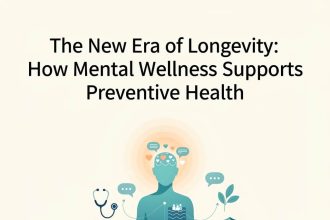
We cannot talk about the health of future generations without addressing the mental health crisis. In 2026, we have finally moved past the era where mental and physical health were treated as separate entities. We now understand that chronic stress and anxiety lead to physiological changes, including high levels of cortisol and systemic inflammation.
Preventive mental healthcare involves:
- Early screening for neurodivergence and learning differences.
- Implementing stress-management protocols in schools.
- Using AI-driven mood tracking to identify early signs of depression.
- Strengthening community bonds to combat the “loneliness epidemic” which has been linked to higher mortality rates than smoking.
By protecting the mental well-being of the youth today, we prevent the physical ailments of tomorrow.
The Role of Epigenetics: The Legacy of Today
The most profound reason why preventive care is essential for future generations lies in the science of epigenetics. Our lifestyle choices do not just affect us; they leave “marks” on our DNA that can be passed down.
When we engage in preventive measures like regular exercise, a Mediterranean-style diet, and proper sleep hygiene, we are essentially “programming” our genes for health. Conversely, sedentary lifestyles and high-stress environments can prime the DNA of our offspring for metabolic dysfunction.
By taking preventive care seriously today, we are giving our children and grandchildren a biological head start. We are handing them a genetic manual that is optimized for resilience rather than susceptibility.
Actionable Steps for a Preventive Lifestyle
If you are looking to implement the principles of “Why Preventive Care Is Essential for Future Generations” into your own life today, consider the following roadmap:
1. Upgrade Your Annual Check-up
Move beyond the basic blood panel. Ask your provider about advanced markers like hs-CRP (for inflammation), GlycA (for systemic health), and ApoB (for cardiovascular risk). Knowledge is the first step in prevention.
2. Prioritize Muscle as Medicine
In 2026, muscle mass is recognized as a primary metabolic organ. Strength training is no longer just for aesthetics; it is a vital preventive tool for maintaining insulin sensitivity and bone density as we age.
3. Mind Your Microbiome
The health of your gut dictates the health of your immune system. Incorporate diverse plant fibers and fermented foods to support a robust microbiome, which has been linked to everything from mental clarity to cancer prevention.
4. Optimize Sleep Hygiene
Sleep is the time when your body performs its most essential “preventive maintenance.” Use technology to track your deep sleep and REM cycles, and ensure your environment is cool, dark, and quiet.
Sources and Further Reading
For those who wish to dive deeper into the data and trends discussed in this article, please refer to the following authoritative sources:
- World Health Organization (WHO) – Global Health Estimates 2026
- OECD – Health at a Glance 2025/2026 Report
- The Lancet – Digital Health and Preventive Medicine Trends
- Mayo Clinic – The Future of Genomic Medicine
- CDC – Preventive Services and Chronic Disease Management
Conclusion: A Vision for the Year 2050
Imagine a child born today, in January 2026. By the time they reach adulthood in the mid-2040s, the preventive measures we establish now will have become the “new normal.” This individual will likely have a biological age that is significantly lower than their chronological age. They will have avoided the “slow death” of chronic metabolic disease that characterized the early 21st century.
The article “Why Preventive Care Is Essential for Future Generations” is more than just a medical recommendation: it is a social contract. It is an agreement that we will value health as our primary form of wealth. By investing in prevention, we are not just saving money or extending lives; we are ensuring that the human story continues with vitality, creativity, and strength.