

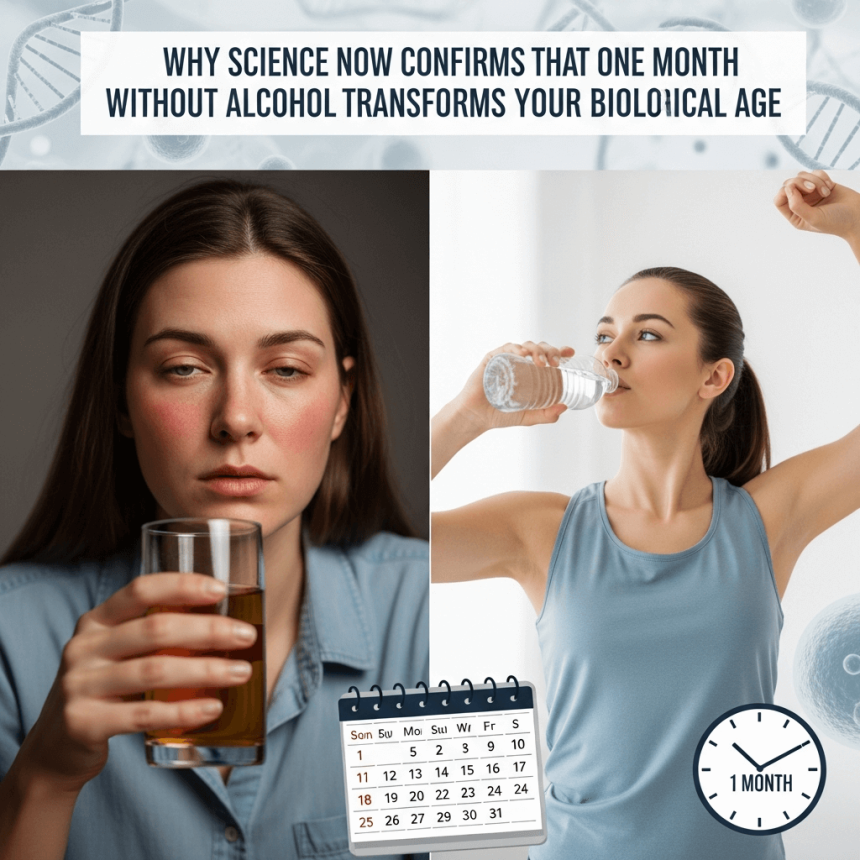
The beginning of 2026 has marked a pivotal moment in global health consciousness. As millions of individuals across the world embark on the annual tradition known as Dry January, a groundbreaking new meta-analysis has provided the most definitive evidence to date that thirty-one days of abstinence is not just a temporary reset but a powerful biological recalibration. This year, the movement has reached record participation, with nearly one third of the adult population in major metropolitan areas choosing to replace their evening cocktails with functional beverages and longevity-focused tonics.
- The Landmark Study of 2026: Brown University Reveals the Cumulative Burden of Alcohol
- Current Live Status: Navigating Day 6 of the January Challenge
- The Physiological Timeline: What Happens Inside Your Body Each Week
- Week One: The Great Stabilization
- Week Two: Cognitive Clarity and Deep Rest
- Week Three: The Visible Glow and Weight Loss
- Week Four: Systemic Resilience and Heart Health
- The Regenerative Power of the Liver: 31 Days to a Healthier Organ
- Longevity and Biological Aging: Turning Back the Clock
- The Mental Health Recalibration: Anxiety and the Dopamine Loop
- The Rise of Functional Beverages and the New Social Script
- Economic Impact: The Financial Benefit of a Dry Month
- Practical Strategies for Success: Beyond Willpower
- Looking Forward: Beyond January 31st
The Landmark Study of 2026: Brown University Reveals the Cumulative Burden of Alcohol
A major systematic review led by Dr. Megan Strowger and researchers at the Brown University School of Public Health has officially moved the conversation from anecdotal success stories to peer-reviewed clinical certainty. Analyzing data from over 150,000 participants across sixteen independent studies, the research highlights a significant gap in how we previously understood moderate consumption. The findings, published in the journal Alcohol and Alcoholism, conclude that even a short-term pause of four weeks is sufficient to achieve measurable, systemic improvements across every major organ system.
The study emphasizes that alcohol imposes a subtle but persistent cumulative burden on mental and physical health. By removing this stressor for just thirty days, participants experienced a profound reversal of markers associated with chronic inflammation and metabolic dysfunction. The significance of this research lies in its ability to show that the human body possesses an incredible capacity for regeneration when given the proper environment.
Current Live Status: Navigating Day 6 of the January Challenge
As of today, January 6, 2026, many participants are entering the crucial transition phase of their journey. Historically, the first five days are defined by physiological adjustment, where the central nervous system begins to stabilize after years of regular alcohol exposure. By Day 6, most individuals are moving past the initial irritability and “brain fog” often associated with the first few days of cessation.
Real-time data from health tracking apps like Try Dry and Reframe indicate that on this specific day, users typically report a noticeable stabilization in their resting heart rate. For those who used alcohol as a sleep aid, Day 6 often represents the first night where REM sleep cycles begin to normalize. This is the stage where the “rebound effect” of the nervous system starts to calm down, leading to fewer middle-of-the-night awakenings. If you are feeling a surge of energy today, it is likely because your liver has successfully cleared the primary metabolic byproducts of your final December drinks, allowing your blood glucose levels to remain more consistent throughout the day.
The Physiological Timeline: What Happens Inside Your Body Each Week
Understanding the biological transformation that occurs during this month requires a deep dive into human physiology. Sobriety is not a passive state; it is an active period of cellular repair and detoxification.
Week One: The Great Stabilization
During the first seven days, the body focuses on homeostasis. Alcohol is a potent diuretic and a central nervous system depressant. When it is removed, the kidneys begin to regulate fluid balance more effectively, and the brain starts to recalibrate its neurotransmitter production.
One of the most immediate benefits seen in the first week is the stabilization of blood sugar. Because many alcoholic beverages are high in simple sugars and interfere with the liver’s ability to release glucose, quitting often leads to a reduction in energy crashes. Participants frequently report that by the end of the first week, their “sugar cravings” begin to subside as the body moves away from the volatile insulin spikes caused by regular drinking.
Week Two: Cognitive Clarity and Deep Rest
By the second week, the focus shifts to the brain and the digestive system. Most participants notice a significant reduction in acid reflux and gastrointestinal inflammation. Alcohol irritates the stomach lining and increases acid production; two weeks of abstinence allows the mucosal lining to heal.
More importantly, this is the period where cognitive clarity emerges. The Brown University study notes that concentration levels and short-term memory performance improve significantly during the second week. This is largely due to the restoration of Glutamate and GABA balance in the prefrontal cortex. As the “fog” lifts, individuals find themselves more productive at work and more present in their personal lives.
Week Three: The Visible Glow and Weight Loss
By Day 21, the physical changes become impossible to ignore. Skin health is one of the most visible indicators of sobriety. Alcohol causes systemic dehydration and peripheral vasodilation, which leads to redness and puffiness. After three weeks, the skin appears more hydrated, pores often seem smaller, and chronic conditions like rosacea or eczema may show signs of remission.
This is also the period where weight loss becomes measurable. Beyond the simple elimination of “empty calories,” the body’s metabolic rate begins to optimize. When the liver is no longer occupied with processing ethanol, it can return to its primary role of metabolizing fats and regulating cholesterol. The 2026 data shows that the average participant loses between three and five pounds by the end of the third week without making any other significant dietary changes.
Week Four: Systemic Resilience and Heart Health
As the month draws to a close, the focus turns to the cardiovascular system and long-term disease prevention. Clinical measurements taken at the end of four weeks consistently show a decrease in systolic and diastolic blood pressure. For those with borderline hypertension, this month can be a life-saving intervention.
The risk of type 2 diabetes also decreases during this phase. Studies have shown that insulin resistance can improve by as much as 28 percent after one month of sobriety. This systemic resilience means the body is better equipped to handle stress, fight off infections, and maintain stable energy levels well into the future.
The Regenerative Power of the Liver: 31 Days to a Healthier Organ
The liver is perhaps the most resilient organ in the human body, but it is also the one most directly impacted by alcohol consumption. In 2026, medical technology has allowed us to witness liver regeneration in real-time through advanced imaging and biomarkers.
When you drink alcohol, the liver prioritizes the breakdown of ethanol over almost all other functions. This leads to a buildup of fat within the liver cells, a condition known as steatosis. The Brown University review confirms that just four weeks of abstinence can substantially reduce liver “stiffness,” which is a primary indicator of early-stage liver disease. By allowing the liver to “take a holiday,” you are giving it the space to regenerate healthy cells and process accumulated toxins. This cellular renewal is essential for maintaining a high metabolism and a strong immune system.
Longevity and Biological Aging: Turning Back the Clock
One of the most exciting aspects of the 2026 health landscape is the focus on longevity and biological age. Recent research from the University of Oxford has highlighted a direct link between alcohol consumption and the shortening of telomeres. Telomeres are the protective caps on the ends of our chromosomes that serve as a marker for biological aging.
The more a person drinks, the faster their telomeres shorten, effectively accelerating their biological clock. By participating in a month of sobriety, you are essentially pausing this accelerated aging process. Clinical data suggests that those who transition from heavy drinking to moderate or zero consumption can actually see improvements in their epigenetic markers. This “biohacking” approach to sobriety is one reason why younger generations, particularly Gen Z and Millennials, are leading the “Sober Curious” movement in 2026.
The Mental Health Recalibration: Anxiety and the Dopamine Loop
Beyond the physical benefits, the psychological impact of a dry month is profound. Alcohol is a powerful modifier of brain chemistry. It provides a temporary surge in dopamine, the “feel-good” chemical, but this is followed by a sharp drop that can lead to increased anxiety and depression.
Many people use alcohol to “take the edge off” at the end of the day, unaware that the drink itself is causing the very anxiety they are trying to soothe. This creates a detrimental cycle of drinking to feel normal. Breaking this cycle for thirty days allows the brain’s reward system to reset. Participants often report a “leveling out” of their mood. Without the artificial spikes and subsequent crashes of dopamine, the brain becomes more sensitive to natural pleasures, such as a good meal, a beautiful sunset, or a meaningful conversation.
The Rise of Functional Beverages and the New Social Script
In 2026, the social landscape of sobriety has changed entirely. The stigma of “not drinking” has been replaced by the prestige of “high-performance living.” The market for non-alcoholic spirits and functional beverages has exploded, reaching an estimated value of over 450 billion dollars globally.
Today’s alternatives are not just sugary mocktails. They are sophisticated drinks infused with adaptogens, nootropics, and botanicals designed to enhance mood and cognitive function without the toxicity of ethanol. These “functional beverages” provide the social ritual of holding a glass while actually contributing to the consumer’s health goals. Whether it is a botanical spirit designed to promote relaxation or a probiotic soda for gut health, the options in 2026 make it easier than ever to navigate social events without feeling like an outsider.
Economic Impact: The Financial Benefit of a Dry Month
While the health benefits are the primary focus, the economic impact of Dry January cannot be ignored. Data from 2026 suggests that the average participant saves hundreds of dollars over the course of the month. Since the launch of the Try Dry app in 2018, users have collectively saved over 1.5 billion pounds by choosing not to purchase alcohol.
This financial windfall is often redirected into other wellness areas, such as gym memberships, high-quality nutrition, or local travel. In a year where inflation and the cost of living remain top of mind for many, the financial incentive of sobriety provides an additional layer of motivation for staying on track.
Practical Strategies for Success: Beyond Willpower
The 2026 study from Brown University makes one thing very clear: willpower alone is often not enough for sustained change. The most successful participants are those who utilize digital tools and social support systems.
Use Science-Backed Tools
Apps that provide daily motivational content, progress tracking, and community support have been shown to double the chances of a successful dry month. These tools help to reframe the experience from one of “deprivation” to one of “achievement.” Seeing the number of calories saved or the improvement in sleep quality in a visual format provides the positive reinforcement needed to reach Day 31.
Create Psychological Distance
Successful participants often use a technique known as “psychological distance.” This involves identifying the specific triggers that lead to drinking, such as a certain time of day or a specific social group, and creating a plan to navigate those moments. This might involve stocking the fridge with appealing non-alcoholic alternatives or planning evening activities that do not revolve around a bar.
The Power of “Damp” January
For those who find total abstinence daunting, 2026 has seen the rise of “Damp January.” This approach focuses on harm reduction rather than total sobriety. By significantly reducing intake, individuals can still experience many of the health benefits, such as improved sleep and lower blood pressure, while learning to manage their relationship with alcohol in a more mindful way. The key is intentionality: choosing when and why to have a drink rather than doing so out of habit.
Looking Forward: Beyond January 31st
The true value of a dry month is not just what happens during those thirty-one days, but how it changes the rest of the year. The latest longitudinal data shows that 70 percent of people who complete a dry month are still drinking significantly less six months later. This is because the month provides a “recalibration tool” that allows individuals to prove to themselves that they can have fun, handle stress, and socialize without alcohol.
As we move through 2026, the trend toward “mindful drinking” is becoming a permanent fixture of our culture. The realization that our health is our most valuable asset is driving a shift away from the “party culture” of the past toward a future defined by longevity, mental clarity, and physical resilience.